Home / Paint Removal and Stripping / How to Remove Wallpaper and Old Paint Together
Paint Removal and Stripping
How to Remove Wallpaper and Old Paint Together
Short Answer
Take the paper off first. Then decide about the paint, layer by layer.
At a Glance
- Paper first, paint second: Strip the wallpaper, then judge the paint underneath
- Steam lifts both: Steam softens paste and loosens paint together
- Check the paint after: Sound paint can stay as a base for new paint
- Skim is an option: A plaster skim covers a damaged wall cleanly
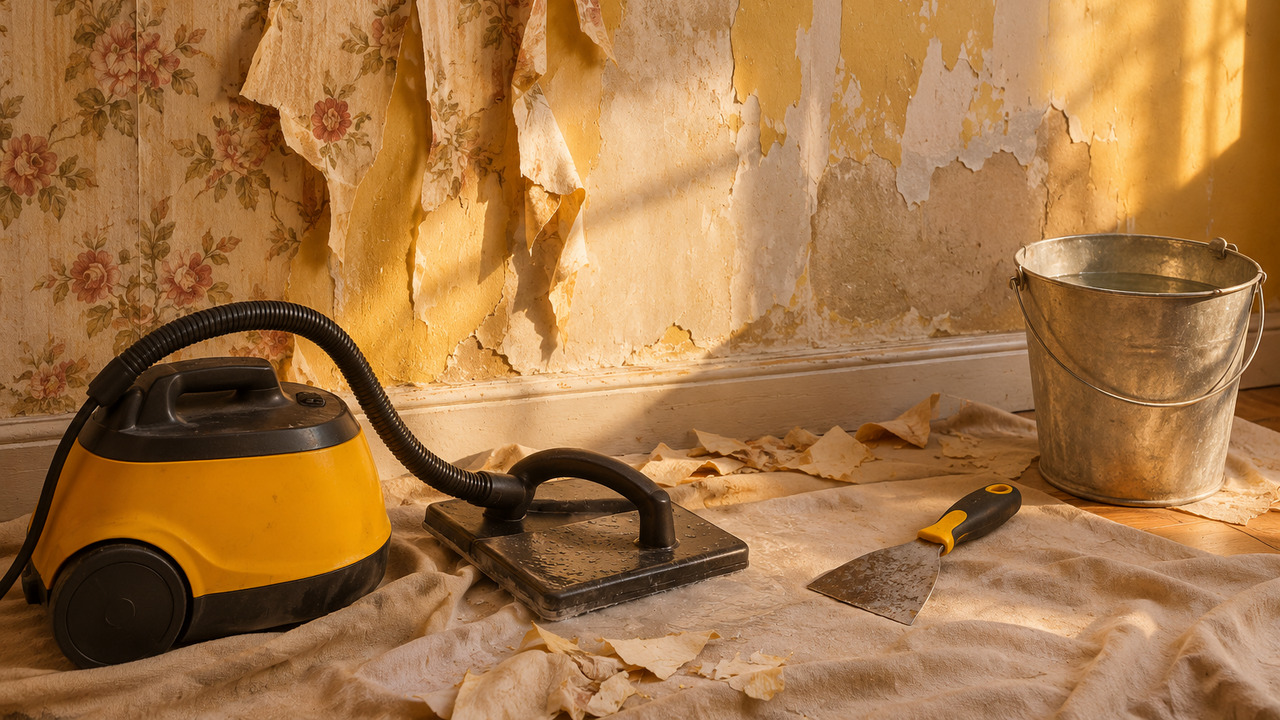
Wallpaper stuck over old paint needs the paper off first, then a decision about the paint underneath. Steam lifts paper and loosens paint at the same time, which helps and hinders in equal measure. Strip the paper, assess the paint, and only strip paint that is actually failing. The rest can stay as a base.
Why paper ends up over paint
People paper over paint to save time, especially in rented homes and quick redecorations. The paper hides the old colour and covers small flaws. The trouble comes later, when the paper needs removing and the paint underneath comes with it, or stays in patches.
Paint under paper also affects how the paper strips. Paste bonds to paint differently than it bonds to bare plaster, so some areas lift easily while others hold fast. Expect an uneven strip, and plan for patching afterwards.
Tools you will need
A wallpaper steamer is the main tool, with a scraper, a bucket, sponges and dust sheets. A spray bottle of warm water and fabric softener can help on small areas, though steam is faster on a whole room. Keep a step ladder handy for high areas.
Wear gloves, because steam is hot and scrapers are sharp. Protect the floor with dust sheets, and cover sockets and switches. Turn off the power to the room if you are steaming near electrical fittings.
Steaming the paper off
Hold the steamer plate against the paper until the paste softens, then peel the paper away in sheets. Work from the top down, in sections you can manage before the steam cools. Scrape stubborn patches while they are still warm.
If the paper was applied over paint, the paint may come away with the paper in places. That is normal. Let those areas dry, then assess them. Do not force paint that is still firmly stuck, or you will damage the plaster underneath.
Paper off, paint assessed, wall sealed. Preparation is the job here.
What the paint underneath looks like
Once the paper is off, you will see the old paint in patches, with bare plaster where the paint lifted. Run a scraper over the remaining paint. Sound paint can stay, and loose paint needs to go. Feather the edges with sandpaper so the joins do not show.
Look for paste residue as well. Paste left on the wall stops new paint bonding, so wash the wall with warm soapy water and a sponge. Rinse with clean water and let the wall dry fully before you fill or paint.
Stripping paint after the paper
Use a scraper for loose paint, and chemical remover for small stubborn patches. Avoid heat on plaster walls, which can crack. Work in sections, and keep the room ventilated if you use remover.
If a large area of paint is loose, it may be quicker to strip the whole wall than to patch around it. Judge by how much is failing. A wall that is mostly bare plaster after the paper comes off is often best stripped fully and sealed.
Sealing and skimming options
If the wall is damaged in many places, a skim of plaster gives a clean, flat surface. A plasterer can skim over sound paint that has been keyed with a suitable primer, so you may not need to strip everything first. Ask a plasterer to look at the wall.
Sealing is essential before repainting. Bare plaster and patched areas need a mist coat or primer, or the new paint will look patchy. A sealed wall also stops old paste residue affecting the new coat.
Repainting or repapering
If you plan to repaint, fill and sand the wall, seal it, then apply your topcoat. If you plan to repaper, the wall needs to be smooth and sealed as well, or the new paper will show every bump. A lining paper can help on a wall that is not perfectly flat.
Choose your finish based on the room. A bathroom or kitchen needs paint that handles moisture, while a bedroom suits paper or emulsion. Whatever you choose, preparation is what makes it last, so do not rush the drying and sealing stages.
Lining paper and painted walls
Lining paper is often used to cover a rough wall before painting, and it can be found under paint in older houses. Lining paper strips like wallpaper, with steam or warm water, but it may be stuck firmly to the plaster. Work in small sections, steam the paper, and peel it while it is warm.
If the lining paper is sound and the paint on top is sound, you can paint over it rather than stripping it. A sound lining paper gives a smooth base, and stripping it can damage the plaster underneath. Judge the paper by whether it is loose, bubbling or stained, not by its age.
When the wall needs a plasterer
If the wall is damaged in many places after the paper and paint come off, a plasterer can skim it and give you a flat surface. A skim is often faster than filling dozens of patches, and the result looks better. Get a plasterer to inspect the wall before you make a final choice.
A plasterer can also tell you whether the old paint needs to come off before skimming, or whether it can be keyed and skimmed over. Preparing the wall afterwards is part of the same job, and a plasterer can advise on the best route for your wall. The same care applies when removing paint from wood in a room, where a test patch saves the visible face.
More guides on this topic