Home / Paint Removal and Stripping / How to Remove Paint from Walls
Paint Removal and Stripping
How to Remove Paint from Walls
Short Answer
Strip wall paint only where it is failing. Sound paint is a good base for a new coat, and stripping it wastes a day for no gain.
At a Glance
- Strip only loose paint: Sound paint can be painted over, so strip only what is peeling or flaking
- Know the wall first: Plaster, brick and lime each need a different approach
- Steam suits wallpaper paste: A steamer lifts old paint that sits over paste and paper
- Patch before repainting: Fill and sand after stripping, then seal the surface
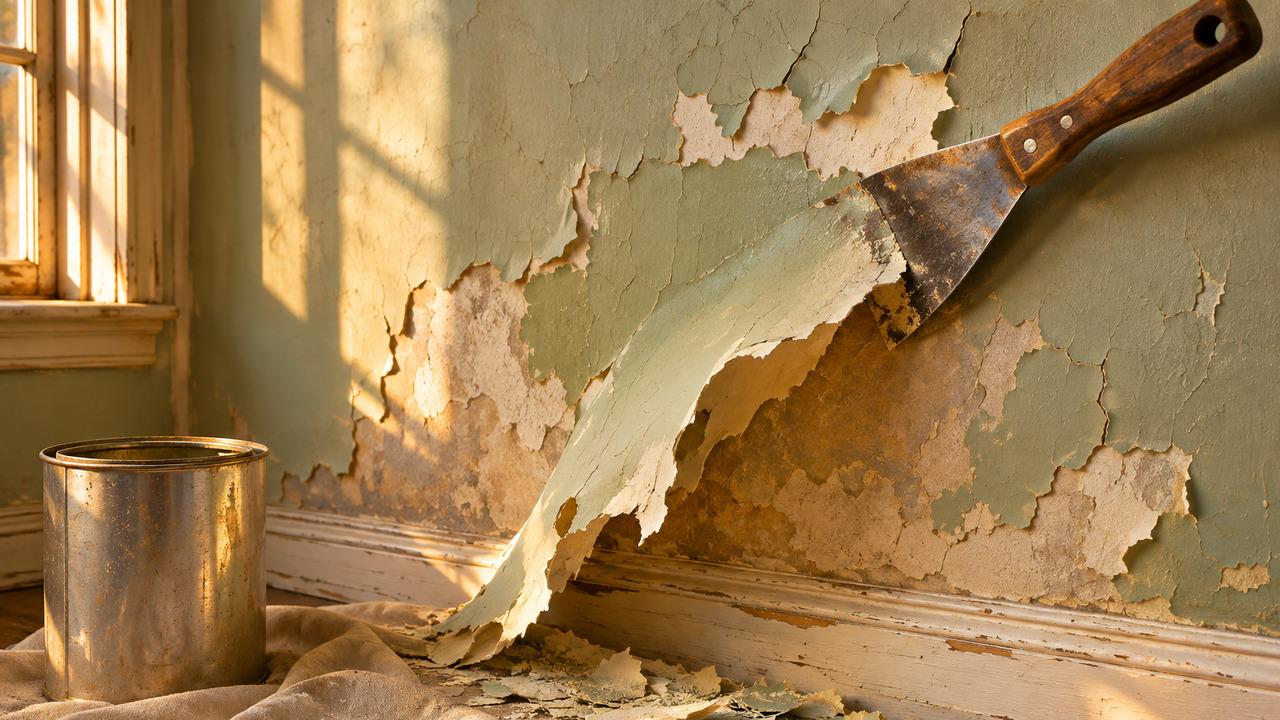
Most wall paint does not need to come off completely, and that is the first thing to get clear. If the old coat is sound, you can paint over it. Stripping is for paint that is peeling, flaking, bubbling or badly applied. Choose your method by the wall underneath, because plaster, brick and old lime behave very differently.
Work out what needs stripping
Run a scraper lightly over the wall and see what comes away. Paint that lifts in sheets or flakes at a touch needs to go. Paint that stays firm can stay, even if the colour is wrong. Mark the loose areas with a pencil so you can work through them in order.
Bubbles and blisters usually mean damp or a poor bond between coats. Find the cause before you strip, or the new paint will bubble in the same place. A damp patch needs to dry out first, and a glossy coat underneath may need a light sand so the next coat can grip.
Scraping loose paint
A wide scraper with a sharp blade is the simplest tool for loose wall paint. Hold it flat against the wall and push under the loose edge. Work from the top down so falling flakes land on your dust sheet. Stop when you reach paint that is firmly stuck.
Do not force paint that is holding. Gouging plaster to chase a stubborn flake creates a repair job that takes longer than the stripping did. Feather the edges of each bare patch with sandpaper so the join does not show through the new coat.
Chemical remover on walls
Chemical remover suits small areas of stubborn paint, such as around a fireplace or on a window reveal. Brush it on thickly, leave it to work, then scrape the softened paint away. Ventilate the room well and wear gloves and eye protection while you work.
Remover can soften plaster if you leave it on too long, so follow the time on the tin and do not walk away for hours. Wipe the wall with a damp cloth afterwards to remove residue. If the plaster feels soft or crumbly, let it dry and assess it before you fill or paint.
Sound paint stays. Strip only what is failing, and repair before you repaint.
Steam and heat on walls
A wallpaper steamer can lift paint that was applied over old wallpaper or paste, because the steam softens the layer underneath. Hold the steamer plate against the wall, wait for the paint to loosen, then scrape it while it is warm. This is slow work, but it avoids chemicals.
A heat gun is risky on plaster walls. Plaster can crack with sudden heat, and paint fumes are a concern in a closed room. If you use heat, keep it moving, work in short bursts and open windows. For most walls, scraping and remover are safer and just as effective.
What to do about textured paint
Textured paint and old Artex style finishes need care. Some older textured coatings contain asbestos, so do not sand or scrape them until you know what they are. If the finish dates from before the nineteen eighties, get it tested or seek advice before you touch it.
If the texture is modern and safe to remove, a steamer or remover can soften it, but the work is messy and slow. Many people choose to skim over a sound textured finish with plaster instead. That gives a flat surface without the dust and risk of full removal.
Repairing the wall after stripping
Stripped walls almost always need filling. Use filler for small holes and cracks, and a skim of plaster for larger damaged areas. Let filler dry fully, then sand it smooth and wipe away the dust. Run your hand across the repair to check it sits flush with the wall around it.
Bare plaster drinks paint, so seal it before you apply a topcoat. A mist coat of thinned emulsion or a dedicated primer gives the new paint something to grip. Skipping this step leads to patchy colour and paint that peels at the first knock.
When to skim instead of strip
If most of the paint is loose, or the plaster underneath is damaged in many places, skimming the whole wall with fresh plaster is often faster than stripping and patching. A plasterer can give you a flat surface in a day, and the result looks better than a wall full of filled patches.
Skimming costs more than stripping it yourself, but it saves days of dusty work and gives a professional finish. Ask a plasterer to look at the wall before you decide. They can tell you whether the old surface will take a skim or whether the loose paint must come off first.
Dealing with paint over old wallpaper
Paint applied over old wallpaper is a common find in older houses, and it needs care. The paint may look sound, but the paper underneath can be loose, and stripping the paint can pull the paper with it. Test a corner by lifting the paint gently with a scraper, and see whether the paper underneath is firm or whether it lifts in sheets. If the paper is loose, you may need to strip both layers together, which is slower but gives a sounder wall in the end.
A steamer can help here, because it softens the paste under the paper as well as the paint on top. Work in small sections, peel the paper while it is warm, and scrape the paint that comes with it. Let the wall dry, then fill and seal it before you paint. A wall that has been stripped back to plaster is a better base than a wall with loose paper hiding under paint.
Paint on ceilings
Ceilings are harder to strip than walls, because you are working overhead and the debris falls on you. Wear eye protection and a mask, cover the floor well, and work in small sections so you can see your progress. A scraper on a pole can help, but a hand scraper gives more control on a ceiling.
Chemical remover on a ceiling is messy, because it drips, so use a gel that clings, and work in small areas. Steam can also help, but it is hot work overhead. If most of the ceiling paint is sound, consider painting over it rather than stripping it. A ceiling that is mostly sound does not need a full strip, and the time saved is better spent on preparation and a good topcoat. The same gentle approach helps when removing paint from wood, where a gouge is harder to repair than a dent in plaster.
More guides on this topic