Home / Paint Removal and Stripping / Paint Remover or Heat Gun: Which Is Best
Paint Removal and Stripping
Paint Remover or Heat Gun: Which Is Best
Short Answer
Choose by the surface. Remover for shapes, heat for flat areas, and neither on paint that may contain lead.
At a Glance
- Remover suits shapes: Gels reach mouldings, curves and joints that heat cannot
- Heat suits flat areas: A heat gun is fast on doors, boards and panels
- Lead paint changes the choice: Heat is risky on old paint that may contain lead
- Cost is close: Both methods need scrapers, protection and time
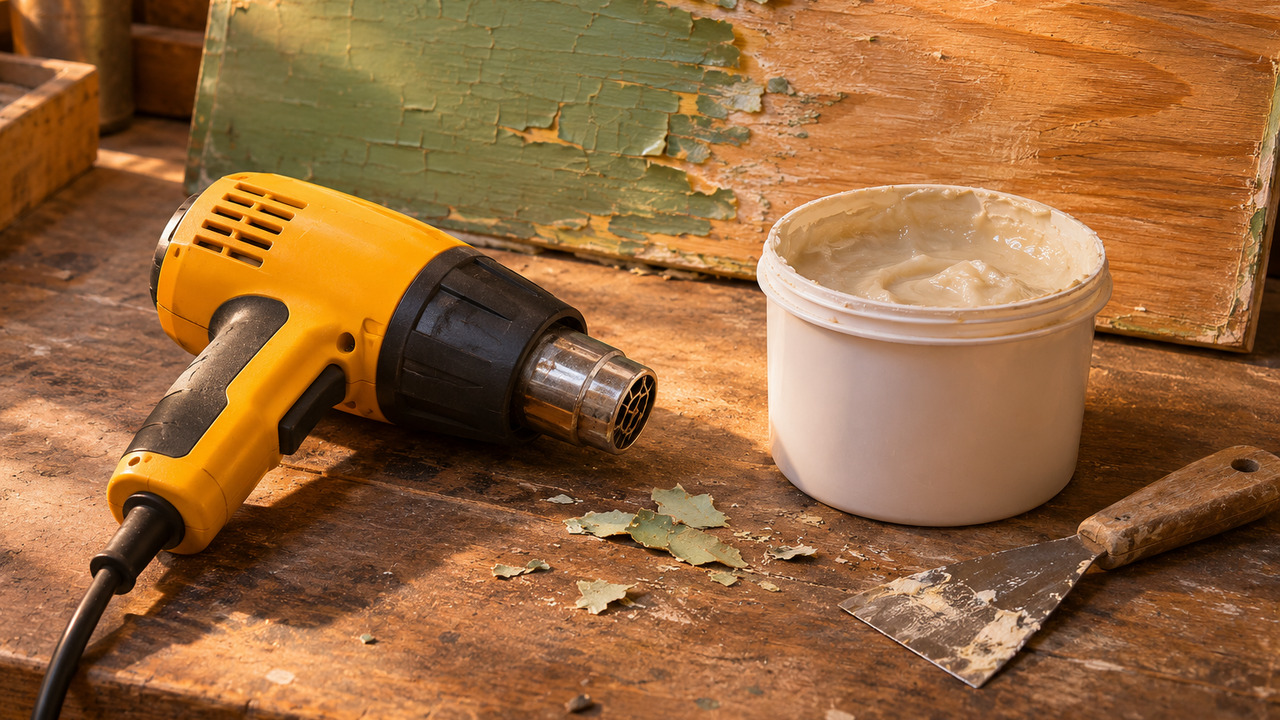
Paint remover wins on shaped wood and in tight corners, while a heat gun wins on flat boards and large areas. Remover is slower and messier but gentler, heat is faster but riskier near glass, plastic and old paint. Your surface, the paint type and the room you are working in should decide, not the tool you happen to own.
How paint remover works
Paint remover softens paint chemically so you can scrape it away. You brush it on, wait, then lift the softened layer with a scraper. It works well on shaped wood, ironwork and small areas, because the gel or paste stays where you put it.
The main drawback is time. Remover needs to sit and work, and thick paint may need a second coat. It is also messy, with drips and residue to clean up. The advantage is control. You can strip a carved chair leg without scorching it or rounding its edges.
How a heat gun works
A heat gun blows hot air onto the paint until it blisters, then you scrape it off while it is warm. It is fast on flat surfaces, with no waiting for chemicals to work and no residue to wash off. A door panel can be stripped in a fraction of the time remover would take.
The drawback is risk. Heat can scorch wood, crack glass, melt plastic and damage putty. It also creates fumes from heated paint, so ventilation matters. A heat gun needs a steady hand and constant movement, or it will burn one spot while another stays cold.
Speed and effort compared
On a flat door, a heat gun is usually faster, because you can work across the panel in steady passes. On a shaped piece, remover is faster overall, because heat cannot reach into curves and you would spend the time saved on sanding out scorch marks.
Effort is different too. Remover asks for patience while you wait, then light scraping. Heat asks for constant attention while you work, with the gun in one hand and the scraper in the other. Neither method is effortless, and both need a clean up afterwards.
Neither tool is best in every case. The surface and the paint decide.
Safety: the deciding factor
Safety should decide when the two methods are otherwise equal. Heat on old paint can release fumes, and it is not suitable if the paint may contain lead. Remover has its own safety needs, including gloves, eye protection and ventilation, but it does not heat the paint.
Both methods need a mask when you scrape and sand, and both need the room ventilated. Keep a fire extinguisher nearby when using heat, and never leave a hot gun unattended. If you are unsure about the paint, choose remover and test first.
Cost and kit
A basic heat gun costs about the same as a few tins of remover, but the gun lasts for many jobs while remover is used up. If you strip paint often, a heat gun pays for itself. If this is a one off job, remover may be cheaper, because you only buy what you need.
Both methods need the same extras: scrapers, sandpaper, gloves, eye protection and dust sheets. A heat gun also needs a power supply and a safe place to rest while hot. Remover needs rags and water for cleaning up. Add these to the cost before you compare.
Which surfaces suit which
Wood with mouldings, carvings or veneer suits remover, because heat can scorch and lift veneer. Flat boards, floorboards and plain doors suit heat, because the surface is even and the gun can move steadily. Metal suits both, with heat faster on flat panels and remover better on ironwork.
Plaster walls suit neither method well. Remover can soften plaster, and heat can crack it. For walls, scraping and sanding are usually better, with remover saved for small stubborn patches. Glass should never be heated, and remover should be kept off glass and plastic fittings.
A practical way to choose
Start by asking three questions. What is the surface shaped like? How old is the paint? Where are you working? Shaped surface, old paint or a room with poor ventilation points to remover. Flat surface, modern paint and good ventilation points to heat.
Many experienced painters keep both tools and switch between them on the same job. They use heat for the flat panels, then remover for the mouldings and corners. That is often the fastest way to a clean result, and it avoids forcing one method where it does not fit.
Using both methods on one job
Many painters use both methods on the same job, because each suits a different part of the piece. They use a heat gun for the flat panels, where it is fast, then switch to remover for the mouldings, corners and detail, where heat cannot reach. This is often the fastest way to a clean result, and it avoids forcing one method where it does not fit.
Switching methods also lets you rest from one kind of work. Heat work is tiring, because you hold the gun and scraper at the same time, while remover work is slower but less physical. Plan the job so you use heat for the large flat areas first, then remover for the detail while the flat areas cool.
What to do when neither works
Sometimes neither method works well, because the paint is very old, very thick or bonded to a varnish underneath. In that case, try combining them: soften the paint with remover, scrape it, then use heat on the residue, or vice versa. A second method can succeed where the first failed, because it attacks the paint in a different way.
If both methods fail, consider whether the paint needs to come off at all. A sound coat can be sanded lightly and painted over, and a damaged surface can be skimmed or covered. Choosing a paint remover is only one part of the decision, and the best answer is sometimes to leave the paint in place and work with it. That is why removing paint from wood with care matters more than speed on a shaped piece.
More guides on this topic