Home / Paint Removal and Stripping / Best Paint Remover in the UK
Paint Removal and Stripping
Best Paint Remover in the UK
Short Answer
There is no single best remover. The right one depends on the surface, the paint type and where you are working.
At a Glance
- Match remover to surface: Gels cling to vertical wood, pastes suit thick layers, liquids suit metal
- Check the label first: Look for the surfaces covered and the safety warnings
- Test a hidden patch: A small test shows speed and effect before you buy more
- Ventilation matters: Open windows and wear gloves and eye protection
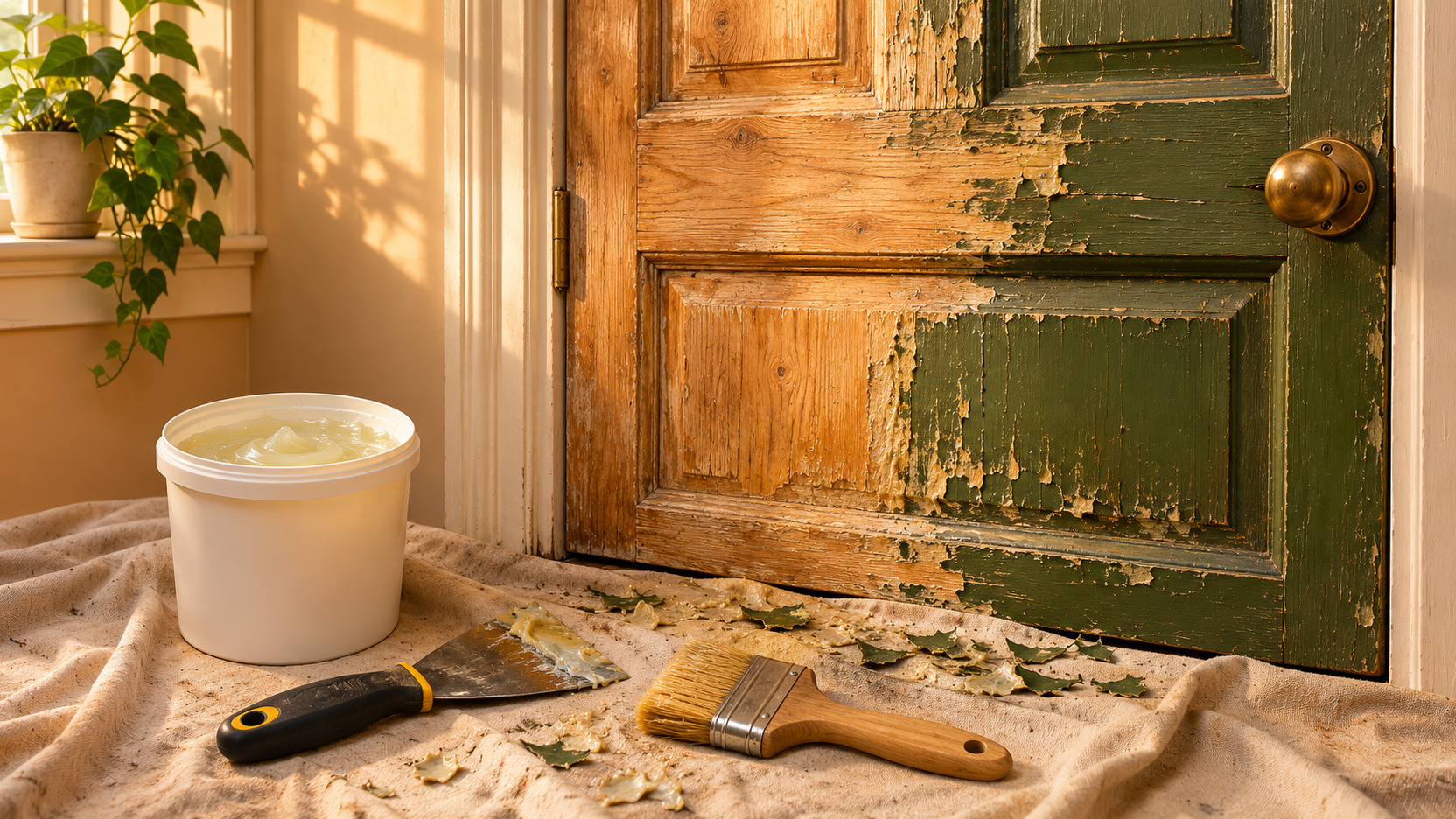
The best paint remover is the one that matches your surface and the size of the job, not the strongest tin on the shelf. Gels cling to vertical wood, pastes suit thick layers on flat boards, and gentler formulas suit indoor work. Read the label for the surfaces it covers, and test it on a hidden patch before you commit.
Why one remover does not fit all
Paint remover works by softening the bond between paint and surface, and different paints soften at different rates. Old oil based paint is often tougher than modern water based paint, and several layers take longer than one. A remover that clears a door panel in one coat may need two coats on a window frame.
The surface matters just as much. Wood, metal, plaster and brick each react differently to chemicals, and a remover that is safe on metal may stain or soften wood. Check the label for the surfaces it lists, and do not assume a product is universal just because the tin looks general.
Gels, pastes and liquids
Gel removers are thick enough to stay on vertical surfaces without running. They suit doors, skirting and furniture, where a liquid would drip to the floor. Apply them with a brush in an even layer and leave them to work undisturbed.
Paste removers are thicker still and suit very thick paint on flat surfaces. Liquid removers are thinner and suit metal, where they can flow into corners and joints. They also suit dipping small parts such as hinges and handles. Choose the form that fits the shape of the piece you are stripping.
Chemical removers and safety
Most chemical removers need gloves, eye protection and good ventilation. Open windows and doors, and keep the room clear of children and pets. Read the safety warnings on the tin before you open it, and keep the product away from skin and eyes.
Some removers have a strong smell, so work in short sessions if you are sensitive to fumes. A mask helps with dust when you scrape, but it does not replace ventilation. If you feel dizzy or unwell, stop, leave the room and get fresh air.
Buy a small tin first, test it on your paint, and let the result choose the remover.
Eco and low odour options
Low odour and plant based removers are now widely sold in the UK, and they suit indoor jobs where fumes are a concern. They often work more slowly than traditional removers, so leave them on longer and expect a second coat on thick paint. The trade off is a more pleasant room to work in.
Eco does not always mean weak. Some of these products are effective on water based paint and on thin oil based layers. They struggle more with very old, hard paint. Test one on your actual paint before you buy enough for the whole job.
Removers for wood, metal and masonry
On wood, choose a remover that will not raise the grain or stain the surface. Gel formulas are a safe start. On metal, a liquid remover can reach into joints and around rivets, and the metal will not absorb it. On masonry, remover suits small areas, but large walls are often better tackled by other methods.
Plaster needs a light touch. Remover left too long can soften plaster, so use it only on small patches and wipe it off promptly. If you are stripping a whole wall, consider scraping and sanding first, and save remover for the stubborn spots that remain.
How to use remover well
Apply remover in a thick layer and resist the urge to scrape too soon. The product needs time to soften the paint right through. Covering the coated area with cling film or foil can stop it drying out, especially on a warm day. Scrape while the paint is soft, not after it has hardened again.
Clean your scraper often so you are not pushing old paint back onto the surface. Work in sections you can finish in one session, and dispose of the softened paint and used remover according to local rules. A tidy work area makes the next section faster.
What to avoid when buying
Avoid buying the largest tin before you have tested the product on your paint. A small tin for a test patch saves money if the remover turns out to be wrong for the job. Also avoid products that do not list the surfaces they cover, or that make vague claims without instructions.
Price alone is a poor guide. A cheaper remover that needs three coats costs more in time and product than a dearer one that works in one. Read reviews from people who stripped the same kind of paint, and ask at a paint counter if you are unsure.
Removers for specific paints
Oil based paint is usually the toughest to remove, because it hardens into a durable film that resists water and mild chemicals. A strong chemical remover or a heat gun is often needed, and you should expect more than one application on thick layers. Water based paint is softer and often lifts with a gentler remover, a steamer or even warm soapy water on a fresh splash.
Varnish and lacquer need a remover made for them, because a paint remover may not soften them in the same way. Check the label for the coatings it covers, and test it on a hidden patch. A remover that works on emulsion may do nothing on a hard varnish, and the only way to know is to test it on your actual surface.
Buying and storing remover
Buy remover in a size that suits the job, and buy a small tin first if you are trying a new product. A large tin that turns out to be wrong for your paint is a waste of money, and it is a hazardous product to store. Keep remover in its original tin, sealed, in a cool place away from children and pets, and check the label for storage advice.
Remover has a shelf life, and an old tin may not work as well as a fresh one. Check the date on the tin, and do not use a product that has separated, dried out or smells unusual. Dispose of old remover at a household waste site that accepts hazardous waste, and never pour it down a drain. That advice matters most when removing paint from wood, because a remover that stains timber is hard to undo.
More guides on this topic