Home / Paint Removal and Stripping / How to Remove Paint from Brick
Paint Removal and Stripping
How to Remove Paint from Brick
Short Answer
Brick strips slowly. Start gentle, test a small area, and accept that repainting may be the better answer.
At a Glance
- Brick is soft: Blasting and grinding can destroy the face of the brick
- Start gentle: Try remover or steam before any abrasive method
- Test a small area: A hidden test shows whether the paint will lift cleanly
- Repainting may be wiser: Sound paint on brick is often better repainted than stripped
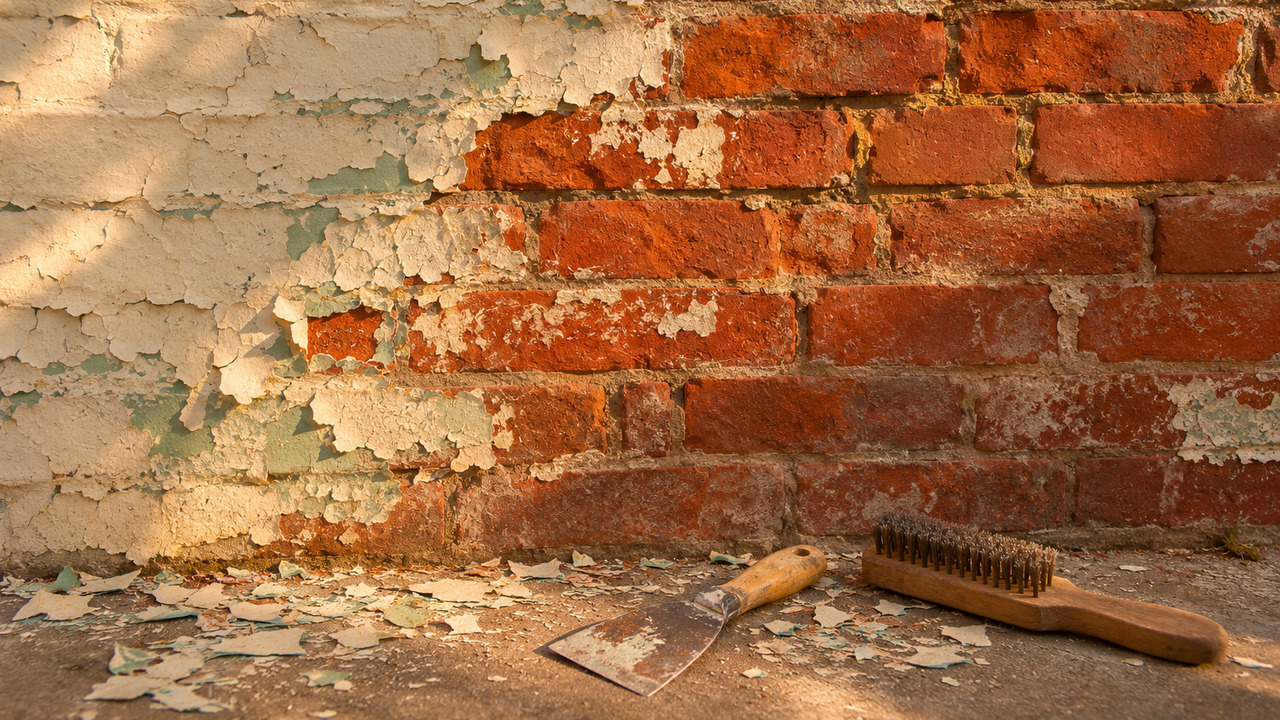
Painted brick is a problem because brick is soft and porous, and paint sinks into its surface. Aggressive blasting or grinding can destroy the face of the brick, so start with the gentlest method. Chemical remover and steam are the usual choices, and sometimes the honest answer is that the paint should stay and be repainted instead.
Why brick is difficult
Brick is porous, so paint does not just sit on the surface. It soaks into the pores and bonds with the material underneath. That is why scraping alone rarely works, and why the brick face can come away with the paint if you use too much force.
Old brick is softer than modern brick, and its face is often the hardest part. Once that face is gone, the brick underneath weathers quickly and looks damaged. Any method that removes brick as well as paint has failed, even if the wall looks clean at first.
Chemical remover on brick
Apply a thick layer of remover, or a poultice made for masonry, and leave it to soften the paint. A poultice stays damp longer than a brushed remover, which helps on a porous surface. Scrape gently with a plastic or wooden scraper so you do not gouge the brick.
You may need several applications, because each coat only softens the outer layer of paint. Work in small sections and wash the brick with clean water between coats. Let the wall dry before you judge the result, as damp brick hides paint residue.
Steam and hot water
Steam can soften paint on brick without chemicals, and it suits small areas such as a fireplace surround. Hold the steamer against the paint until it loosens, then scrape it while warm. Hot water and a stiff brush can help with thin, flaking paint on exterior walls.
Steam is slow on thick paint, and it wets the brick, so allow plenty of drying time afterwards. Do not use a pressure washer as a first step. High pressure water can drive paint deeper into the brick and damage the mortar joints.
On brick, gentle wins. A damaged brick face cannot be put back.
Methods to avoid on brick
Avoid sandblasting, shot blasting and aggressive grinding on brick. These methods remove the face of the brick along with the paint, and the damage cannot be undone. They also create a lot of dust, which is a health risk and a mess for neighbours.
Avoid strong acids unless you know exactly what you are doing. Acids can stain brick, damage mortar and harm plants and soil nearby. If a contractor suggests blasting or acid, ask them to show you a test patch on a hidden area first.
Dealing with mortar joints
Mortar joints often hold paint more stubbornly than the brick face, because the paint sits in the recess. A small brush or a wooden stick can clear paint from joints without damaging the mortar. If the mortar is already crumbling, repointing may be needed after stripping.
Do not use a metal wire brush aggressively on joints. It can widen the joint and loosen the mortar. Work gently, and stop if the mortar starts to crumble. A sound joint is more important than a paint free joint.
When to repaint instead
If the paint is sound and the brick underneath is in good condition, repainting is often the sensible choice. A fresh coat of masonry paint protects the brick and looks better than a half stripped wall. Choose a paint made for masonry, and prepare the surface by cleaning and priming as the maker advises.
Repainting also avoids the risk of damaging the brick. Many painted brick houses have been repainted for decades without harm, while stripped walls often show patchy brick and damaged faces. Weigh the look you want against the risk before you start.
After stripping brick
Let stripped brick dry fully before you decide what to do next. Damp brick looks darker and hides residue, so wait for a dry spell. Brush off loose dust with a soft brush, and check the mortar for damage. Repoint any loose joints before you paint or seal the wall.
If you plan to leave the brick bare, consider a breathable treatment made for brick, and take advice from a specialist. Sealing brick with the wrong product can trap moisture and cause damp inside. Bare brick needs to breathe, so do not seal it with a non breathable coating.
Paint on interior brick
Interior brick, such as a fireplace surround or a feature wall, is often painted with emulsion or gloss, and it needs a gentle method. Chemical remover or steam suits a small interior area, because they create less dust than grinding and they do not damage the brick face. Work in small sections, scrape gently, and wash the brick with clean water between coats.
A fireplace surround needs extra care, because soot and heat can affect the paint and the brick. Clean the soot off first, then test the remover on a hidden area. If the brick is old and soft, accept that some paint may remain in the pores, and consider repainting rather than chasing a perfect strip.
Paint on exterior brick
Exterior brick is exposed to rain and frost, so paint on it often fails in patches, with sound paint next to bare brick. Strip the loose areas, clean the wall, and consider repainting the whole wall in masonry paint rather than trying to strip it fully. A full strip on an exterior wall is a large job, and the brick may look patchy afterwards.
If you do strip exterior brick, work in dry weather, and let the wall dry fully between coats of remover. Damp brick hides paint residue, and it also slows the remover. Paint removal from walls on brick is best done in sections, so you can see your progress and protect the mortar joints from damage. A test patch is just as important when removing paint from wood, where the wrong method can damage the surface for good.
More guides on this topic