Home / Paint Removal and Stripping / How to Remove Paint from Concrete
Paint Removal and Stripping
How to Remove Paint from Concrete
Short Answer
Concrete can take rough treatment, but paint in its pores still needs patience.
At a Glance
- Concrete is tough: It tolerates grinding and washing that wood cannot
- Grinder for large floors: A floor grinder clears paint fast on big areas
- Remover for small patches: Chemical remover suits steps, edges and small areas
- Porous paint lingers: Paint in the pores may need a second pass
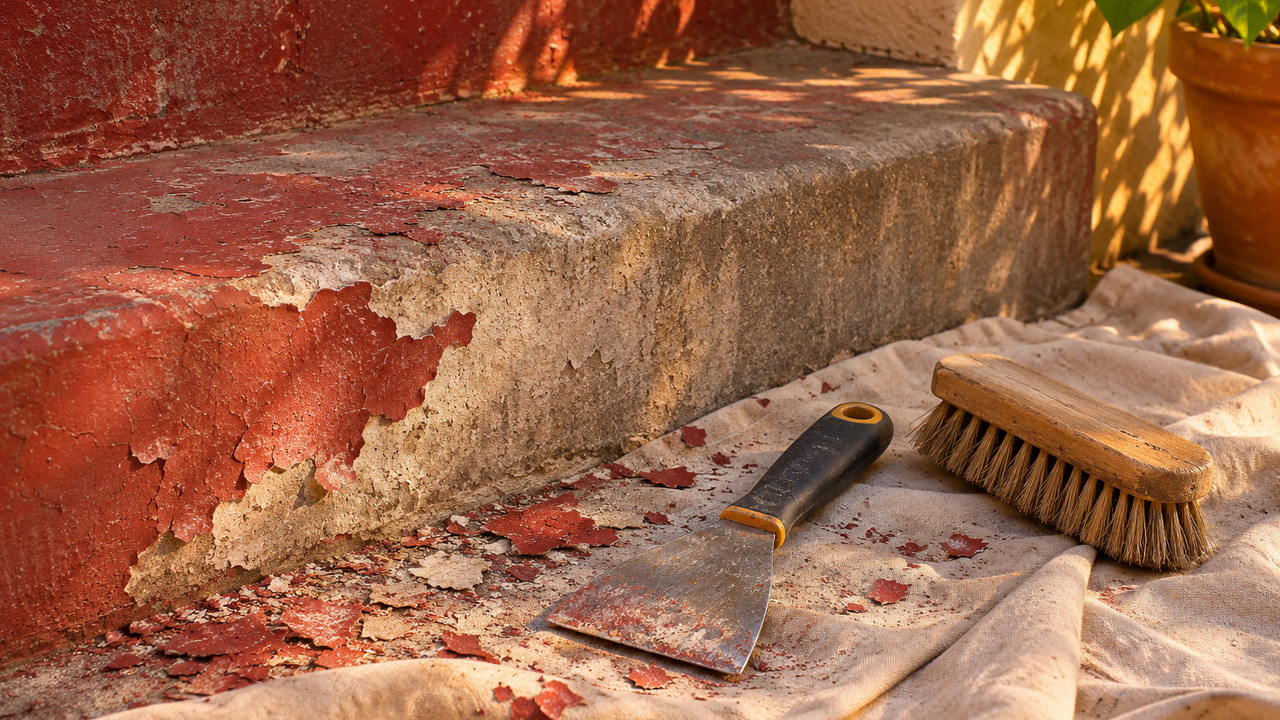
Concrete is tough, so it tolerates methods that would ruin wood or plaster. A floor grinder suits large areas, chemical remover suits small patches, and a pressure washer helps with loose paint. The hard part is paint that has soaked into the pores, which may need more than one pass to clear fully.
Assess the concrete first
Look at how the paint is failing. Flaking paint on a garage floor may lift with a scraper and a stiff brush. Paint that is firmly bonded will need a grinder or remover. Check for cracks and damp patches too, because paint often fails where water gets in.
Find out what the concrete will be used for after stripping. A floor that will be repainted needs a clean, sound surface. A floor that will be left bare needs a smoother finish. The end use decides how thorough the stripping must be.
Scraping and brushing
Start with a floor scraper and a stiff wire brush. These clear loose paint quickly and show you what is firmly stuck. Work in sections, and sweep up the debris as you go so you can see the surface clearly.
A wire brush on a pole suits large floors, while a hand brush suits steps and corners. Wear a mask and eye protection, because concrete dust and paint flakes spread easily. This stage is quick, but it rarely removes all the paint.
Chemical remover on concrete
Brush remover onto small areas and leave it to soften the paint. Concrete is porous, so the remover may soak in and need a second coat. Scrape the softened paint off, then scrub the surface with a stiff brush and clean water.
Remover is best for steps, edges and patches where a grinder cannot reach. It is slow on a whole garage floor, and the cost adds up. Ventilate the area, wear gloves, and keep remover away from drains and planting.
Strip in sections, keep the dust down, and let the concrete dry before you repaint.
Grinding and sanding floors
A floor grinder with a suitable disc is the fastest way to strip a large concrete floor. Hire one from a tool hire shop, and ask for advice on the right disc for paint removal. Work in steady passes, and keep the machine moving so you do not gouge one spot.
Grinding creates a lot of dust, so seal the room, wear a mask and eye protection, and use a vacuum attachment if the machine has one. Check your progress often. The goal is to remove paint, not to grind away the concrete surface itself.
Pressure washing outdoors
A pressure washer can lift loose paint from patios, steps and exterior walls. Use a fan nozzle, keep the lance moving, and do not hold it close to one spot for long. High pressure can damage the surface of concrete and force water into cracks.
Pressure washing is not a substitute for grinding on firmly bonded paint. It works best after scraping, to clear the flakes and dust that remain. Let the concrete dry fully before you judge the result or apply a new coating.
Dealing with stains and residue
Paint that has soaked into concrete may leave a stain even after the surface layer is gone. A poultice or a second coat of remover can lift more of it, but a faint stain may remain. If the floor will be repainted, a stain is not a problem once it is clean and dry.
Oil stains and old paint often sit together on garage floors. Clean oil with a degreaser before you strip paint, or the paint remover will not work properly. A clean surface strips faster and gives a better finish for the next coat.
Preparing concrete for repainting
After stripping, sweep and wash the concrete, then let it dry fully. Fill cracks with a filler made for concrete, and let it set before you sand it smooth. Check for damp by taping a sheet of plastic to the floor and looking for moisture underneath after a day.
Use a paint made for concrete floors, and a primer if the maker advises it. Bare concrete drinks paint, so the first coat may need thinning or a dedicated primer. A well prepared floor holds paint far longer than a rushed one.
Paint on garage floors
Garage floors often carry oil stains as well as paint, and the oil needs cleaning before the paint will strip well. Use a degreaser on the oil, scrub it, rinse it, and let the floor dry before you start stripping paint. A floor that is clean strips faster, and the new paint bonds better.
Garage floors also get heavy use, so the paint needs to be fully removed before you repaint, or the new coat will peel where the old paint is loose. Work in sections, grind or scrape the paint, and check the floor for cracks that need filling before you paint.
Paint on steps and patios
Steps and patios are often painted with masonry paint, and they need a method that suits outdoor work. Scrape the loose paint, use remover on stubborn patches, and wash the surface with a stiff brush and clean water. Paint removal from concrete outdoors is best done in dry weather, so the surface dries quickly and you can see what paint remains.
Patios that will be left bare need a smoother finish than a floor that will be repainted, so take time with the final cleaning. A pressure washer on a low setting can help clear dust and flakes, but keep it moving and do not hold it close to one spot, or it can damage the concrete surface. The same patience helps when choosing a paint remover for a small patch that a grinder cannot reach.
More guides on this topic