Home / Paint Removal and Stripping / How to Dispose of Old Paint Safely
Paint Removal and Stripping
How to Dispose of Old Paint Safely
Short Answer
Never pour paint away. Check your council rules, and let liquid paint harden first where that is advised.
At a Glance
- Never down a drain: Paint must not go into sinks, toilets or drains
- Liquid and dried differ: Hardened paint is handled differently from liquid paint
- Check local rules: Council sites vary, so check before you travel
- Keep tins sealed: Store leftover paint upright, sealed and labelled
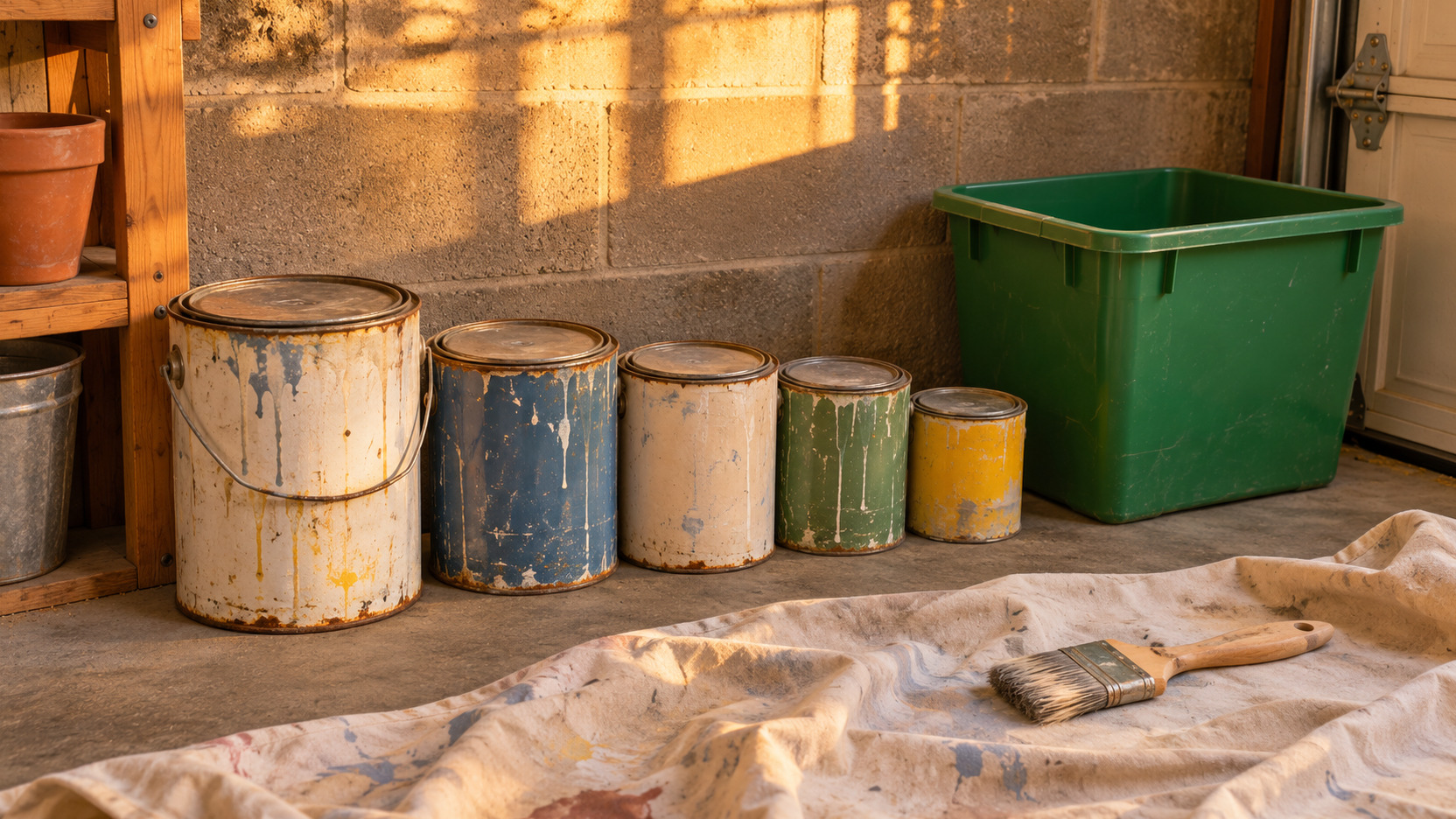
Paint must never go down a drain, a toilet or a sink, because it pollutes water and blocks pipes. Liquid paint, dried paint and empty tins are handled differently, and the rules vary by area. Check your local council website for the nearest household waste site and its paint rules before you load the car.
Why paint needs careful disposal
Paint contains chemicals that harm water life and soil. Even water based paint should not go down a drain, because it adds to the load on sewage treatment and can block pipes. Oil based paint is worse, and needs to be treated as hazardous waste in many areas.
Paint tins and brushes also carry residue. Rinsing brushes in a sink sends paint into the water system, so wash them in a bucket and let the water settle, or use a brush cleaning system. Small habits make a real difference over a whole project.
Liquid paint: what to do
If you have liquid paint left over, keep it for touch ups if it is still usable. Store it in a sealed tin, labelled with the colour and room, in a cool dry place. Paint that is still good should not be thrown away.
If the paint is unusable, check your council website for how to dispose of it. Many councils accept liquid paint at household waste sites, often in a dedicated paint container. Some areas run paint reuse schemes, where usable paint goes to community projects. Check locally rather than assuming.
Hardening paint before disposal
Some councils ask you to harden liquid paint before disposal, by leaving the tin open in a ventilated area or mixing in a hardening agent or absorbent material such as cat litter. Hardened paint is then handled differently from liquid paint, and may go in a different container.
Do not harden paint unless your council advises it, because rules vary. Hardening paint in a garden or on soil is not acceptable, and burning paint is dangerous. Follow the guidance for your area, and ask at the waste site if you are unsure.
Paint never goes down a drain. Check locally, store it safely, and dispose of it properly.
Dried paint and empty tins
Paint that has dried hard in a tin is often treated as general waste, but check locally, because some councils still want it in a separate stream. Remove the lid so staff can see the paint is dry, and make sure the tin is empty of liquid.
Empty tins with only a dry residue can usually be recycled as metal, once the lid is off and the paint is dry. Tins with liquid paint left in them should not go in a recycling bin. When in doubt, take them to the household waste site and ask.
Brushes, rollers and cloths
Brushes and rollers with dried paint can usually go in general waste, but check locally. Cloths soaked in oil based paint or solvent can be a fire risk, so lay them flat to dry outside, away from heat, before you dispose of them. Never bundle damp, solvent soaked cloths in a bin.
Reusable brushes should be cleaned and kept, not thrown away. Wash water based paint brushes in a bucket, let the paint settle, and pour the clear water away carefully according to local advice. Oil based brushes need solvent, which should be reused and then disposed of at a waste site.
Paint stripper and solvents
Paint stripper, white spirit and other solvents are hazardous waste and must not go in a household bin or down a drain. Store them in sealed, labelled containers and take them to a household waste site that accepts hazardous waste. Check opening times and rules before you travel.
Keep solvents away from children and pets, and store them upright in a cool place. If a container is leaking, put it inside a larger sealed container and handle it with gloves. Never mix solvents together, and never pour them onto soil or into water.
Finding your local rules
Council websites usually have a page on paint disposal, with the nearest site, opening times and what they accept. Search for your council name and paint disposal, or call the council if the website is unclear. Rules change, so check each time rather than relying on what you did last year.
Community reuse schemes are worth checking too. Some take usable paint for schools, charities and community halls. Giving paint a second life is better than disposing of it, and it saves someone else buying a new tin.
Storing leftover paint for reuse
Leftover paint that is still usable should be kept, not thrown away. Pour it into a smaller, clean tin if the original tin is nearly empty, so there is less air inside, and label it with the colour, the room and the date. Store it upright, sealed, in a cool dry place away from frost.
Check stored paint before you use it again. Stir it well, and look for a skin on top, a bad smell or a lumpy texture, which can mean it has gone off. If it looks and smells normal, test it on a small area first. A tin of stored paint can save you buying a new tin for a touch up.
Community reuse and recycling
Many areas have paint reuse schemes, where usable paint is collected and given to community projects, schools and charities. Check your council website or search for a paint reuse scheme near you, and see what they accept. Giving paint a second life is better than disposing of it.
Empty metal tins can often be recycled, once the paint is dry and the lid is off. Choosing a paint remover and other paint products also creates waste, such as used cloths and empty tins, and those should be disposed of according to local rules. Check with your council if you are unsure. Leftover paint from removing paint from wood is often worth keeping for the next coat, rather than throwing it away.
More guides on this topic