Home / Paint Finishes Explained / Paint Sheen Levels Explained: From Flat to High Gloss
Paint Finishes Explained
Paint Sheen Levels Explained: From Flat to High Gloss
Short Answer
Sheen is how much shine the dried paint has. Flat hides flaws but marks easily. Gloss cleans easily but shows flaws. Eggshell and satin sit in the middle, and most rooms use one of those two.
At a Glance
- Flattest: flat matt, hides flaws, least washable
- Low sheen: eggshell, soft glow, wipes gently
- Mid sheen: satin, smooth glow, washable and tough
- Highest: high gloss, bright, hard and easiest to clean
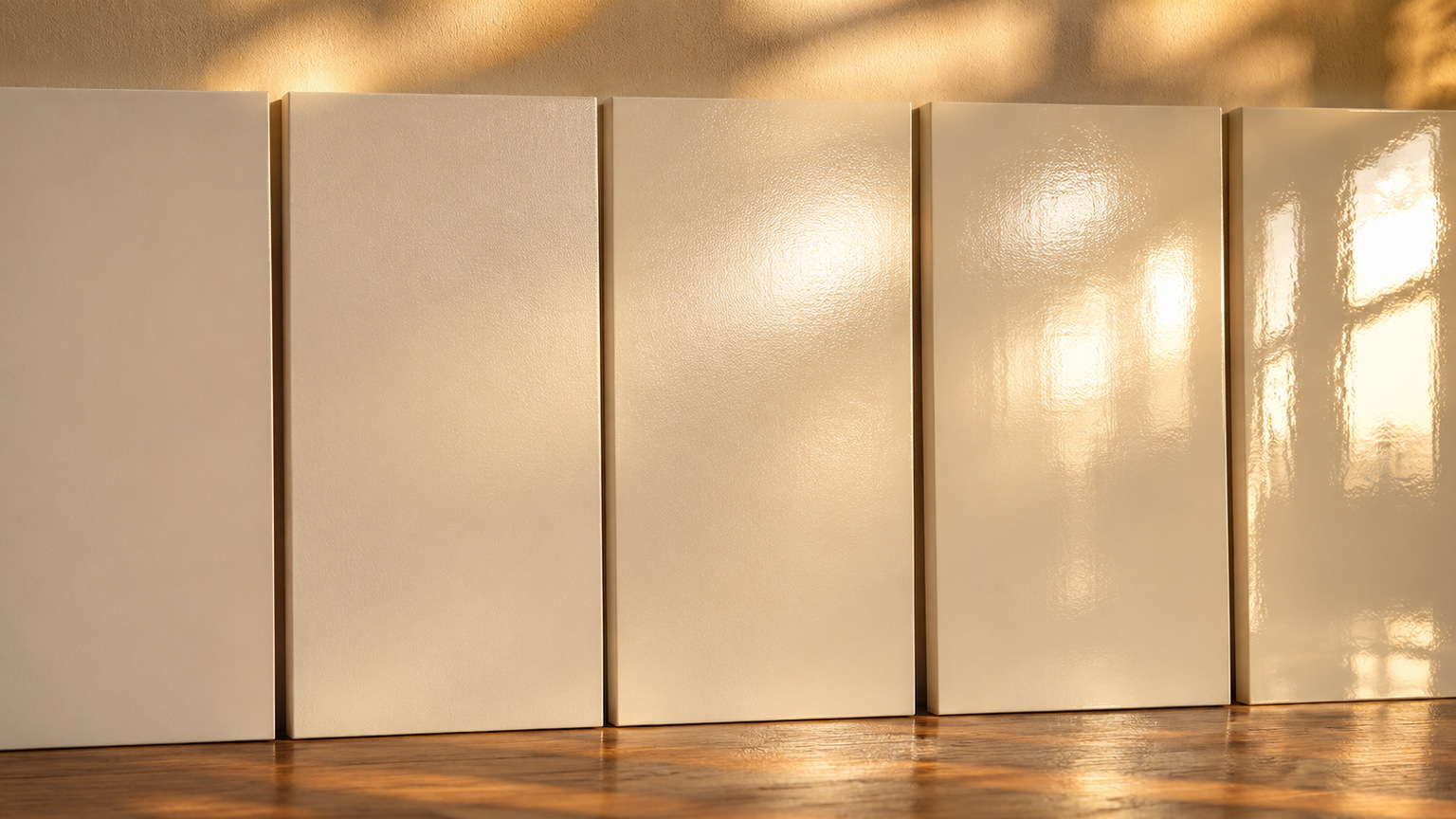
Paint sheen runs from flat, with almost no shine, to high gloss, with a bright, reflective surface. In between sit eggshell, satin and semi gloss, each a little shinier and a little tougher than the last. The higher the sheen, the easier the paint is to clean and the more it shows every flaw. The lower the sheen, the calmer the look and the more forgiving the finish.
Flat and matt
Flat is the lowest sheen, with almost no shine at all. It gives a soft, velvety look that hides bumps, joins and repairs better than any other finish. It suits ceilings, where light rakes across the surface and shows every mark, and calm living rooms and bedrooms where the walls are not touched often.
The drawback is that flat is the least washable finish. A scuff will mark it, and a scrub can leave a shiny patch. A vinyl matt is a little tougher, with vinyl in the film to help it wipe, but it is still a flat finish at heart. The guide to vinyl matt paint explains that tougher matt in detail.
Eggshell and low sheen
Eggshell is the next step up, with a low sheen and a soft glow. It looks almost flat from a distance, but it wipes clean, which a basic matt does not. It hides small flaws better than satin, and it suits living rooms, bedrooms and period woodwork where a calm look is wanted with a little more durability.
Low sheen is a similar level, sometimes used as a name for a paint between matt and satin. The names vary between makers, so look at a dried sample rather than trusting the name alone. The guide to eggshell paint covers this level in full.
Satin and mid sheen
Satin is a mid sheen, with a smooth, clear glow. It is washable, hard wearing and easy to live with, which is why it is used on doors, skirting, cupboards and busy walls. It reflects enough light to brighten a room, yet it does not glare the way gloss can. It is the most popular mid sheen in many homes.
Satin shows bumps and repairs more than eggshell, so the surface needs to be in good order first. On a wall, it will show a patch of filler if it is not sanded smooth. On woodwork, it shows brush marks more than eggshell, so a good brush and thin coats matter. The guide to satin paint explains where satin shines.
Every step up in sheen buys washability and pays for it in honesty about the surface.
Semi gloss and gloss
Semi gloss sits between satin and gloss, with a noticeable shine and a hard, washable film. It suits woodwork and trim where a bright finish is wanted, but it is less common on walls. Gloss is the next step, with a bright, reflective surface that is the hardest wearing of the common finishes and the easiest to wipe clean.
High gloss is the top of the scale, with a mirror like shine that shows every flaw. It is used on a front door or a piece of furniture where a very bright finish is wanted, and it needs a perfectly smooth surface to look its best. The guide to best gloss paints covers gloss in detail.
How to read a sheen chart
A sheen chart shows the finishes in order, from flat to high gloss, with a sample of each. Use it as a guide, not as a rule, because the exact shine varies between makers and between products. A satin from one maker may be shinier than a satin from another, and a wall satin may differ from a trim satin in the same range.
The best test is a dried sample on the surface you are painting, looked at in daylight. Paint a patch, let it dry fully, and look at it from the doorway and from the side, where the light shows the sheen best. That test will tell you more than any chart.
Choosing a sheen for each room
For a ceiling, use flat. For a calm bedroom or living room, use flat or eggshell on the walls and satin on the woodwork. For a hallway, use eggshell or satin on the walls and satin on the skirting. For a kitchen or bathroom, use satin or soft sheen on the walls and satin on the woodwork, with a moisture resistant paint where steam is a daily fact.
Keep the woodwork sheen consistent through the house, so the doors and skirting look like they belong together. A little consistency goes a long way, and it stops a room looking like a collection of leftover tins. The overview of paint finishes explained will help you match the sheen to each room.
A simple rule to remember
If you remember one thing, remember this: the shinier the paint, the tougher it is and the more it shows. The flatter the paint, the calmer it looks and the more it hides. Most rooms sit in the middle, with a flat or eggshell wall and a satin woodwork, because that combination gives you the best of both.
Test the sheen before you commit, prepare the surface well, and apply the paint in thin coats. A well chosen sheen, applied well, will look good for years. A poorly chosen sheen, however well applied, will show its flaws every day.
More guides on this topic