Home / Paint Finishes Explained / What Is Eggshell Paint
Paint Finishes Explained
What Is Eggshell Paint
Short Answer
Eggshell is a low sheen finish that looks calm and soft, yet wipes clean. It suits walls and woodwork where matt would mark too easily and satin would show too much. Prepare the surface well and apply it in thin coats.
At a Glance
- Sheen: low, a soft glow with no real shine
- Best for: living rooms, bedrooms and period woodwork
- Washable: yes, when it is a proper eggshell paint
- Forgiving: hides small dents better than satin or gloss
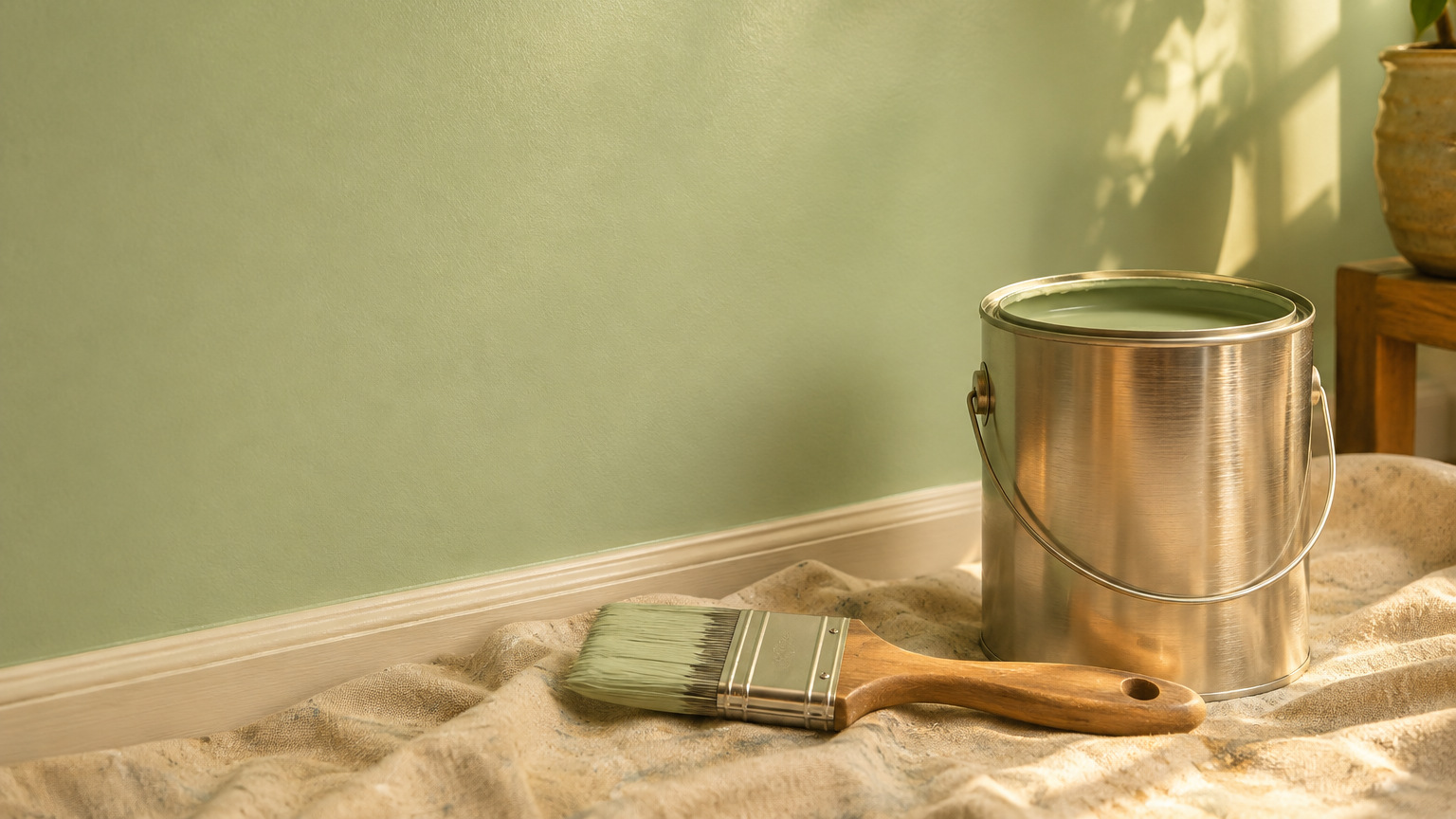
Eggshell paint is a low sheen paint with a soft, gentle glow, like the surface of an eggshell. It sits between flat matt and satin, hiding small flaws better than satin while still wiping clean. It suits walls and woodwork in rooms where you want a calm look with a little more durability than matt, and it is a favourite in period homes.
What eggshell looks like on a wall
On a wall, eggshell looks almost flat from a distance, with just a hint of light on the surface when you look closely. It does not glare, and it does not draw attention to itself. That makes it a good choice for a room where you want the colour and the furniture to lead, rather than the paint finish.
It is softer than satin, which has a clearer glow, and it is warmer than a flat matt, which can look chalky in a dark room. In a period home, eggshell on the walls and the woodwork gives a coherent, traditional look that suits old plaster and old doors.
Eggshell on woodwork
Eggshell is popular on woodwork in older houses, because it hides the dents and repairs that old doors and skirting carry. A gloss finish would show every one of those marks, while eggshell softens them. It still wipes clean, so a hallway door or a skirting board in eggshell will stand up to daily use.
On new, smooth woodwork, eggshell looks calm and understated. It pairs well with a matt wall in the same room, because the slight difference in sheen gives the woodwork a quiet presence without a shine. If you want a tougher finish on a door that is touched all day, satin may be the better choice, as the guide to satin paint explains.
Is eggshell washable
A proper eggshell paint is washable, which means you can wipe it with a soft cloth and warm soapy water without leaving a mark. That is one of its main advantages over a flat matt, which can leave a shiny patch where you scrubbed it. The washability depends on the paint being a true eggshell, not a flat matt sold under a similar name, so read the tin.
Do not scrub eggshell hard or use an abrasive cleaner, because that will wear the sheen away in a patch. Wipe gently and dry the surface after. For a kitchen or a bathroom, where walls are wiped often and steam is a daily fact, a satin or a moisture resistant finish may be tougher in the long run.
Eggshell is the quiet finish. It does its work without drawing attention to itself.
Eggshell or satin: how to decide
The choice comes down to how much wear the surface will take and how smooth it is. Satin is tougher, shinier and easier to wipe, so it suits a busy hallway, a kitchen or a door that is opened all day. Eggshell is softer, flatter and more forgiving, so it suits a living room, a bedroom or an old door with repairs.
If you are torn, test both on the same door or wall and look at them in daylight. The difference is clear once you see them side by side. A room with eggshell walls and satin woodwork is a common and pleasant combination, because the woodwork gets the tougher finish where it needs it.
Applying eggshell paint
Prepare the surface as you would for any paint: wash it, sand it lightly, fill dents and prime bare areas. Eggshell shows brush marks less than satin or gloss, which makes it a forgiving paint to apply, but thin coats still look better than one heavy coat. Use a good brush on woodwork and a roller on walls, keeping a wet edge.
Let each coat dry as the tin directs, and sand very lightly between coats if the surface feels rough. Two coats are usually enough over a sound surface, with a third on a pale colour over a dark base. Do not rush the drying, because a coat that is still soft will mark when you apply the next one.
Eggshell in different rooms
In a living room, eggshell on the walls gives a calm, warm look that suits soft furnishings and bookshelves. In a bedroom, it gives a restful finish that does not glare in the morning light. In a hallway, it will wipe clean, though a satin may be tougher where bags and coats brush the wall every day.
In a kitchen or bathroom, eggshell can work on walls away from direct steam and splashes, but a moisture resistant satin is often the safer choice near a cooker or a shower. The overview of paint finishes explained will help you match the finish to each room.
Keeping eggshell looking good
Dust eggshell walls regularly and wipe marks with a soft cloth and warm soapy water. Dry the surface after wiping, and avoid strong cleaners that dull the sheen. Touch up chips on woodwork early, with a small brush and the paint you kept from the job.
Eggshell is a finish that ages gracefully when it is looked after, because its low sheen does not show wear as harshly as a gloss. With gentle cleaning and the odd touch up, it should stay smart until the next time you redecorate. If you want a still tougher eggshell, the guide to best eggshell paints covers the paints that hold up best in use.
More guides on this topic