Home / Paint Finishes Explained / Satin Gloss Matt and Eggshell Paint Finishes Explained
Paint Finishes Explained
Satin Gloss Matt and Eggshell Paint Finishes Explained
Short Answer
Use matt on ceilings and calm living rooms, eggshell or satin on walls that need wiping, and gloss or satin on woodwork. The shinier the paint, the tougher it is to clean and the more it shows every flaw underneath.
At a Glance
- Flattest: matt, hides bumps and gives a calm look
- Soft sheen: eggshell, a gentle glow that still wipes
- Mid sheen: satin, smooth and washable for busy rooms
- Shiniest: gloss, hard and easy to clean on woodwork
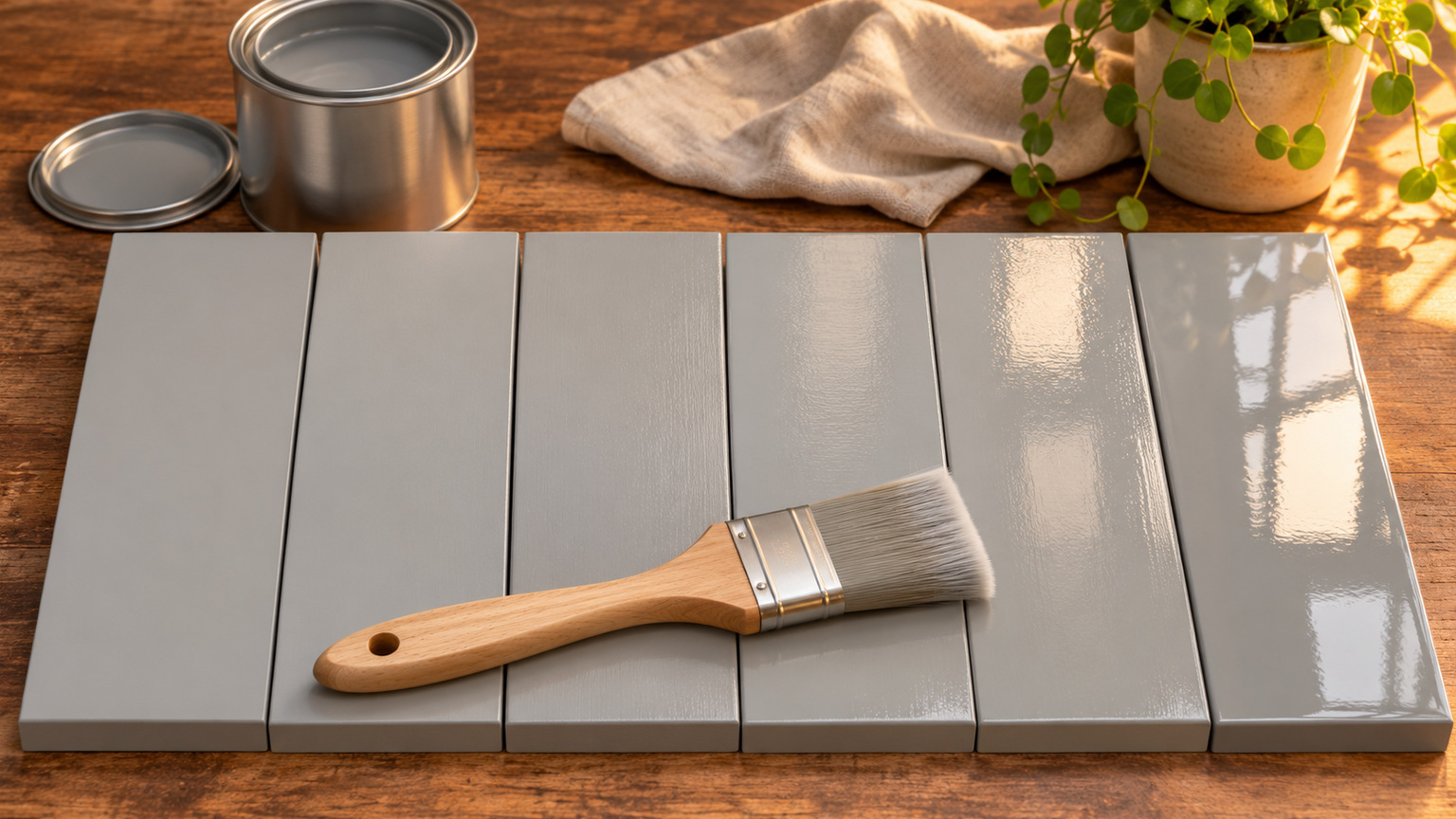
Paint finish means how much shine the dried paint has, and it changes how a room looks and how easy the walls are to clean. Matt is flat and calm, eggshell has a soft hint of shine, satin is smoother and more reflective, and gloss is bright and hard. The right choice depends on the room, the surface and how much wear it will take.
What paint finish actually means
Finish is the level of shine in the dried paint film, often called sheen. A flat matt paint reflects very little light, so the surface looks even and soft. A gloss paint reflects a lot of light, so it looks bright and smooth, and it also shows every dent, brush mark and repair beneath it. The finish does not change the colour, but it changes how the colour reads in the room.
Sheen also affects how the paint behaves. In general, a shinier paint forms a harder, tighter film that resists water and wiping better than a flat paint. That is why kitchens, bathrooms and hallways often use a sheen finish, while bedrooms and living rooms often use a matt. The trade off is always the same: durability against forgiveness.
Matt paint
Matt paint is flat, with almost no shine. It is the most forgiving finish, because it hides small bumps, filler patches and uneven plaster better than any other. It gives a calm, soft look that suits living rooms, bedrooms and ceilings, where you want the colour to speak rather than the shine. Most ceiling paint is a flat matt for this reason.
The drawback is that matt is the least washable finish. Scuffs and marks show, and scrubbing can leave a shiny patch where you cleaned. A vinyl matt is tougher than a basic matt and wipes better, so it is a good step up for a family living room. For a full explanation, see the guide to vinyl matt paint and where it works best.
Eggshell paint
Eggshell sits between matt and satin, with a soft, low sheen like the shell of an egg. It has a gentle glow that warms a room without looking shiny, and it hides small flaws better than satin. It is a good choice for walls in a bedroom or a living room where you want a little more durability than matt, and for woodwork in a period home where a full gloss would look too bright.
Eggshell is washable when it is a proper eggshell paint, so it suits a hallway or a child's bedroom better than a flat matt. It is not as hard wearing as satin on a surface that is touched all day, but it is a calm, practical middle ground. The guide to what eggshell paint is covers its uses in more detail.
Satin paint
Satin has a smooth, mid level sheen that looks fresh and clean. It reflects enough light to brighten a room, yet it does not glare the way gloss can. Satin is washable and hard wearing, so it suits kitchens, bathrooms, hallways and woodwork. It is the most popular finish for doors, skirting and cupboards in many homes.
The drawback is that satin shows bumps and repairs more than matt or eggshell, so the surface needs to be in good order first. On a wall, satin will show a patch of filler if it is not sanded smooth. On woodwork, it shows brush marks more than eggshell, so a good brush and thin coats matter. The guide to what satin paint is explains where it shines and where it does not.
Choose the finish for the room and the surface, not for the colour chart.
Gloss paint
Gloss is the shiniest finish, with a bright, reflective surface. It is the hardest wearing of the common finishes and the easiest to wipe clean, which is why it has long been used on doors, skirting and radiators. A gloss front door or a gloss skirting board looks crisp and clean, and it stands up to daily knocks.
Gloss also shows the most. Every dent, brush mark and speck of dust in the paint will be visible, so the surface must be smooth and well prepared. In a modern home, many people now choose satin over gloss for woodwork, because it is nearly as tough and far more forgiving. Gloss still has its place where a bright, hard finish is wanted.
Silk and soft sheen
Silk is a wall emulsion with a noticeable sheen, shinier than soft sheen and close to satin. It wipes well and suits kitchens and bathrooms, but it shows bumps in the plaster clearly. Soft sheen is gentler, with a low shine that is easier to live with on a wall that is not perfectly smooth. The names vary between makers, so read the tin and look at a dried sample rather than trusting the name alone.
If you are choosing between matt and silk for a room, the guide to matt or silk paint walks through the trade offs in plain terms. The short version is that silk is tougher and easier to clean, while matt is calmer and more forgiving. Your walls and your household will decide which matters more.
How light changes the finish
The same finish can look very different in different light. A satin wall that looks calm in a north facing room can look shiny in a south facing room with strong sun. A gloss door in a dark hallway looks bright, while the same gloss in a bright room can glare. Test the finish on the wall or the door and look at it through the day before you commit.
Ceilings are a good example. Light rakes across a ceiling at a low angle, so even a soft sheen can show roller marks. That is why ceilings are almost always matt. Walls that face a window will show a sheen more than walls that face away from it, so think about where the light falls in each room.
Choosing a finish room by room
For a bedroom or a calm living room, matt or eggshell on the walls and satin on the woodwork is a safe, pleasant combination. For a hallway, a washable eggshell or satin on the walls and satin on the skirting will stand up to scuffs and bags. For a kitchen or bathroom, a moisture resistant satin or soft sheen on the walls and a satin trim paint on the woodwork will cope with steam and wiping.
For a ceiling, use a flat matt made for ceilings. For a door, use a satin or eggshell trim paint. Keep the woodwork finish consistent through the house, so the doors and skirting look like they belong together. A little consistency goes a long way, and it stops a room looking like a collection of leftover tins.
More guides on this topic