Home / Emulsion and Interior Paint / Emulsion Paint Drying Times and Recoat Times
Emulsion and Interior Paint
Emulsion Paint Drying Times and Recoat Times
Short Answer
Follow the tin for touch dry and recoat times. Wait until the paint is dry to the touch and the time on the tin has passed before you recoat. Give the paint longer in a cold or damp room, and longer still before you use the wall hard.
At a Glance
- Touch dry: the surface feels dry, but it is still soft
- Recoat: the time to wait before the next coat
- Fully dry: the paint has hardened properly
- Factors: warmth, air flow and low humidity speed drying
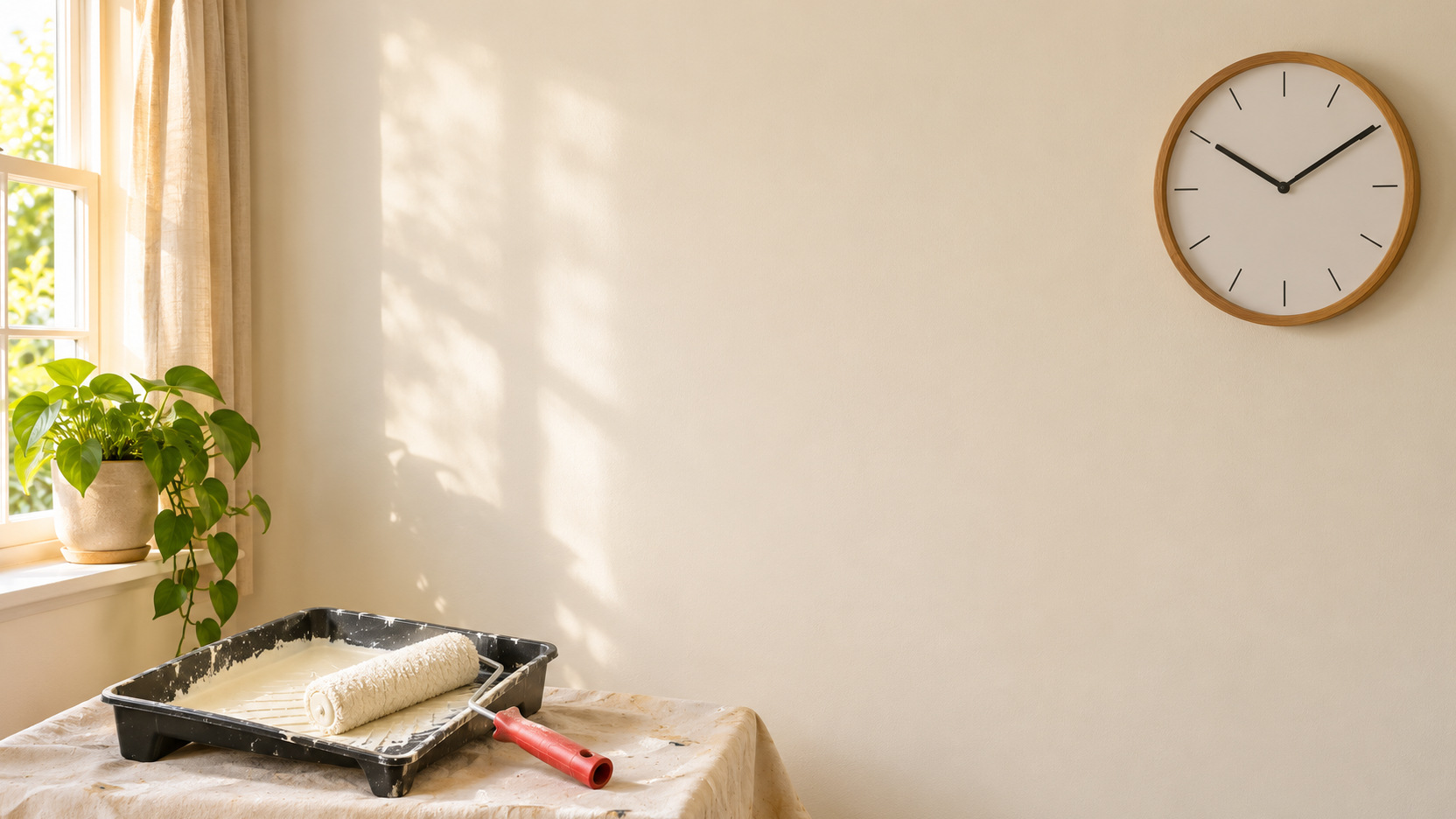
Emulsion paint drying time depends on the paint, the room temperature, the humidity and the ventilation, so there is no single time that suits every job. The tin will give guidance for touch dry and for recoat, and that guidance is the best place to start. Rushing the recoat is one of the most common reasons a paint job fails.
Touch dry, recoat and fully dry
Touch dry means the surface feels dry when you touch it lightly, but the paint underneath is still soft. It is not ready to recoat, and it is not ready to be wiped or knocked. Recoat time is the time the maker advises you to wait before you apply the next coat, so the first coat has dried enough to take the second without marking or peeling.
Fully dry, or cured, means the paint has hardened properly and can be used normally. That takes longer than the recoat time, often a day or more, and it depends on the room. A wall that feels dry may still be soft underneath, so give it time before you put furniture back against it or wipe it hard.
What affects drying time
Warmth speeds drying, because the water in the emulsion evaporates faster in a warm room. Cold slows it, and a room that is very cold can leave the paint soft and patchy. Humidity slows drying too, because the air is already full of moisture and cannot take more from the paint. A damp day or a steamy bathroom will slow drying noticeably. A well chosen emulsion for interior walls will dry evenly when the room is warm and aired.
Ventilation helps, because moving air carries the moisture away from the paint. Open a window a little, or use a fan to move air through the room, but do not create a strong draught that blows dust onto the wet paint. Thick coats dry slower than thin coats, and a coat applied over a damp wall will dry slower than one applied over a dry wall.
How to judge whether paint is dry
Touch the paint lightly in a hidden area, like behind a door or low on the wall. If it feels cool or tacky, it is not dry yet. If it feels dry and smooth, and the time on the tin has passed, it is probably ready to recoat. Look at the paint as well. Wet paint looks darker and shinier than dry paint, so a wall that still looks patchy or dark in places is not dry yet.
Do not test the paint by pressing hard or by wiping it, because that will mark a coat that is still soft. A light touch in a hidden spot is enough. If you are unsure, wait longer. A little extra drying time is far cheaper than a recoat that peels or marks the first coat.
Dry to the touch is not dry enough to recoat. Wait for the time on the tin.
Recoating too soon
Recoating too soon is a common mistake, and it shows in the finish. The roller can pull the first coat off the wall, leaving bare patches or a rough texture. The second coat can also trap moisture in the first coat, which can lead to blistering or peeling later. The wall may look fine at first, then show problems as it dries.
If you have recoated too soon and the finish looks rough, let the wall dry fully, then sand it lightly and apply another coat once it is dry. Do not try to fix it while the paint is still wet, because that will only make it worse. Patience is the best fix for a recoat that was too soon.
Drying in a cold or damp room
In a cold room, warm the room gently before you paint, and keep it warm while the paint dries. Do not use strong direct heat, which can skin the surface while the paint underneath stays soft. Open a window a little for air, and give the paint extra time. In a damp room, use a dehumidifier if you have one, or wait for a drier day.
A bathroom or kitchen will dry slower than a bedroom, because of the steam and humidity. Give those rooms extra time, and do not use the shower or cook a big meal until the paint has hardened. The guide to emulsion for bathrooms explains why patience matters even more in a steamy room.
When the paint is fully hard
A wall painted with emulsion may feel dry in a few hours, but it will not be fully hard for a day or more. That matters when you put furniture back, hang pictures or wipe the wall. A chair pushed against a wall that is still soft will leave a mark, and a wipe on a wall that is still soft can leave a shiny patch.
Give the paint a full day before you use the room normally, and longer in a cold or damp room. Keep a little of the paint for touch ups, and deal with any marks early, once the paint has hardened. The guide to painting a wall with emulsion covers the application that gives the paint the best chance to dry well.
A simple drying checklist
Before you paint, check the room temperature, the humidity and the ventilation. Read the tin for the touch dry and recoat times, and plan the job so you have enough time for both coats with proper drying in between. Do not start a second coat late in the evening if the room will cool overnight, because the paint will dry slowly and may stay soft.
After painting, let the room dry with a little air flow, and check the paint in a hidden spot before you recoat. If it feels dry and the time on the tin has passed, go ahead. If it feels tacky or looks patchy, wait longer. A little patience at this stage will show in the finish for years.
More guides on this topic