Home / Emulsion and Interior Paint / Emulsion Paint for Bathrooms: What Works and What Does Not
Emulsion and Interior Paint
Emulsion Paint for Bathrooms: What Works and What Does Not
Short Answer
Use a moisture resistant bathroom emulsion in soft sheen or satin. Prepare the walls, treat any mould first, and keep the room ventilated. Ordinary matt emulsion will not last in a steamy bathroom.
At a Glance
- Works: moisture resistant emulsion in soft sheen or satin
- Fails: ordinary flat matt on walls near a shower
- Ceiling: needs the same moisture resistant paint
- Ventilation: a fan matters more than any paint
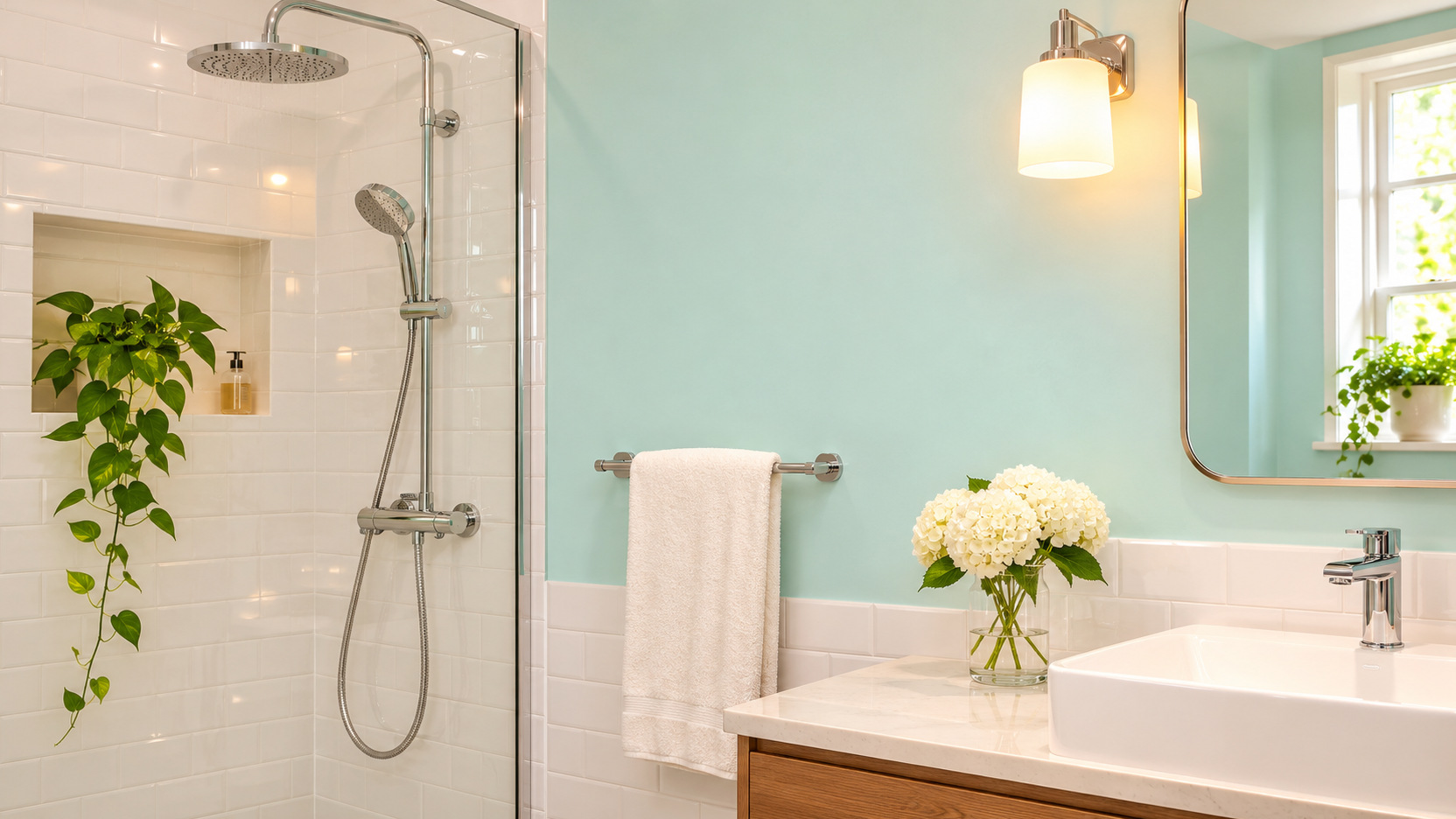
Emulsion paint for bathrooms needs to be moisture resistant and washable, in a soft sheen or satin finish, because ordinary matt emulsion soaks up steam, marks and feeds mould. A bathroom swings between warm and steamy and cold and damp through the day, and that cycle is hard on paint. A paint made for damp rooms will keep the room looking fresh for far longer than a general emulsion.
Why ordinary emulsion fails in a bathroom
A bathroom is the hardest room in the house for paint. Steam from a shower soaks into the paint film and into the plaster behind it. Ordinary matt emulsion is porous, so it absorbs that moisture, which can leave tide marks, soften the surface and give mould a place to grow. The corners, the wall above a bath and the ceiling above a shower take the worst of it.
Splashes add to the problem. Toothpaste, soap and shampoo land on the wall by the basin and bath, and a paint that cannot be wiped will stain. A moisture resistant emulsion forms a tighter film that sheds water and stands up to gentle wiping, so the room stays cleaner between repaints.
What to look for on the tin
Look for the words moisture resistant and mould resistant on the tin, and check whether the paint is made for walls and ceilings in a bathroom. A paint sold as bathroom paint is usually a moisture resistant emulsion with added protection against mould, and it is the simplest choice for a small bathroom with a shower and no window.
Check the finish as well. A soft sheen or satin finish will shed water better than a flat matt, and it will wipe clean more easily. A paint that is both moisture resistant and washable will cope with the daily life of a bathroom far better than a general emulsion. The overview of best emulsion paint explains the finishes in more detail.
Dealing with mould before you paint
Painting over mould is a waste of time. The mould will show through and keep growing under the new paint. Wash the affected area with a mould remover or a dilute bleach solution made for the job, following the safety advice on the product. Let the wall dry fully, and find why the mould grew there in the first place.
Most bathroom mould comes from poor ventilation or a cold spot where steam condenses. Run the extractor fan during and after a shower, open a window when you can, and keep the room warm enough that walls do not stay cold and wet. A stain blocking primer can cover a cleaned stain, but it will not stop mould returning if the room stays damp.
Paint cannot fix a bathroom that stays damp. Fix the damp first.
Preparing bathroom walls for emulsion
Wash the walls with sugar soap to remove soap film and grease, then rinse and let them dry. Fill cracks and holes, sand the filler smooth, and prime bare plaster with a mist coat or a primer the paint maker advises. Bare plaster drinks paint unevenly, so a mist coat evens out the finish and helps the topcoats stick.
Check for flaking paint and loose filler, and scrape back anything that is not sound. If the old paint is glossy, sand it lightly to give the new paint a key. Take your time here, because a bathroom repaint that fails usually fails at the preparation stage, not at the colour stage.
Painting the walls and ceiling
Use the same moisture resistant paint on the ceiling as on the walls, because steam rises straight to the ceiling. A flat matt on a bathroom ceiling will mark and can peel in patches above the shower. A soft sheen or satin finish on the ceiling is easier to wipe and stands up to condensation far better.
Keep paint above the tile line and away from direct jets of water, because paint is not a substitute for tiles or a proper splash zone. Where tiles meet paint, a sound sealant line matters more than the paint itself, because water creeping behind the paint will lift it whatever the finish. Apply the paint in thin coats, and let each coat dry fully before the next.
Keeping bathroom emulsion in good order
After painting, give the room time to dry and harden before you use the shower. The tin will guide you on drying, and a little extra patience pays off in a bathroom, where steam arrives soon after. Wipe splashes with a soft cloth and warm water, and avoid abrasive cleaners that wear the sheen away in patches.
Keep the fan running for a while after a bath or shower, and wipe condensation from the walls and ceiling when it forms. Small habits like these keep mould at bay and stretch the life of the paint by years. If mould does return in one corner, treat it early and check the ventilation before it spreads. For a kitchen, where steam and grease are also a daily fact, the guide to emulsion for kitchens follows the same moisture resistant thinking.
When emulsion is not enough
Emulsion, even a moisture resistant one, is not the right paint for the inside of a shower, where water sits on the surface all day, or for a wall that is constantly wet. Those areas need tiles or a proper waterproof finish. Emulsion is for the walls and ceiling of a bathroom that is ventilated and kept dry between showers.
If the bathroom has no fan and no window, no paint will last long, however good it is. Fix the ventilation first, then paint. A fan that works, a window that opens, and a moisture resistant emulsion together will keep a bathroom looking fresh. Any one of them on its own will not.
More guides on this topic