Home / Emulsion and Interior Paint / Best Emulsion Paint in the UK
Emulsion and Interior Paint
Best Emulsion Paint in the UK
Short Answer
Use a quality vinyl emulsion made for interior walls, in matt for most rooms and soft sheen where walls are wiped often. Prepare the wall, apply two coats, and keep a little paint for touch ups. A good emulsion is worth the extra cost.
At a Glance
- Best all round: vinyl matt for living rooms and bedrooms
- Busy rooms: soft sheen or satin for kitchens and hallways
- New plaster: mist coat first, then two full coats
- White: a good white emulsion covers better and stays brighter
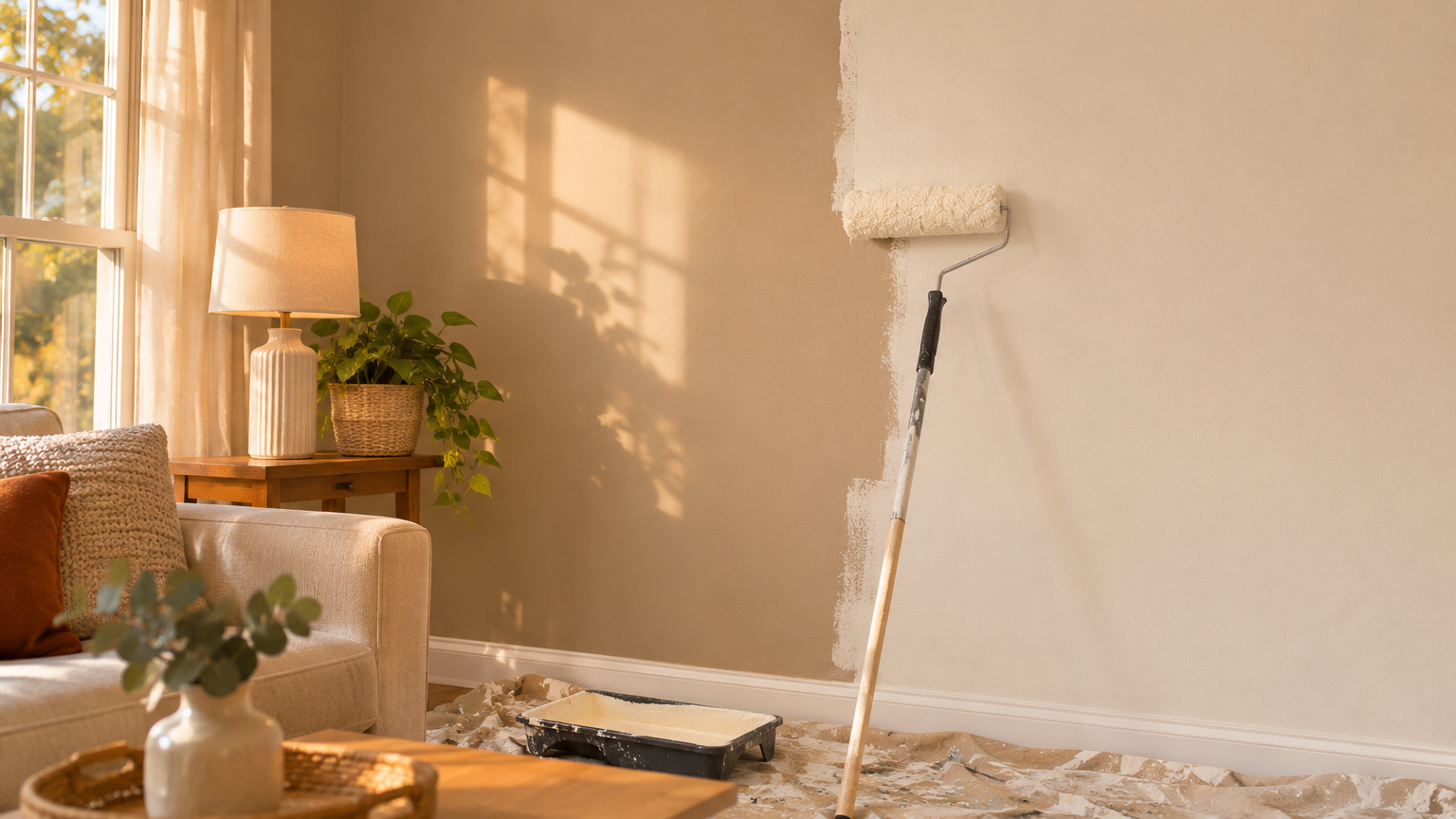
The best emulsion paint in the UK is a good quality vinyl emulsion in the finish your room needs, matt for calm rooms and soft sheen for busy ones, applied to a clean, sound wall. Emulsion is the paint most homes use on most walls, and the difference between a good one and a cheap one shows in coverage, colour and how long the finish lasts.
What emulsion paint is
Emulsion is a water based paint made for interior walls and ceilings. It dries fast, smells far less than oil based paint, and brushes and rollers wash out in water. It comes in a range of finishes, from flat matt to silk, and in almost any colour. Most of the paint on the walls of a British home is emulsion, and most rooms need nothing else.
Emulsion is made for large, flat areas. It rolls on evenly, covers well, and gives a consistent colour across a wall. It is not made for woodwork, metal or a surface that is touched all day, though a washable emulsion will cope with light wiping. For woodwork, use a trim paint made for the job, as the guide to choosing the right emulsion explains in more detail.
Vinyl matt, silk and soft sheen
Vinyl matt is the most popular emulsion finish, with a flat look that hides bumps and gives a calm colour. It suits living rooms, bedrooms and dining rooms, and a good vinyl matt wipes better than a basic matt. Silk has a noticeable sheen, wipes easily and shows every flaw, so it suits a smooth wall in a busy room. Soft sheen sits between the two, with a low shine that wipes well without showing quite so much.
The finish you choose should match the room and the wall. A rough or repaired wall will look better in matt, while a smooth wall in a hallway will benefit from a soft sheen. If you are unsure, a vinyl matt is the safe choice for most rooms, and a soft sheen is the safe choice for a room that will be wiped often.
What makes a good emulsion
A good emulsion covers well in two coats, gives an even colour with no patchy areas, and forms a film that does not mark at the first touch. It should roll on smoothly without splattering too much, and it should dry to a consistent finish across the whole wall. A cheap emulsion can need extra coats, which wipes out any saving, and it may mark when you wipe it.
Check the tin for the finish, the room it is made for, and whether it is washable or moisture resistant. A paint made for kitchens and bathrooms will cope with steam and splashes better than a general emulsion. A paint made for ceilings will be thicker and slower to dry, which helps on a ceiling but not on a wall. The guide to white emulsion paints covers the whites that cover best.
Choosing emulsion for each room
For a living room or a bedroom, a vinyl matt in a colour you like is usually the best choice. It gives a calm look, hides small flaws, and wipes gently when it marks. For a hallway, a vinyl matt or a soft sheen will cope better with scuffs from bags and coats. For a kitchen or a bathroom, a moisture resistant emulsion in soft sheen or satin will cope with steam and splashes.
For a ceiling, use a matt emulsion made for ceilings, not a wall emulsion, because the ceiling paint is made to dry without flashing. For a child's bedroom, a washable emulsion will save you a repaint, because the walls can be wiped clean. Match the paint to the room, not just to the colour chart.
A good emulsion is the paint you do not notice. A bad one is the paint you notice every day.
Preparing walls for emulsion
Wash the walls with sugar soap to remove dust, grease and nicotine, then rinse and let them dry. Fill holes and cracks, let the filler set, and sand it smooth. Prime bare plaster with a mist coat, which is a thinned coat of emulsion that soaks in and seals the surface, so the topcoat goes on evenly. Prime filled areas too, so the topcoat does not flash.
Check for flaking paint and loose filler, and scrape back anything that is not sound. Paint grips only as well as the surface beneath it. If the old paint is glossy, sand it lightly to give the new emulsion a key. A little time on preparation will show in the finish for years.
Applying emulsion well
Use a roller for the main wall and a brush for cutting in around the ceiling, skirting and corners. Load the roller well, work in sections, and keep a wet edge so each new section blends into the last without a dry line. Cut in one wall at a time and roll it while the cut in edge is still wet.
Work from the top of the wall down, and finish each section with light, even strokes in the same direction. Let the first coat dry fully before you apply the second, and judge the colour once it is dry, because wet emulsion always looks darker. Two coats over a sound surface usually give an even, lasting finish.
White emulsion and colours
White emulsion is the most used colour, and it is worth buying a good one. A good white covers better, stays brighter and does not look grey in a dark room. A cheap white can need extra coats and may look patchy, especially over a dark colour. If you are painting over a dark wall, a primer or an extra coat may be needed, whatever the paint.
Coloured emulsion should be bought from the same batch for the whole room, because colour can vary slightly between tins. Stir the paint well before you start, and test the colour on the wall and look at it through the day, because the light changes how it reads. A colour that looks calm at noon can look cold under evening lights.
Keeping emulsion walls looking good
Dust emulsion walls regularly and wipe marks with a soft cloth and warm soapy water, then dry the wall after. Avoid scouring pads and strong cleaners, which can wear the finish and leave a shiny patch. Deal with marks early, because a fresh scuff wipes off more easily than one that has been left for weeks.
Keep a little of the emulsion labelled with the room and the colour for touch ups. A small touch up with a brush, feathered out at the edges, will blend in well on a matt wall. With gentle cleaning and the odd touch up, a good emulsion should stay fresh until the next time you redecorate. If you want to know how much paint to buy, the guide to how much emulsion you need will help you work it out.
More guides on this topic