Home / Best Paint for a Surface or Room / Best Paint for Radiators
Best Paint for a Surface or Room
Best Paint for Radiators
Short Answer
Use a paint sold for radiators, or a trim paint the maker lists for metal and radiators. Paint with the heating off and the radiator cool, over a clean, sanded and primed surface. Thin coats and proper drying give the best result.
At a Glance
- Best paint: radiator paint or heat resistant trim paint for metal
- Finish: satin or gloss, both wipe clean and resist yellowing
- Heating: off and cool before you paint, and off while it dries
- Prep: wash, sand lightly and prime bare metal spots
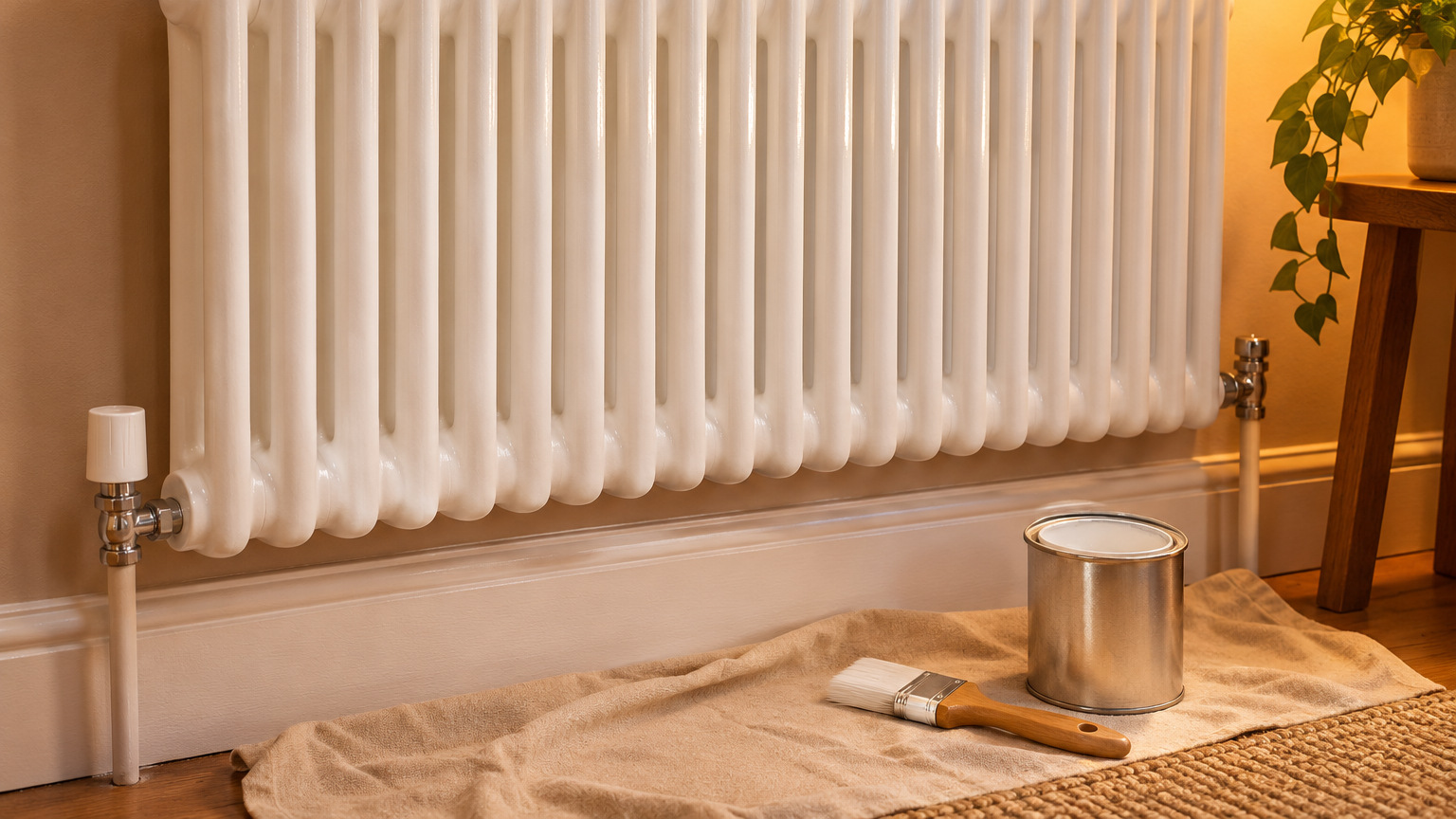
The best paint for radiators is a heat resistant radiator paint or a tough trim paint made for metal, in satin or gloss, applied to a clean and sound surface with the heating off and cool. Radiators heat up and cool down every day, so ordinary wall paint will crack, peel and yellow. A paint made for the job stays flexible and keeps its colour through the heat cycle.
Why radiators need a special paint
A radiator is not like a wall or a door. It heats to a high temperature, cools down, and heats again, day after day through the winter. That expansion and contraction puts stress on the paint film. A paint that is too brittle will crack along the edges, and a paint that cannot take heat will yellow or peel.
Radiators also sit near dust and the odd splash, and they are hard to clean behind. A smooth, hard finish wipes clean and does not hold dust the way a rough or chalky finish does. That is why a satin or gloss radiator paint is the usual choice, rather than a flat matt that would mark and hold grime.
Radiator paint or trim paint
A paint sold as radiator paint is made for the job and is the simplest choice. It is heat resistant, it resists yellowing, and it is made to stick to metal. Some are water based, some are solvent based, and the tin will say whether it needs a primer and what surfaces it suits. The same heat and steam thinking applies to painted kitchen cupboards near a cooker.
A tough trim paint can also work when the maker lists radiators among its uses. Check the tin before you buy, because not every trim paint is made for heat. If you are already painting the woodwork in the room, the same trim paint used on skirting may suit the radiator too, provided the maker says so.
Preparing a radiator
Turn the heating off and let the radiator cool completely before you start. Wash it with sugar soap to remove dust and grease, and rinse it well. Pay attention to the top and the back, where dust collects, and to the valves, where the odd drip can leave a mark. Let it dry fully.
Sand the surface lightly to dull any old gloss and give the new paint a key. If there is rust, sand it back to bright metal and prime the bare spots with a metal primer. If the old paint is flaking, scrape it back to a sound edge. Painting over rust or flaking paint will only lift the new coat with the old one.
Paint a cold radiator. Paint on a hot one dries too fast and will not last.
Painting the radiator
Use a small brush or a small roller made for radiators, which reaches between the panels and behind the front. Work in thin coats, starting at the top and working down, so drips land on areas you have not finished yet. Keep the brush strokes even and do not overload it, or paint will pool in the gaps and dry with a ridge.
Let the first coat dry as the tin directs, then apply a second thin coat if needed. Keep the heating off while the paint dries and hardens, and do not turn it on to speed things up. Heat will dry the surface too fast and leave the paint underneath soft, which shortens its life.
What about painting a radiator a colour
White is the usual choice for a radiator, because it blends with most rooms and reflects heat well. A radiator paint in white that resists yellowing will stay bright for years, even with daily heating. If you want a colour, choose a radiator paint in that shade, or a trim paint the maker lists for radiators in colour.
Dark colours on a radiator can look striking against a pale wall, but they show dust more, and they absorb more heat into the paint film. A mid tone is a good compromise if you want colour without a very dark finish. Test the colour on a hidden area first, and judge it once the radiator is warm, because heat can change how a colour reads.
Common mistakes to avoid
The most common mistake is painting with the heating on. The paint dries on contact, leaves brush marks, and does not bond properly. The second mistake is skipping the wash, because radiators collect a surprising amount of grease and dust, especially in a kitchen. Paint over that and it will peel.
Another mistake is painting over rust without treating it. Rust will keep growing under the paint and push it off in flakes. Sand it back, prime the bare metal, and only then apply the topcoat. Likewise, do not paint the valves shut. Mask them or paint around them carefully, so they can still be turned.
Keeping a painted radiator in good order
Dust the radiator regularly with a long duster or a vacuum brush, and wipe it with a soft cloth and warm soapy water when it marks. Avoid abrasive cleaners, which wear the finish. If a chip appears, touch it up early with the paint you kept, and prime any bare metal first so rust does not start.
Check the paint each autumn before the heating season starts. A small touch up then is far easier than a full repaint in the middle of winter, when you cannot leave the heating off for long. With the right paint and a little care, a radiator should stay smart for years. If the radiator is near a damp room, the advice on bathroom paint will help you judge the moisture it faces.
More guides on this topic