Home / Best Paint for a Surface or Room / Best Paint for Bathrooms
Best Paint for a Surface or Room
Best Paint for Bathrooms
Short Answer
Use a bathroom paint or a washable, moisture resistant emulsion in a soft sheen or satin finish. Prepare the walls properly, treat any mould first, and keep the room ventilated. Paint alone will not fix a bathroom that stays damp.
At a Glance
- Best choice: moisture resistant bathroom emulsion, satin or soft sheen
- Ceilings matter: steam rises, so the ceiling needs the same care
- Ventilation: an extractor fan does more than any paint can
- Avoid: flat matt emulsion on walls near a shower or bath
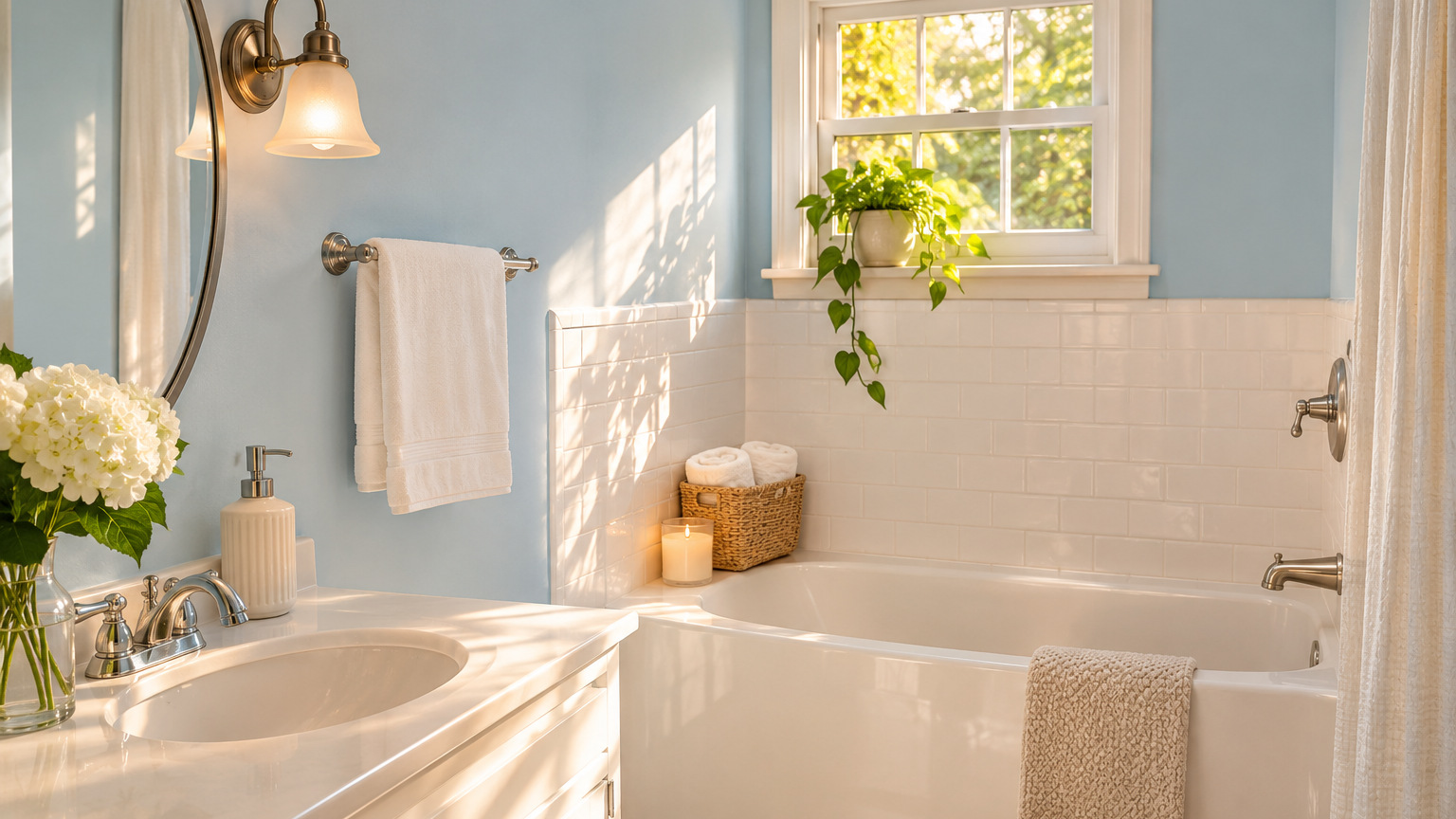
The best paint for bathrooms is a moisture resistant emulsion or specialist bathroom paint with a washable finish, used on walls that are clean, dry and sound. Steam from a shower soaks into ordinary matt paint, leaves marks and feeds mould in corners. A paint made for damp rooms, with good ventilation and proper preparation, keeps the room looking fresh for far longer.
What makes a bathroom hard on paint
A bathroom swings between warm and steamy and cold and damp several times a day. That cycle pushes moisture into the paint film and into the plaster behind it. Ordinary matt emulsion soaks up that moisture, which can leave tide marks, soften the surface and give mould a place to grow. The corners, the wall above a bath and the ceiling above a shower take the worst of it.
Splashes add to the problem. Toothpaste, soap and shampoo land on the wall by the basin and bath, and a paint that cannot be wiped will stain. A bathroom paint is made with that in mind. It forms a tighter film that sheds water and stands up to gentle wiping, so the room stays cleaner between repaints.
Bathroom paint or a washable emulsion
A paint sold as bathroom paint is usually a moisture resistant emulsion with added protection against mould. It is the simplest choice for a bathroom, especially a small one with a shower and no window. Look for the words moisture resistant and mould resistant on the tin, and check whether it is made for walls and ceilings.
A good quality washable emulsion in soft sheen can also work in a larger bathroom with a window and a working fan. The sheen helps water run off and makes wiping easier. What matters is the finish and the condition of the wall, not the word on the front of the tin alone. If you want the full detail on sheen, a hard wearing satin for cupboards uses the same idea of a tougher film on a surface that gets touched and wiped.
Dealing with mould before you paint
Painting over mould is a waste of time. The mould will show through and keep growing under the new paint. Wash the affected area with a mould remover or a dilute bleach solution made for the job, following the safety advice on the product. Let the wall dry fully, and find why the mould grew there in the first place.
Most bathroom mould comes from poor ventilation or a cold spot where steam condenses. Run the extractor fan during and after a shower, open a window when you can, and keep the room warm enough that walls do not stay cold and wet. A stain blocking primer can cover a cleaned stain, but it will not stop mould returning if the room stays damp.
No paint can do the job of a fan and a dry wall.
Preparing bathroom walls
Wash the walls with sugar soap to remove soap film and grease, then rinse and let them dry. Fill cracks and holes, sand the filler smooth, and prime bare plaster with a thinned first coat or a primer the paint maker advises. Bare plaster drinks paint unevenly, so a mist coat or primer evens out the finish and helps the topcoats stick.
Check for flaking paint and loose filler, and scrape back anything that is not sound. Paint grips only as well as the surface beneath it. If the old paint is glossy, sand it lightly to give the new paint a key. Take your time here, because a bathroom repaint that fails usually fails at the preparation stage, not at the colour stage.
Painting the ceiling and the shower area
The ceiling takes the most steam, so use the same bathroom paint there as on the walls. A flat matt on a bathroom ceiling will mark and can peel in patches above the shower. A soft sheen or satin finish on the ceiling is easier to wipe and stands up to condensation far better.
Around the bath and shower, paint is not a substitute for tiles or a proper splash zone. Keep paint above the tile line and away from direct jets of water. Where tiles meet paint, a sound sealant line matters more than the paint itself, because water creeping behind the paint will lift it whatever the finish. If the wall itself is tiled, see the advice on painting tiles before you decide whether paint is the right answer there.
Choosing a colour for a small bathroom
Pale colours make a small bathroom feel larger and brighter, and they show steam marks less than very dark shades. White, pale grey and soft blue are popular for good reason, and they pair well with white suites and chrome fittings. A soft sheen in a pale colour still reads as calm rather than shiny.
Darker colours can work in a larger bathroom with good light, and they hide splashes well, but they show limescale marks near the shower more clearly. Test a colour on the wall and watch it through a steamy shower and a cold morning. A colour that looks fine when dry can look patchy while the room is still damp, so judge it once the room has dried out.
How to keep the paint in good order
After painting, give the room time to dry and harden before you use the shower. The tin will guide you on drying, and a little extra patience pays off in a bathroom, where steam arrives soon after. Wipe splashes with a soft cloth and warm water, and avoid abrasive cleaners that wear the sheen away in patches.
Keep the fan running for a while after a bath or shower, and wipe condensation from the walls and ceiling when it forms. Small habits like these keep mould at bay and stretch the life of the paint by years. If mould does return in one corner, treat it early and check the ventilation before it spreads, rather than waiting for a full repaint.
More guides on this topic