Home / Best Paint for a Surface or Room / Best Paint for Skirting Boards
Best Paint for a Surface or Room
Best Paint for Skirting Boards
Short Answer
Use a satin or eggshell paint made for woodwork and trim. Prepare the boards well, fill and sand them, and apply two thin coats. The finish will stand up to daily knocks far better than emulsion.
At a Glance
- Best finish: satin or eggshell trim paint, not wall emulsion
- Prep: wash, fill gaps and dents, sand smooth before painting
- Colour: white or off white is usual, and it shows scuffs least when tough
- Tool: a good brush gives control along the top edge
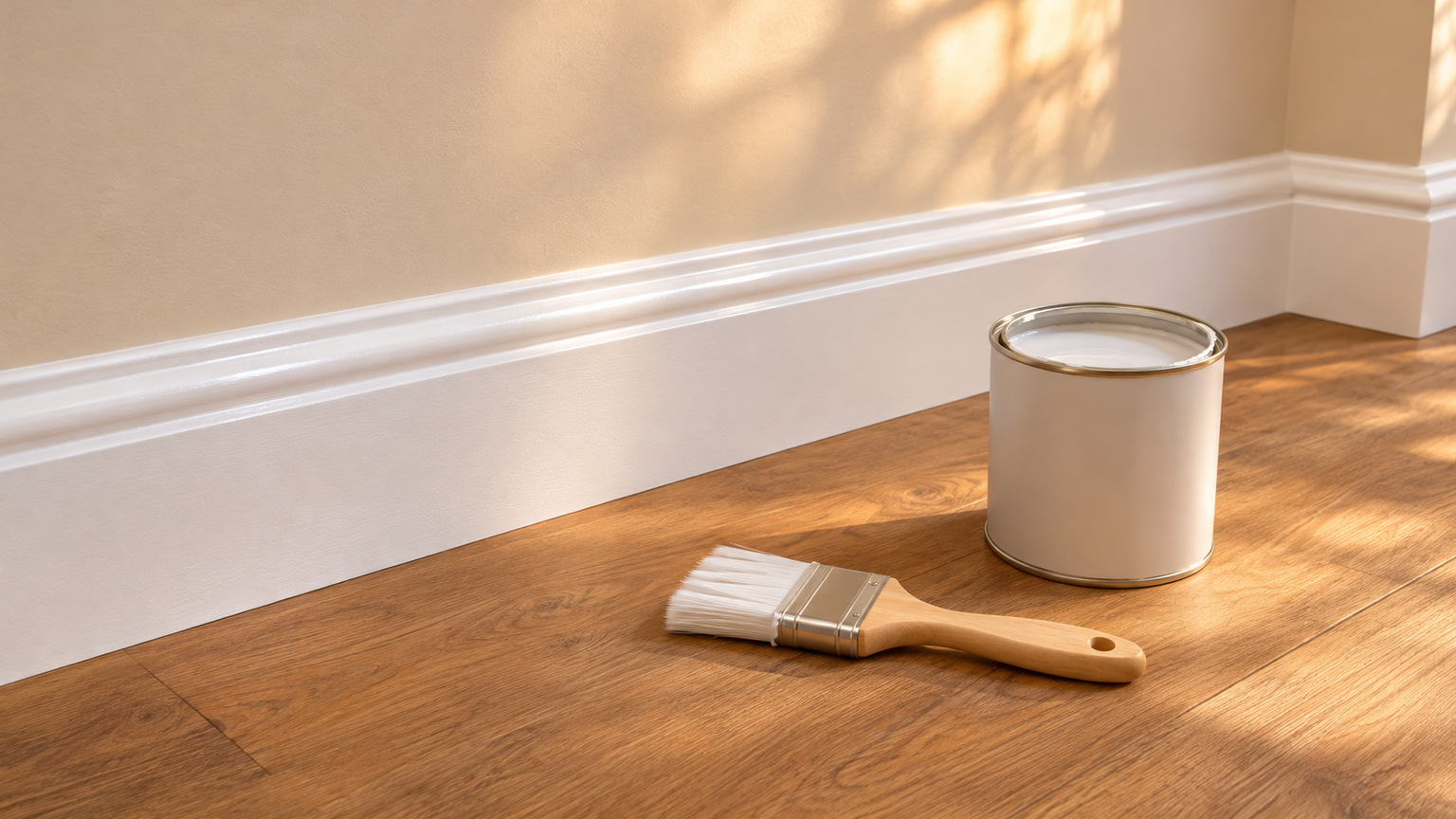
The best paint for skirting boards is a tough satin or eggshell trim paint that resists scuffs and wipes clean, applied to boards that are clean, filled and sanded. Skirting takes knocks from shoes, toys, furniture and the hoover every week, so a soft wall paint will mark and wear through fast. A hard trim finish keeps the line around the room looking sharp for years.
Why skirting needs trim paint
Skirting boards sit at floor level, where everything hits them. Feet catch them, chairs push back against them, and the hoover bumps along them each time you clean. Wall emulsion is made for a surface nobody touches, so it scuffs, marks and wears through on skirting in a matter of months. Trim paint forms a harder film that can take that contact.
There is also the cleaning to think about. Skirting collects dust and the odd splash from mopping, and it needs a wipe now and then. A washable trim finish lets you clean it without leaving a dull patch or rubbing the paint away. That matters most in hallways and family rooms, where the boards get the hardest use in the house.
Satin, eggshell or gloss on skirting
Satin is the most popular choice for skirting now. It has a soft sheen that looks clean and modern, it wipes well, and it does not show brush marks as harshly as a full gloss. It suits most homes and most woodwork, and it pairs well with satin doors and architraves for a consistent look through a room. The same hard wearing approach suits painted kitchen cupboards that are touched every day.
Eggshell is flatter and softer, and it hides small dents in old boards better than satin. It suits older houses and rooms where you want a calm, painted wood look rather than a shine. Full gloss is the toughest of the three and the easiest to wipe, but it shows every bump and brush mark, so the boards need to be in very good order first. A satin finish on interior doors pairs neatly with either satin or eggshell skirting in the same room.
Preparing old skirting boards
Start by washing the boards with sugar soap to remove dust, grease and old polish, then rinse and let them dry. Check for dents, chips and gaps where the board meets the wall or the floor. Fill dents with a wood filler, let it set, and sand it smooth. Fill the gap along the top edge with a flexible decorator caulk, and smooth it with a damp finger before it skins over.
Sand the whole board lightly to dull any old gloss and give the new paint a key. Wipe away the dust with a damp cloth. If the boards are bare wood, prime them first. If they are already painted and sound, a light sand is usually enough, with spot primer on any bare or filled areas. Do not paint over flaking paint, because the new coat will peel with the old one beneath it.
Skirting shows every shortcut, because you look at it from above at close range.
Cutting in and painting neatly
Protect the floor with a dust sheet or masking tape along the bottom edge, and tape the wall just above the board if you are worried about a wobbly line. Use a brush about two inches wide, load it well, and paint along the board in steady strokes. Work the paint into the top edge first, then fill in the face of the board.
Keep a wet edge and do not go back over paint that has started to dry, or you will leave brush marks. Two thin coats look far better than one thick one, which can drip onto the floor and dry with a ridge. Let the first coat dry as the tin directs, sand very lightly if it feels rough, and wipe the dust away before the second coat.
Painting skirting in a room with carpet
Carpet makes the job harder, but it is still doable with care. Push a wide filling knife or a strip of stiff card between the board and the carpet to shield the fibres while you paint the bottom edge. Move the shield along as you go, and wipe it clean often so paint does not transfer back onto the carpet.
Alternatively, lift the carpet edge slightly if it is loose, or paint with a smaller brush and a light hand along the bottom. The key is patience at the bottom edge, because a drip on carpet is hard to remove. A dust sheet over the carpet near the wall catches the odd drop and saves a lot of worry.
Matching skirting to doors and walls
Most people paint skirting the same colour and finish as the doors and architraves, which gives a room a tidy, joined up look. White and off white are the usual choices, and they work with any wall colour. If your walls are pale, white skirting gives a crisp edge. If your walls are dark, the same white skirting frames the colour well.
You can also paint skirting a colour that matches the wall, which makes a small room feel taller because the line around the floor disappears. That works best with a satin finish in the wall colour, so the boards still wipe clean. Whatever you choose, keep the finish consistent across the room, because mixed sheens on woodwork look accidental rather than planned.
Keeping skirting looking good
Once painted, dust skirting regularly and wipe it with a soft cloth and warm soapy water when it marks. Avoid scouring pads, which dull the finish and wear through the paint at the corners. Touch up chips promptly with a small brush and the paint you kept from the job, so a small knock does not turn into a bare patch.
Check the caulk line along the top edge now and then, and renew it if it cracks or pulls away. A sound caulk line keeps dust and draughts out and keeps the paint edge looking sharp. With a tough trim paint and a little care, skirting should stay smart until the next time you redecorate the room. For walls that meet the skirting, a sound emulsion on plaster gives the same even, clean finish above the boards.
More guides on this topic