Home / Exterior Paint / Best Paint for Exterior Houses
Exterior Paint
Best Paint for Exterior Houses
Short Answer
Use masonry paint on the walls, exterior trim paint on the woodwork, and metal paint on metal. Prepare each surface, prime bare areas, and paint in dry weather. A house painted surface by surface will last far longer than one painted with a single paint.
At a Glance
- Walls: breathable masonry paint made for brick or render
- Woodwork: exterior trim paint in satin or gloss
- Metal: exterior metal paint over a metal primer
- Colour: test it large, in daylight, before you commit
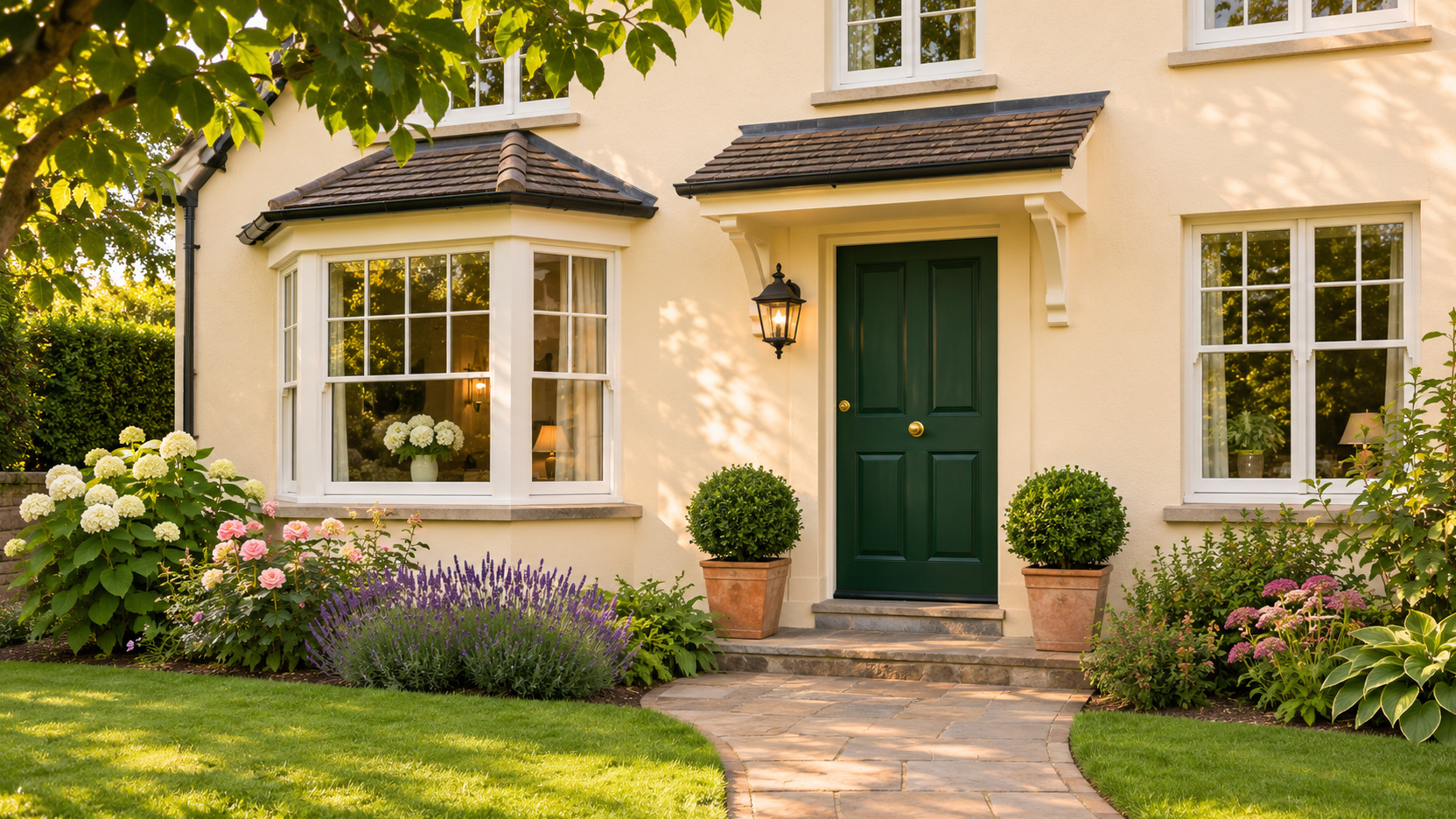
The best paint for exterior houses is a masonry paint for the walls, a weatherproof trim paint for the woodwork, and a metal paint for any metal, each chosen for the surface it will protect. There is no single paint that suits a whole house, because walls, wood and metal face the weather differently and need different paints.
Walls first: masonry paint
The walls are the largest area of a house, and they need a masonry paint made for brick, render or pebbledash. The paint should be breathable, so moisture can escape from the wall, and weatherproof, so rain does not soak in. A smooth masonry paint gives a clean, even look, while a textured paint hides small bumps and repairs.
Check whether the wall is brick or render, and choose a paint made for it. A silicone based masonry paint sheds water very well and suits a wall that faces driving rain. The guide to painting exterior walls covers the choice and application in detail.
Woodwork: windows, doors and fascias
Windows, doors, fascias and soffits need an exterior trim paint that is hard, smooth and weatherproof. A satin or gloss finish suits most woodwork, with satin hiding small bumps better and gloss giving a brighter, harder finish. The paint must flex with the wood as it moves with the seasons, and it must resist sun, rain and frost.
Prepare the woodwork as you would for any exterior wood: clean it, sand it lightly, fill dents and prime bare wood. Paint in dry weather, in thin coats, and let each coat dry fully. The guide to exterior woodwork paint covers this job in detail, and the guide to exterior wood paint explains the choice of paint, stain or treatment.
Metal: gates, railings and gutters
Metal around a house, like a gate, a railing or a gutter, needs a metal paint over a metal primer, after rust has been removed. Paint over rust and the rust will keep growing under the paint and push it off. A satin or gloss metal paint gives a hard, wipeable finish that resists rain and sun, and it should be applied in thin coats in dry weather.
Check the gutters as well, because a leaking gutter will keep a wall damp and ruin new paint. Fix any leaks before you paint, and let the wall dry fully. The guide to painting exterior metal covers rust, primer and topcoats in full.
A house is not one surface. Paint it surface by surface, with the right paint for each.
Choosing a colour for the whole house
Colour is the most visible choice you will make, and it is worth testing properly. Paint a large test patch on the wall and look at it through the day, in sun and in shade, because a colour that looks right on a small tin can look very different across a whole house. Think about the roof, the windows, the door and the garden as well, so the colour suits the house as a whole.
Pale colours make a house look larger and brighter, and they show dirt more. Dark colours make a house look smaller and more solid, and they show fading more. A mid tone is often the safest choice, and it hides dirt and fading better than a very pale or very dark colour. If you are unsure, a soft white, a pale grey or a warm cream will suit most houses.
Planning the job
Plan the job surface by surface, starting with the walls, then the woodwork, then the metal. Check the weather forecast for a dry spell, and give yourself enough time for cleaning, repairing, priming and two coats on each surface. Do not try to paint the whole house in a single weekend, because the preparation alone will take longer than you expect.
Work from the top down, so drips land on areas you have not finished yet, and protect the ground, the plants and the windows with dust sheets and masking tape. A little planning at the start will save a lot of trouble later, and it will give you a better finish. The guide to how to paint a house exterior walks through the whole job step by step.
How often to repaint a house
A house exterior does not need repainting every year, but it does need checking every spring. Look for cracks, flaking paint, green algae and damp patches, and deal with them early. A wall that is checked and touched up regularly will last far longer than a wall that is left until the paint is failing across the whole house.
When you do repaint, clean the surfaces again and let them dry, then apply a fresh coat over the old one if it is sound. You do not always need to strip the old paint, provided it is not flaking. A regular coat every few years is far cheaper than repairing rotten wood or damp walls, and it keeps the house looking cared for.
What to check before you buy
Before you buy, check each surface and what paint it needs, and buy the right paint for each one. Check the colour, and test it on the wall if you can. Buy enough paint from the same batch for each surface, and stir it well before you start. Keep a little of each paint for touch ups, labelled with the surface and the colour.
Store leftover paint in a dry, frost free place with the lid on tight. A house painted with the right paints, over well prepared surfaces, in dry weather, should stay smart for years, and a fresh coat later will be far easier because the groundwork is already there.
More guides on this topic