Home / Exterior Paint / Painting Exterior Walls: A Complete Guide
Exterior Paint
Painting Exterior Walls: A Complete Guide
Short Answer
Use a masonry paint made for exterior walls. Clean and repair the wall, prime bare areas, and apply two coats in dry weather. Do not paint over damp, loose or dirty masonry.
At a Glance
- Paint: masonry paint made for exterior walls
- Prep: clean, repair cracks and prime bare render
- Weather: dry day, no rain due, mild temperature
- Coats: two coats over a sound surface
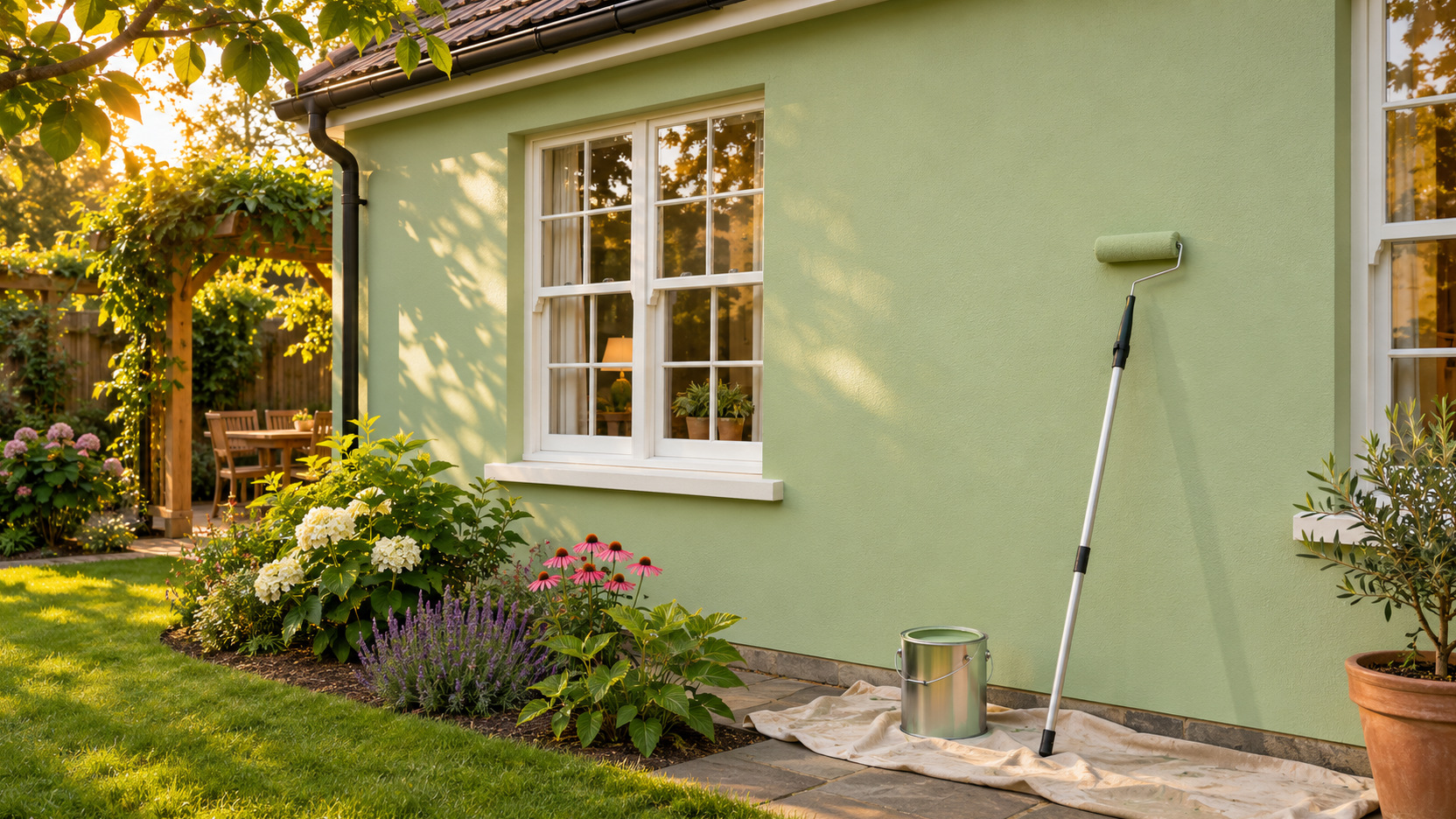
Painting exterior walls means cleaning the masonry, repairing cracks and loose render, priming bare areas, and applying a masonry paint in dry weather. An exterior wall faces rain, sun, frost and wind all year, so the paint must be weatherproof, flexible and able to let moisture out of the wall. A good masonry paint protects the wall, but only if the preparation is done properly.
What masonry paint does
Masonry paint is made for brick, render, pebbledash and concrete. It forms a weatherproof film that sheds rain, resists sun and frost, and lets moisture vapour out of the wall so the wall can breathe. That last point matters, because a paint that traps moisture in the wall can cause damp and peeling inside the house.
There are different types of masonry paint, including smooth, textured and silicone based paints that shed water very well. The tin will say what surfaces it suits and whether it is made for a particular type of render or brick. Read it before you buy, and choose a paint made for your wall, not just a paint that looks right on the shelf.
Checking the wall before you paint
Walk around the house and look at the walls in daylight. Check for cracks, loose render, flaking paint, green algae and damp patches. Tap the render to listen for hollow areas where it has blown, and look at the joints in the brickwork for gaps where water can get in. A wall that is in poor order needs repair before it needs paint.
Check the gutters and downpipes as well, because a leaking gutter will keep a wall damp and will ruin new paint. Fix any leaks, and let the wall dry fully before you paint. Painting over a damp wall traps moisture and leads to peeling, however good the paint is. The guide to exterior wood paint follows the same rule about dry, sound surfaces.
Cleaning and repairing the wall
Brush the wall down with a stiff brush to remove dirt, algae and loose paint. Wash it with a suitable cleaner or a pressure washer on a low setting, if the wall can take it, and let it dry fully. Fill cracks with a filler made for exterior masonry, let it set, and smooth it to match the wall. Repair loose render before you paint, because paint will not hold render that is already moving.
Prime bare render and filled areas with a primer or a thinned first coat as the paint maker advises, so the topcoat goes on evenly. If the wall was painted before and the old paint is sound, a wash and a light clean may be enough. If the old paint is flaking, scrape it back to a sound edge and feather the edge smooth.
A painted wall is only as good as the wall beneath the paint.
Choosing a masonry paint
Choose a masonry paint made for your wall type, in the colour and finish you want. Smooth masonry paint gives a clean, even look and suits most render and brick. Textured masonry paint hides small bumps and repairs, and it suits a rough render or pebbledash. A silicone based masonry paint sheds water very well and suits a wall that faces driving rain.
Check the colour in daylight on a test patch, because a colour that looks right on a small tin can look very different across a whole house. A pale colour will show dirt more, while a dark colour will show fading more. Think about the roof, the windows and the garden as well, so the colour suits the house as a whole.
Applying masonry paint
Use a large brush or a roller made for masonry, which has a long pile to reach into the texture of the wall. Work in sections, starting at the top and working down, so drips land on areas you have not finished yet. Keep a wet edge, so each new section blends into the last without a dry line. Apply the paint evenly and do not leave puddles in the texture.
Let the first coat dry as the maker directs before you apply the second. Two coats over a sound surface usually give an even colour and a good level of protection. Keep the paint out of strong direct sun while you work, so it does not dry too fast and leave marks, and do not paint if rain is due.
Weather and timing
Paint exterior walls on a dry day with no rain due, and a mild temperature so the paint can dry properly. Avoid painting in strong sun, in frost, or when the wall is damp from overnight rain. The best time is often late spring or early summer, when the days are long, dry and mild, and the wall has had time to dry out after winter.
Check the forecast for the day and the night after you paint, because rain overnight can wash fresh paint off a wall. If rain is due, wait for a better day. A little patience with the weather will give you a far better finish than a rushed job in the wrong conditions. The guide to exterior drying times and weather covers the timing in detail.
Keeping painted walls looking good
Check the walls each spring for cracks, flaking paint and green algae, and deal with them early. Wash the walls with a soft brush and warm soapy water when they look dirty, and avoid a pressure washer on a high setting, which can lift paint and force water into the wall. Touch up chips and cracks promptly, so water does not get in and lift more paint.
Keep gutters and downpipes clear, so water does not run down the wall and stain the paint. With a good masonry paint and a little care, an exterior wall should stay smart for years, and a fresh coat later will be far easier because the groundwork is already there. If the wall is brick rather than render, the guide to painting exterior brick covers that job in detail.
More guides on this topic