Home / Exterior Paint / Exterior Paint Drying Times and Best Weather to Paint In
Exterior Paint
Exterior Paint Drying Times and Best Weather to Paint In
Short Answer
Paint outside on a dry, mild day with no rain due, and follow the tin for touch dry and recoat times. Give the paint longer in cold or damp weather, and do not paint if rain, frost or strong sun is expected.
At a Glance
- Best weather: dry, mild, light breeze, no rain due
- Avoid: rain, frost, strong sun and very cold days
- Touch dry: the surface feels dry, but it is still soft
- Recoat: wait for the time on the tin before the next coat
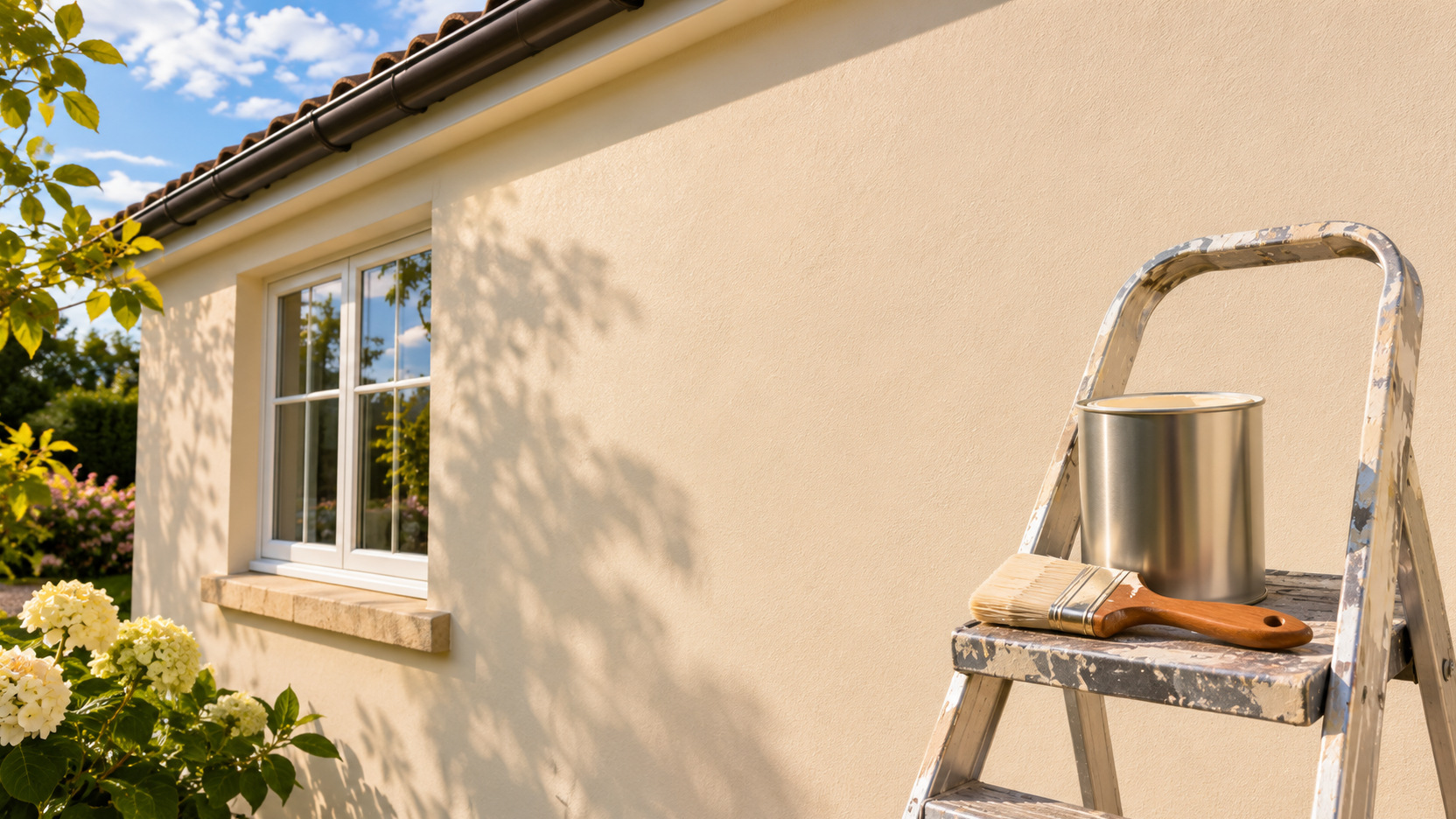
Exterior paint drying time depends on the paint, the temperature, the humidity, the wind and whether the sun is on the wall, so there is no single time that suits every job. A warm, dry day with a light breeze will dry paint far faster than a cold, damp day with no air, and rain can ruin a fresh coat in minutes.
Touch dry, recoat and fully dry outside
Touch dry means the surface feels dry when you touch it lightly, but the paint underneath is still soft. It is not ready to recoat, and it is not ready to be rained on. Recoat time is the time the maker advises you to wait before you apply the next coat, so the first coat has dried enough to take the second without marking or peeling.
Fully dry, or cured, means the paint has hardened properly and can take rain, sun and use normally. That takes longer than the recoat time, often a day or more, and it depends on the weather. A wall that feels dry may still be soft underneath, so give it time before you judge the finish or let rain fall on it.
The best weather for painting outside
The best weather is a dry day with a mild temperature, a light breeze and no rain due for the day and the night after. A temperature that is mild, not hot and not cold, lets the paint dry evenly without skinning over or staying soft. A light breeze helps the paint dry, by carrying moisture away from the surface, without blowing dust onto the wet paint.
Late spring and early summer are often the best seasons, when the days are long, dry and mild, and the walls have had time to dry out after winter. Early autumn can also be good, if the days are dry and mild, though the nights are colder and the paint will dry slower. Check the forecast for the day and the night after you paint, because rain overnight can wash fresh paint off a wall.
Weather to avoid
Avoid painting in rain, or when rain is due soon after you finish, because rain will wash fresh paint off a wall and leave a patchy, streaked finish. Avoid painting in frost, or when frost is due overnight, because the paint will not dry properly and may crack or peel. Avoid painting on a very cold day, because the paint will dry slowly and stay soft.
Avoid painting in strong direct sun as well, because the paint will dry too fast on the surface, leaving brush marks and a patchy finish, while the paint underneath stays soft. Paint a wall in shade if you can, or paint it in the morning or evening when the sun is not on it. A wall in strong sun is not a good place to paint, however dry the day is.
Rain can undo a day of painting in minutes. Check the forecast first.
How temperature and humidity affect drying
Warmth speeds drying, because the water or solvent in the paint evaporates faster in a warm room. Cold slows it, and a very cold day can leave the paint soft and patchy. Humidity slows drying too, because the air is already full of moisture and cannot take more from the paint. A damp day, or a day after rain, will slow drying noticeably, even if the sun is out.
Wind helps drying, by moving air across the surface and carrying moisture away, but a strong wind can blow dust and leaves onto wet paint, and it can dry the surface too fast. A light breeze is ideal. Thick coats dry slower than thin coats, and a coat applied over a damp wall will dry slower than one applied over a dry wall.
Planning around the weather
Plan the job around the forecast, not around a date on the calendar. Look for a dry spell of two or three days, so you have time for cleaning, priming and two coats with proper drying in between. Do not start a big wall late in the day if the temperature will drop overnight, because the paint will dry slowly and may stay soft.
Work on the shaded side of the house in the morning, and the sunny side in the afternoon when the sun has moved, so you are not painting in strong sun. Keep an eye on the sky while you work, and stop if rain is coming, rather than trying to finish a wall in the rain. A little patience with the weather will give you a far better finish than a rushed job in the wrong conditions. The guide to painting exterior walls covers the application that gives the paint the best chance to dry well.
What to do if rain catches fresh paint
If rain catches fresh paint, let the wall dry fully, then look at it in daylight. If the paint has washed off in patches, you will need to clean the wall, let it dry, and repaint those areas. If the paint has only a few streaks, a light sand and another coat may be enough. Do not try to fix it while the paint is still wet, because that will only make it worse.
If the paint has dried with a patchy finish, check whether it is sound and dry, then apply another coat in better weather. A fresh coat over a sound, dry surface will usually even out the finish. The guide to exterior wood paint follows the same rule about dry, sound surfaces and dry weather.
A simple weather checklist
Before you paint outside, check the forecast for the day and the night after, and look for a dry, mild day with a light breeze and no rain due. Check the wall is dry, by touching it and looking for damp patches, and check the temperature is mild, not hot and not cold. Plan to paint in shade where you can, and give each coat the time on the tin to dry before you recoat.
After painting, let the paint dry with a little air flow, and check it in a hidden spot before you recoat. If it feels dry and the time on the tin has passed, go ahead. If it feels tacky or looks patchy, wait longer. A little patience with the weather will show in the finish for years.
More guides on this topic