Home / Exterior Paint / Exterior Woodwork Paint: A Practical Guide
Exterior Paint
Exterior Woodwork Paint: A Practical Guide
Short Answer
Use an exterior trim paint made for woodwork outside. Prepare the timber well, prime bare wood, and apply two thin coats in dry weather. A satin finish hides small flaws better than gloss.
At a Glance
- Paint: exterior trim paint in satin or gloss
- Prep: clean, sand, fill and prime bare wood
- Weather: dry day, no rain due, mild temperature
- Coats: two thin coats over a sound primer
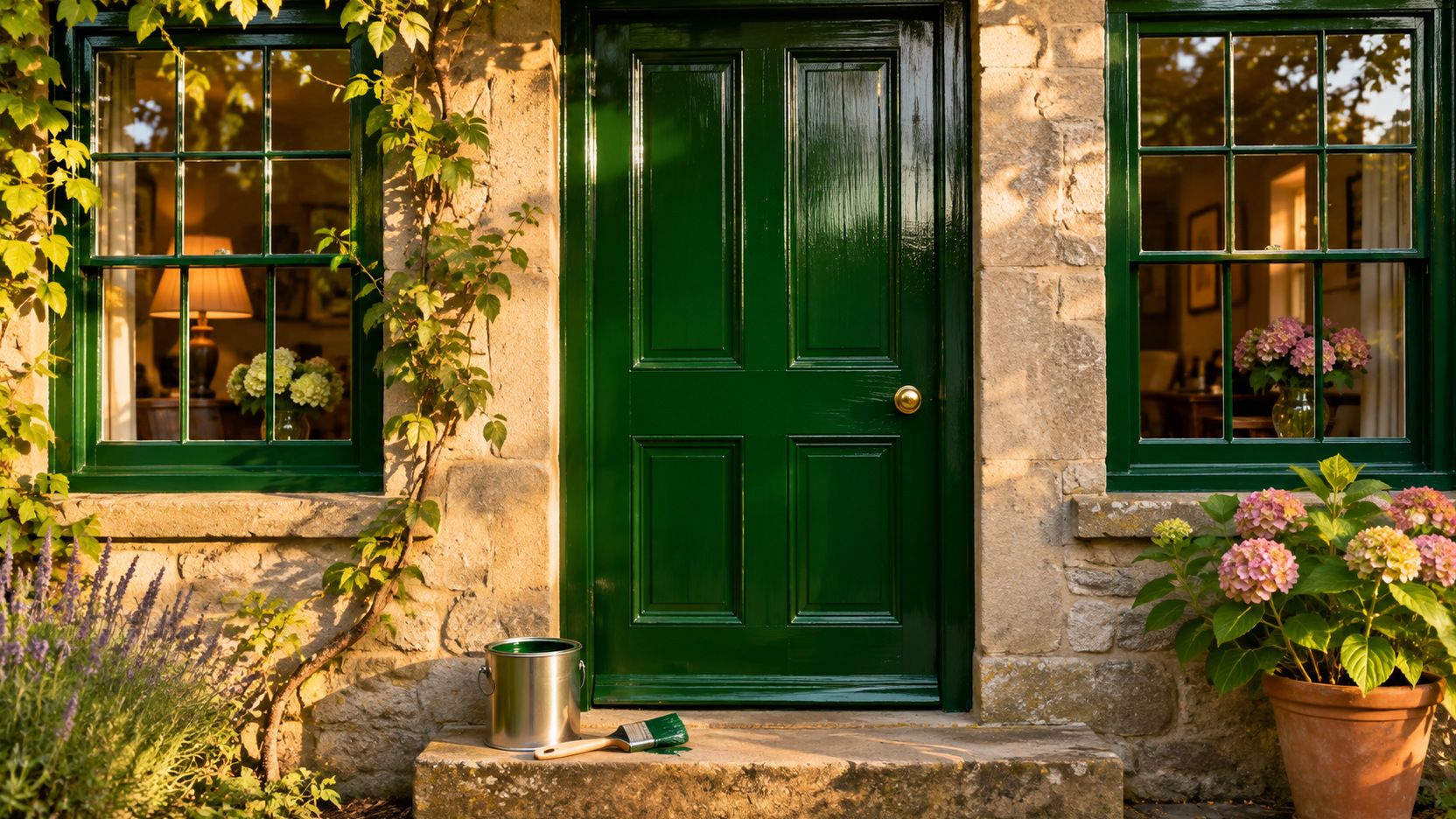
Exterior woodwork paint is a weatherproof trim paint made for windows, doors, fascias and other wood outside, in satin or gloss, applied to clean, dry and sound timber. Woodwork outside faces rain, sun, frost and wind, and it is opened, closed and touched every day, so it needs a paint that is hard, flexible and weatherproof.
What exterior woodwork needs
Exterior woodwork is the most used wood outside a house. A front door is opened and closed many times a day, a window is opened and shut, and a fascia sits in rain and sun all year. The paint must be hard enough to resist knocks and wiping, flexible enough to move with the wood as it expands and contracts, and weatherproof enough to shed rain and resist sun.
That is a lot to ask of a paint, which is why an exterior trim paint is made differently from an interior one. It has more flexibility, more resistance to sun, and a harder film once cured. An interior paint, used outside, will crack, peel and fade within a season, however well it is applied.
Satin or gloss for exterior woodwork
Satin is the most popular choice for exterior woodwork now. It has a soft sheen that looks fresh and clean, it wipes well, and it does not show brush marks as harshly as a full gloss. It suits most windows, doors and fascias, and it pairs well with the masonry paint on the walls.
Gloss is shinier, harder and easier to wipe, but it shows every bump and brush mark, so the woodwork needs to be smooth and well prepared first. It suits a front door where a bright, crisp look is wanted. The choice is yours, but the paint must be made for exterior woodwork, whatever the finish. The guide to exterior wood paint explains the choice of paint, stain or treatment for other exterior timber.
Preparing exterior woodwork
Wash the woodwork with sugar soap to remove dirt, grease and algae, then rinse and let it dry fully. Check for rotten wood, loose putty and gaps, and repair them before you paint. Fill dents and holes with an exterior filler, let it set, and sand it smooth. Sand the whole surface lightly to dull any old gloss and give the new paint a key.
Prime bare wood with a primer made for exterior wood, and spot prime any filled areas. If the old paint is flaking, scrape it back to a sound edge and feather the edge smooth. Painting over a loose edge will only lift the new paint with the old. A surface that is clean, dry and sound will take the paint evenly and hold it for far longer.
Woodwork outside fails at the joints and the bottom edge first. Prepare those well.
Painting windows and doors
Paint windows and doors in thin coats, with a good brush, working in steady strokes and keeping a wet edge. On a panelled door, paint the mouldings first, then the flat panels, working from the top down. On a window, paint the frame first, then the opening parts, and take care not to paint the glass or the seals shut.
Mask the glass with tape and paper, and protect the seals, because paint on glass is hard to remove cleanly and paint on a seal can stop it working. Let each coat dry fully before you apply the next, and do not close a window or door until the paint is dry, or it may stick. Give the paint time to harden before you use the door hard.
Fascias, soffits and trim
Fascias and soffits sit at the top of the house, where they take rain and sun all year, and they are hard to reach, so they need a paint that lasts. Prepare them as you would any exterior woodwork, and paint them in thin coats with a brush, working along the length of the board. Use a ladder safely, or a scaffold if the house is tall, and do not lean out to reach a far corner.
Check the gutters while you are up there, because a leaking gutter will keep the fascia damp and ruin new paint. Fix any leaks before you paint, and let the wood dry fully. A fascia painted over damp wood will peel, however good the paint is.
Keeping exterior woodwork looking good
Check exterior woodwork each spring for chips, cracks and flaking paint, and deal with them early. A small chip touched up with a primer and a topcoat will stay invisible, while a chip left open will let water in and lift a larger patch. Wash the woodwork with a soft cloth and warm soapy water when it looks dirty, and avoid abrasive cleaners.
Keep a little of the paint for touch ups, labelled with the surface and the colour. With a good exterior trim paint and a little care, woodwork should stay smart for years, and a fresh coat later will be far easier because the groundwork is already there. If the woodwork is part of a larger job, the guide to how to paint a house exterior will help you plan the whole house.
Common mistakes to avoid
The most common mistake is using an interior paint outside, which will fail quickly in rain and sun. The second is painting over damp or rotten wood, which will peel and let rot spread. The third is painting in rain or on a very hot day, which dries the paint too fast or washes it off.
Another mistake is painting a window or door shut, by painting over the seals or closing it before the paint is dry. Mask the seals, let the paint dry, and check that the window and door open and close smoothly before you finish. A little care at the start will save a lot of trouble later.
More guides on this topic