Home / Masonry Paint / White Masonry Paint: A Practical Guide
Masonry Paint
White Masonry Paint: A Practical Guide
Short Answer
The short version of white masonry paint is that preparation does most of the work on the masonry wall, the right product does the rest, and rushing either one is what causes peeling and early wear with white masonry paint. Choose white masonry paint for the surface you have, not the one you wish you had.
At a Glance
- Finish: tidy and even white masonry paint when the masonry wall is prepared well
- Maintenance: wash the masonry wall gently and touch up white masonry paint where it wears
- Avoid: painting a damp or dirty masonry wall with white masonry paint
- Best for: white masonry paint on a masonry wall that is sound, clean and dry
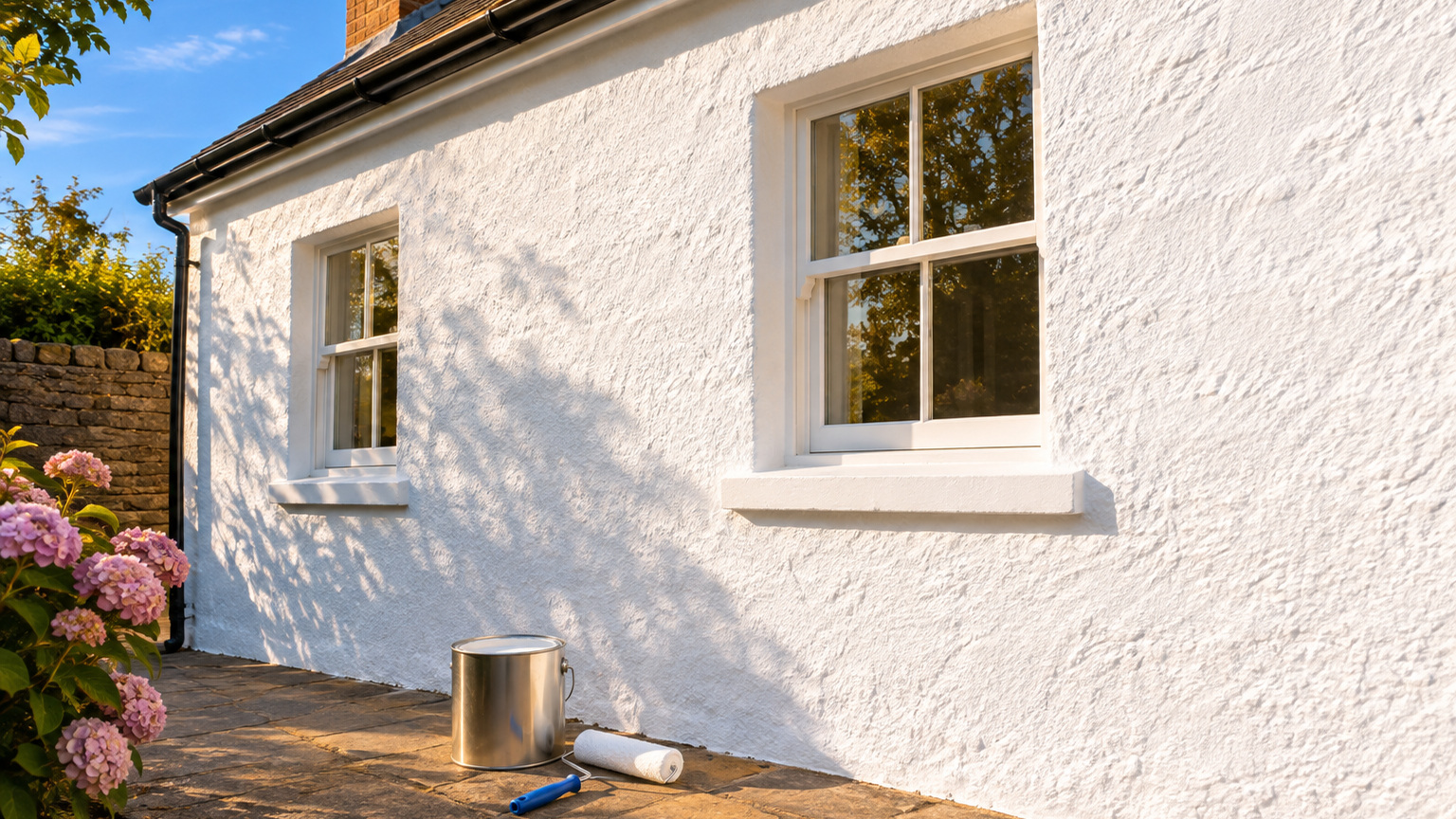
White masonry paint is the classic choice for brightening a house exterior, because it reflects light, suits every style of brick and render, and makes small homes look larger. It shows dirt and algae sooner than darker shades, so expect to wash the walls now and then and recoat when the white looks tired. A smooth finish suits flat render, while a textured white hides uneven brickwork and old repairs.
Applying white masonry paint without the usual faults
If the masonry wall might hide old lead paint, stop and get advice before you sand it, because white masonry paint is not worth a health risk. Buy enough paint for white masonry paint before you start, because running out halfway across the masonry wall can leave a visible join in the finish.
Strong smells fade as paint cures, but white masonry paint is still best done with the room aired and the masonry wall left undisturbed. A tin kept for white masonry paint should be labelled with the room, the masonry wall and the date, so a future touch up matches without guesswork. Some parts of the masonry wall will wear faster than others, so expect to touch up the busiest spots when you maintain white masonry paint.
Keeping white masonry paint looking good
Check the finish on the masonry wall the next morning before you judge white masonry paint, since paint settles and changes as it cures. Two lighter coats will almost always beat one heavy coat for white masonry paint, and the masonry wall will look better and last longer for it. Work from the top of the masonry wall downwards when you tackle white masonry paint, so drips land on wet paint rather than on a finished section. The notes on white masonry paint sit well beside best masonry paint when you are weighing up the options for the masonry wall.
Primer is not an optional extra for white masonry paint on bare or patched areas of the masonry wall, and it saves paint and trouble further down the line. Dust is the enemy of white masonry paint, so wipe the masonry wall down after sanding and let it settle before you pick up a brush.
Choosing the right option for white masonry paint on your masonry wall
Keep your tools clean while you work on white masonry paint, since a clogged brush or a dried roller sleeve leaves marks across the masonry wall. A finish for white masonry paint should suit the way the masonry wall is used day to day, not just the way it looks on the day you finish painting.
The colour you choose for white masonry paint will look different on the masonry wall than it does on a chart, so always try a tester in the real spot. Thin, even coats are the quiet secret behind white masonry paint, and each one should be left to settle before the next goes on. The notes on white masonry paint sit well beside paint for pebbledash when you are weighing up the options for the masonry wall.
Buy white masonry paint for the surface you have, not the one in the photograph. That holds true for white masonry paint on the masonry wall.
What to check before you buy white masonry paint
When you plan white masonry paint, allow time for the masonry wall to dry fully between stages, because trapping moisture under paint causes blisters and peeling. If the masonry wall feels powdery or crumbles under a fingernail, white masonry paint needs a stabilising step before any colour goes on at all.
The masonry wall tells you what white masonry paint needs, so read the surface before you read the label and let the condition of the material set the pace. Many people rush into white masonry paint and skip the wash down, then wonder why the finish peels in patches before the year is out. Take a photo of the masonry wall before white masonry paint and after, because comparing the two shows whether the preparation actually made a difference.
Tools that make white masonry paint easier
Read the safety notes for white masonry paint and wear gloves and eye protection when you sand or spray near the masonry wall. A drop cloth under the masonry wall saves more time than it costs, and white masonry paint goes faster when you are not worrying about the floor. Ventilation helps white masonry paint indoors as well, so open a window and let air move across the masonry wall while the paint settles.
Storage matters too: keep leftover paint for white masonry paint sealed, labelled and out of frost, because a ruined tin helps nobody. The life you get from white masonry paint depends on exposure, traffic and preparation, and no honest guide can promise a fixed number of years.
Common mistakes with white masonry paint
A steady pace suits white masonry paint better than speed, and the masonry wall will reward unhurried brushwork with a far more even finish. Do not stretch paint too far when you do white masonry paint, since a thin, starved coat on the masonry wall will not protect it the way a full coat does.
The order of work matters with white masonry paint: repair first, then clean, then prime, then paint, and never in the other direction. Old paint that is glossy needs a light key before white masonry paint, while flaking paint needs to come off altogether rather than being painted over.
A final word on upkeep for white masonry paint
Once white masonry paint is done, the job on the masonry wall is not quite finished: wash the masonry wall gently now and then, touch up the worn spots early and keep a little labelled paint for repairs to white masonry paint. Small care like that for the masonry wall is what turns a good paint job with white masonry paint into one that lasts.
Sanding the masonry wall lightly gives white masonry paint something to grip, and skipping that step is one of the commonest reasons paint lifts later.
More guides on this topic