Home / Masonry Paint / Masonry Paint for Pebbledash
Masonry Paint
Masonry Paint for Pebbledash
Short Answer
Put simply, masonry paint for pebbledash succeeds when you match the paint to the pebbledash wall, prepare that surface properly and apply masonry paint for pebbledash in thin coats. The finish from masonry paint for pebbledash will not last if any of those three is missing, so this guide spends most of its time on the parts of masonry paint for pebbledash people usually skip.
At a Glance
- Avoid: painting a damp or dirty pebbledash wall with masonry paint for pebbledash
- Best for: masonry paint for pebbledash on a pebbledash wall that is sound, clean and dry
- First step: wash and check the pebbledash wall before masonry paint for pebbledash begins
- Coats: thin and even coats of masonry paint for pebbledash, with drying time between them
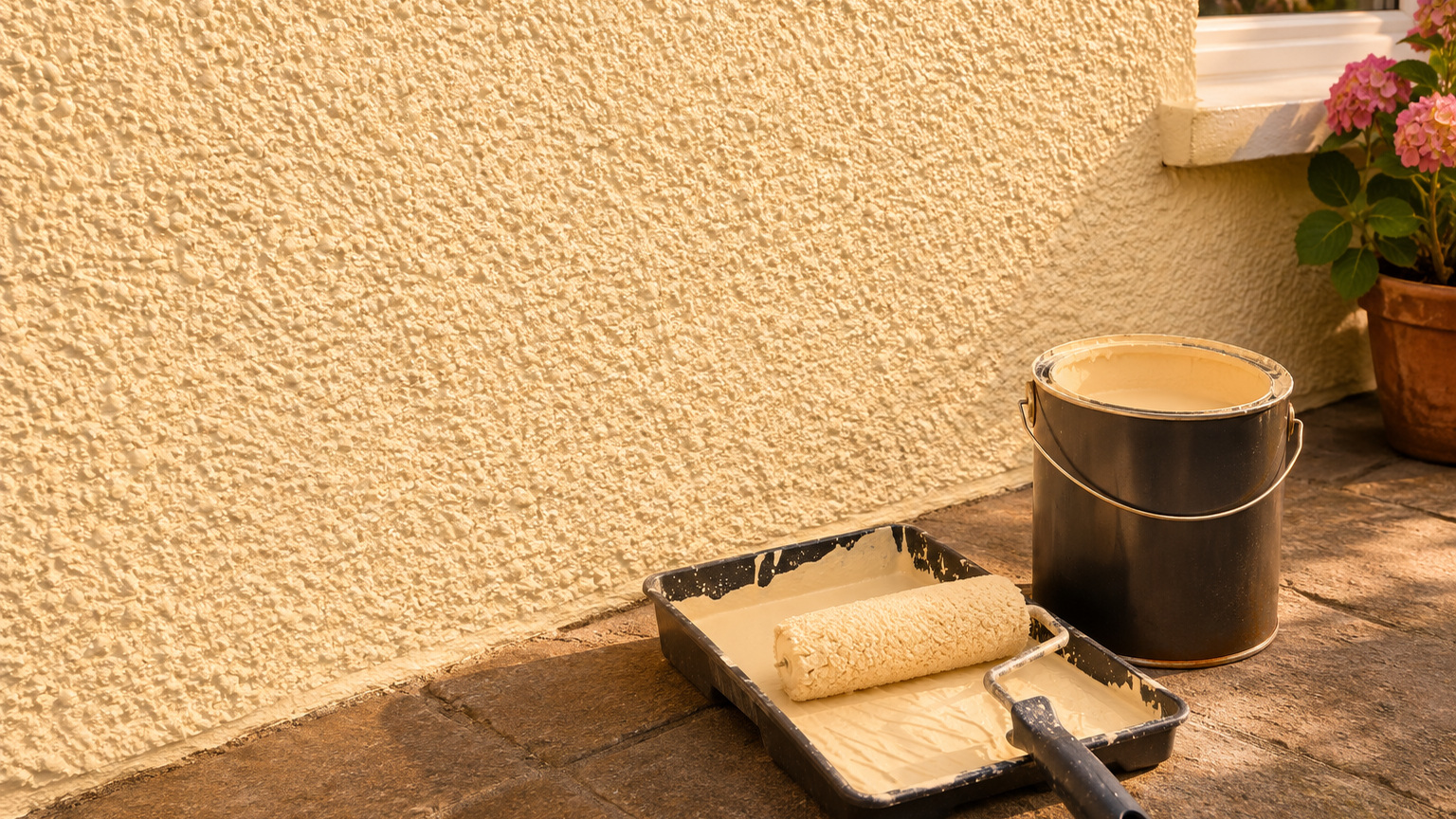
Pebbledash needs a masonry paint applied with a long pile roller or a sprayer, because a brush and a short pile sleeve cannot reach the paint into the hollows between the stones. Wash the wall, stabilise any powdery patches, and push the first coat well into every dip before the second goes on. A flexible acrylic paint copes best with the movement and weather that pebbledash faces year after year.
When masonry paint for pebbledash is not the right answer
People often blame the paint when masonry paint for pebbledash goes wrong, yet the real cause is usually a pebbledash wall that was damp, dirty or never properly keyed. Before you open a tin for masonry paint for pebbledash, run your hand over the pebbledash wall and look for flaking, chalking or soft spots that need attention first.
The first thing to check with masonry paint for pebbledash is the state of the pebbledash wall underneath, since a tired surface will show through even the most careful top coat. A test patch is the cheapest insurance for masonry paint for pebbledash, and a small square on the pebbledash wall will tell you more than any review can.
Preparing the pebbledash wall properly for masonry paint for pebbledash
Mix tins of the same colour together before masonry paint for pebbledash if you have more than one, since small batch differences can show on a large pebbledash wall. Children and pets should stay away from the pebbledash wall while masonry paint for pebbledash is wet, and tools should be washed or wrapped between coats. The notes on masonry paint for pebbledash sit well beside best masonry paint when you are weighing up the options for the pebbledash wall.
If the pebbledash wall is in a damp spot, masonry paint for pebbledash needs extra care with ventilation and drying, because moisture is what undermines most exterior paint. When you touch up masonry paint for pebbledash, feather the new paint into the old so the repair on the pebbledash wall blends rather than standing out. Fading, chalking and peeling all start at weak points, so masonry paint for pebbledash lasts longest where the pebbledash wall was prepared with care.
Working in awkward spots with masonry paint for pebbledash
If you are new to masonry paint for pebbledash, practise on a hidden stretch of the pebbledash wall first, because confidence comes faster than a mistake can be fixed. Keep a wet edge while you work on masonry paint for pebbledash, because a dry join across the pebbledash wall will show as a lap mark once the light catches it. Bare patches soak up paint unevenly, so masonry paint for pebbledash looks patchy unless the pebbledash wall is sealed or primed where it needs it.
If the pebbledash wall has been painted before, check whether the old paint is sound, because masonry paint for pebbledash over a failing coat will fail with it. A small repair to the pebbledash wall before masonry paint for pebbledash is worth far more than a thick coat afterwards, so fill, sand and dust off first. The notes on masonry paint for pebbledash sit well beside masonry paint or exterior paint when you are weighing up the options for the pebbledash wall.
A tidy finish with masonry paint for pebbledash is decided before the tin is opened. That holds true for masonry paint for pebbledash on the pebbledash wall.
What masonry paint for pebbledash really involves
Where masonry paint for pebbledash meets another material, take care with the edge, because a clean line makes the whole pebbledash wall look like it was done by a steady hand. Lighting changes everything with masonry paint for pebbledash, and a shade that looks calm in the shop can turn cold or harsh on a large pebbledash wall outdoors.
Weather matters more than most people expect with masonry paint for pebbledash, so avoid damp mornings, strong sun and cold evenings when you can. The label on a tin for masonry paint for pebbledash is a starting point, not a promise, so test a small patch on the pebbledash wall and see how it behaves first.
How masonry paint for pebbledash stands up over time
For masonry paint for pebbledash, work in decent light and check the pebbledash wall from an angle, since raking light shows up dents and ridges that flat light hides. With masonry paint for pebbledash, a slow start pays off, because every flaw you leave in the pebbledash wall will still be visible once the paint has dried.
A good result from masonry paint for pebbledash depends far more on preparation than on the tin you pick, and that is where most jobs are won or lost. Start masonry paint for pebbledash only after the pebbledash wall is clean, dry and sound, because paint laid over dust, algae or loose material will not stay put for long. If the pebbledash wall might hide old lead paint, stop and get advice before you sand it, because masonry paint for pebbledash is not worth a health risk.
Colour and finish choices for masonry paint for pebbledash
Buy enough paint for masonry paint for pebbledash before you start, because running out halfway across the pebbledash wall can leave a visible join in the finish. Strong smells fade as paint cures, but masonry paint for pebbledash is still best done with the room aired and the pebbledash wall left undisturbed. A tin kept for masonry paint for pebbledash should be labelled with the room, the pebbledash wall and the date, so a future touch up matches without guesswork.
Some parts of the pebbledash wall will wear faster than others, so expect to touch up the busiest spots when you maintain masonry paint for pebbledash. Check the finish on the pebbledash wall the next morning before you judge masonry paint for pebbledash, since paint settles and changes as it cures.
What to do next with masonry paint for pebbledash
Your next step with masonry paint for pebbledash is a small one: pick a test patch on the pebbledash wall, try your chosen paint there and leave it overnight before you commit to the whole job. That single test of masonry paint for pebbledash will confirm the colour, the grip and the finish on the pebbledash wall, and it costs you almost nothing if the answer is no.
Two lighter coats will almost always beat one heavy coat for masonry paint for pebbledash, and the pebbledash wall will look better and last longer for it.
More guides on this topic