Home / Painting Tools Rollers and Brushes / Spray Machines for Painting: A Practical Guide
Painting Tools Rollers and Brushes
Spray Machines for Painting: A Practical Guide
Short Answer
Spraying is fast on the surface and slow on the setup. Hire first, and see if it suits you.
At a Glance
- Large areas suit spraying: Spraying is fast on fences, ceilings and whole houses
- Masking takes time: Cover everything you do not want painted
- Hire before you buy: Hire a machine for a one off large job
- Cleaning is essential: Paint left in a machine will block it
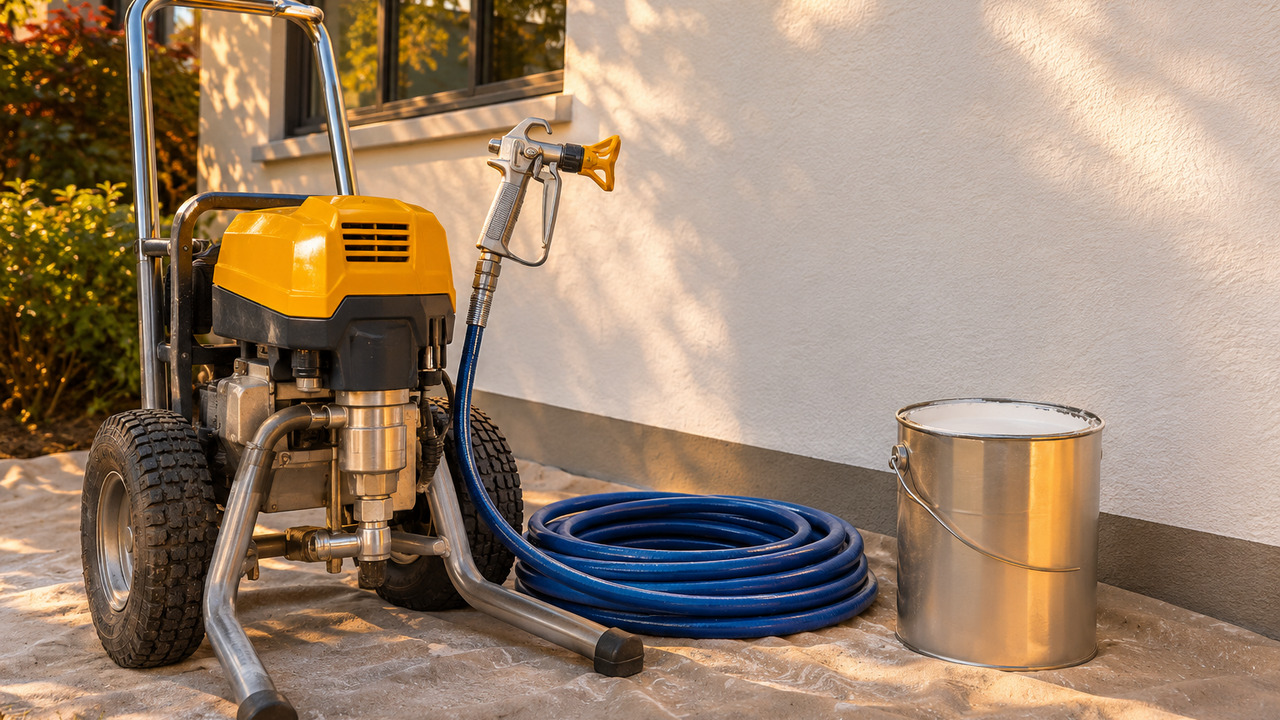
A spray machine is worth hiring when you have a large area to cover, such as a whole house, a long fence or a set of ceilings. It lays paint on fast and evenly, but it needs careful masking, the right paint and a thorough clean afterwards. For a single room, a roller is usually quicker once you count the setup and cleaning time.
How spray machines work
A spray machine pumps paint through a nozzle and breaks it into a fine mist. The mist lands on the surface in an even coat, with no brush marks or roller texture. The machine controls the flow, and you control the speed and distance.
Different machines use different methods, but the principle is the same. Paint is forced through a small tip at pressure, and the spray pattern is set by the tip size and the pressure. A wider tip suits walls, while a narrower tip suits detail.
Types of spray machine
Airless machines are the most common for walls and fences. They spray thick paint without thinning, and they cover large areas quickly. HVLP machines use air to give a finer spray, and they suit furniture and woodwork.
Handheld machines are smaller and suit small jobs. They are easy to carry and clean, but they hold less paint. Choose the type that suits the size and surface of your job, not the one with the most features.
When spraying makes sense
Spraying makes sense on large, unobstructed areas. A long fence, a set of ceilings or a whole house exterior are good examples. The time saved on the surface outweighs the time spent masking and cleaning.
Spraying does not make sense on a small room with lots of masking, or on a job with many colours and edges. In those cases, a roller and brush are faster and give a cleaner result with less waste.
Hire a spray machine for a big job, mask well, and clean it the same day.
Masking and overspray
Overspray is the fine mist that drifts beyond the surface you are painting. It settles on floors, windows and furniture, so masking is essential. Use masking film for large areas, tape for edges, and dust sheets for floors.
Seal the room if you are spraying indoors, and cover light fittings and sockets. Work in a ventilated space, wear a mask and eye protection, and keep children and pets out of the room while you spray.
Paint choice and thinning
Some paints spray better than others. Emulsion sprays well, and many exterior paints are made for spraying. Gloss and satin may need thinning, depending on the machine. Check the paint label and the machine instructions before you start.
Strain the paint before you pour it in, to remove lumps that could block the tip. Test the spray on a spare board, and adjust the pressure and distance until the finish looks even. A test board saves a spoiled wall.
Hiring versus buying
Hiring a spray machine is sensible for a one off job. Hire shops supply the machine, hoses and tips, and they can advise on the right setup. Hiring also avoids the cost of buying a machine you may rarely use.
Buying makes sense if you spray often, such as for fences and outbuildings every year. A bought machine needs storage, maintenance and cleaning, so factor those in. If you are unsure, hire once and see how you get on.
Cleaning after spraying
Clean the machine as soon as you finish, while the paint is still wet. Flush water or cleaner through the pump, hose and gun until it runs clear. Take apart the nozzle and filter, clean them, and let everything dry before you store it.
A machine that is not cleaned will block, and the blockage may be hard to clear. If you hired the machine, return it clean, or you may face a cleaning charge. Cleaning is part of spraying, not an optional extra.
Spraying a whole house exterior
A whole house exterior is a large job where a spray machine can save days, but it needs careful planning. Mask windows, doors, paths and plants, check the weather, and work in sections so you can keep a wet edge. An airless machine suits this work, because it can spray thick exterior paint without thinning.
Work with a helper if you can, so one person sprays and the other back rolls or brushes the edges. A sprayed exterior still needs a brush for the detail around windows and doors, where the spray cannot give a clean edge. Home paint sprayer models are smaller, while a hired airless machine suits a whole house.
Spraying ceilings
Ceilings are hard to paint with a roller, because you are working overhead and the paint drips. A sprayer can cover a ceiling quickly and evenly, with no roller marks. Mask the walls, cover the floor, and spray in steady passes across the ceiling.
A ceiling sprayer needs a steady hand, because the spray pattern must overlap evenly. Practice on a spare board first, and keep the sprayer at a consistent distance from the ceiling. Choosing paint rollers for ceilings is still a good option for a single room, where masking for a sprayer takes longer than rolling.
More guides on this topic