Home / Painting Tools Rollers and Brushes / Best Paint Rollers in the UK
Painting Tools Rollers and Brushes
Best Paint Rollers in the UK
Short Answer
The sleeve must suit the wall. Short pile for smooth, long pile for rough, and a frame that does not wobble.
At a Glance
- Pile suits the surface: Short pile for smooth walls, long pile for rough ones
- Frame matters: A solid frame stops tramlines and wobble
- Sleeve size counts: A wider sleeve covers large walls faster
- Wash or replace: Clean good sleeves, replace worn ones
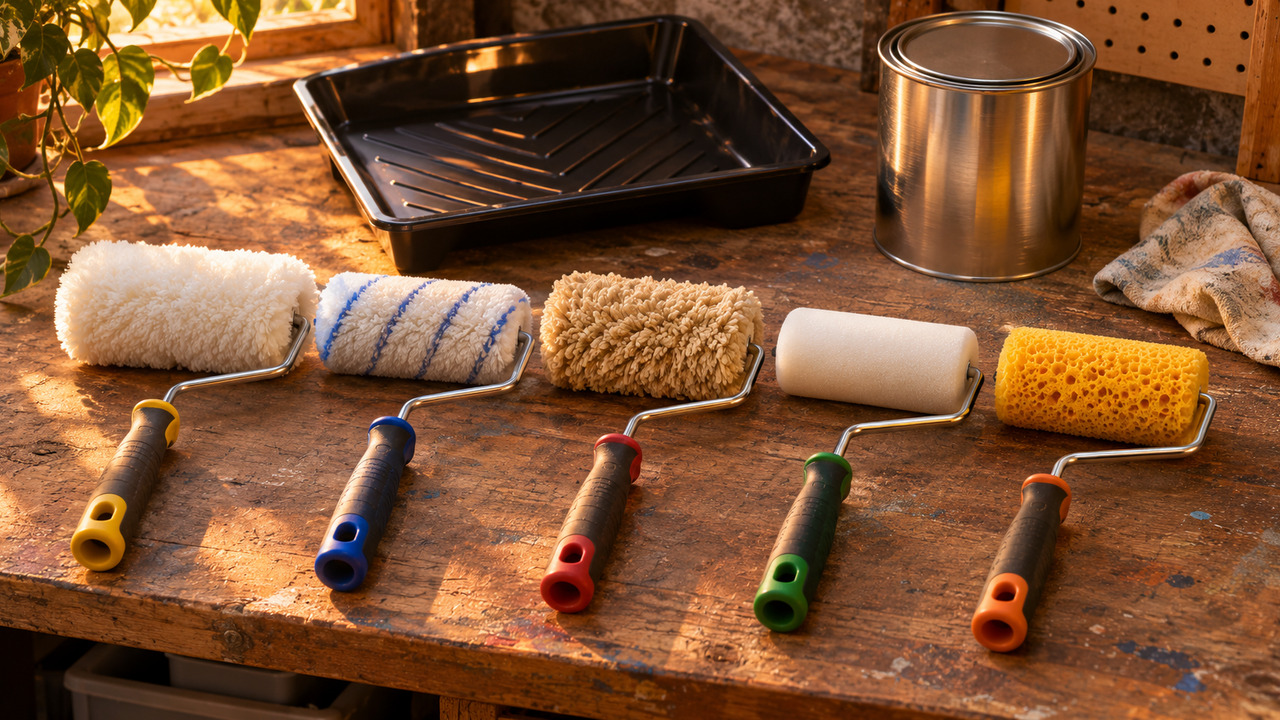
The best roller is the one that suits your wall and your paint. A short pile sleeve suits smooth walls, a medium pile suits lightly textured plaster, and a long pile suits rough surfaces. A good frame matters too, because a wobbly frame leaves tramlines. Buy the sleeve for the surface, not the cheapest pack on the shelf.
What makes a good roller
A good roller lays paint on evenly, holds enough paint to cover a section without dripping, and leaves a smooth finish without tramlines. The sleeve, the frame and the handle all play a part. A cheap sleeve that sheds fibres will ruin a finish, however good the paint is.
Look for a sleeve that feels dense and even, with fibres that stay in place when you pull at them. The frame should spin freely without wobble, and the handle should feel comfortable in your hand. These small details matter when you are rolling a whole room.
A roller sleeve that is too long for the wall leaves a heavy texture, while a sleeve that is too short misses the dips in the plaster and leaves thin patches. The pile length is not a detail to guess at: look at the wall in side light, feel it with your hand, and choose the sleeve that matches what you find. A wall that looks smooth in daylight can be rougher than you think, and the right pile makes the difference between a flat finish and a patchy one.
Pile length explained
Pile length is the length of the fibres on the sleeve. Short pile, for smooth walls and new plaster, leaves a fine finish with little texture. Medium pile suits lightly textured walls and older plaster, where a short pile would miss the dips.
Long pile suits rough surfaces such as Artex style textures and rough masonry, where the fibres need to reach into the surface. Using a long pile on a smooth wall leaves a heavy texture that looks wrong. Match the pile to the wall, and the finish will follow.
Sleeve materials
Sleeves are made from synthetic fibres, natural fibres or foam. Synthetic sleeves suit water based paint and are easy to clean. Natural fibre sleeves suit oil based paint and hold a lot of paint, but they need careful cleaning. Foam sleeves suit smooth surfaces and gloss paint, where a fine finish matters.
Foam sleeves can leave bubbles if you roll too fast, so use a steady pace. Synthetic sleeves are the usual choice for emulsion on walls, because they are easy to use and clean. Try one sleeve on a test area before you buy a pack.
A good roller is not expensive. It is the right pile, on a solid frame, kept clean.
Frames and handles
A roller frame holds the sleeve and lets it spin. A good frame has a solid metal arm and a handle that does not flex. Cheap frames bend under pressure, which causes tramlines and uneven paint. Spend a little more on the frame, because it lasts for many jobs.
Handles come in different lengths. A short handle suits cutting in around edges and painting woodwork, while a longer handle suits walls. An extension pole fits most frames and saves you reaching up to a ceiling. Check that the pole fits your frame before you buy.
Roller sizes
Rollers come in different widths. A wide roller covers a large wall quickly, but it is heavy when loaded with paint and hard to control in a small room. A narrow roller suits small rooms, doors and tight spaces. A mini roller suits woodwork and edges.
Most people need two sizes: a standard width for walls and ceilings, and a mini roller for woodwork and detail. A wide roller is useful for a large open room, but it is not essential. Choose sizes that suit the rooms you paint most.
Rollers for ceilings and walls
Ceilings need a roller that holds paint without dripping, because drips land on you and the floor. A medium pile sleeve on an extension pole is the usual choice. Work in sections, keep a wet edge, and roll in one direction for an even finish.
Walls need a similar approach, with a sleeve that suits the surface texture. Roll in a W pattern to spread the paint, then roll over it in straight lines to even it out. Do not press hard, or the roller will leave tramlines and squeeze paint out at the edges.
Rollers for woodwork and gloss
Woodwork needs a smaller roller and a finer finish. A foam sleeve or a short pile sleeve suits gloss and satin paint on doors and skirting. Roll thin coats, and lay off in one direction to avoid brush marks and bubbles.
Gloss paint shows every flaw, so the roller must be clean and free of dried paint. Use a fresh sleeve for gloss work, and clean it thoroughly afterwards. A worn sleeve leaves texture that spoils a smooth door.
Caring for your rollers
Clean rollers soon after use. Wash water based paint out with warm soapy water, and work the paint out of the fibres until the water runs clear. Let the sleeve dry standing up, so air can reach it. Store frames and handles dry.
A good sleeve can be reused many times if you clean it well. Replace a sleeve when the fibres are matted, shedding or worn flat. A worn sleeve leaves a poor finish, and no amount of paint will fix it.
Roller sleeves for textured walls
Textured walls need a longer pile, because the fibres must reach into the dips and hollows of the surface. A short pile sleeve will skip over the texture and leave thin patches, while a medium or long pile sleeve will carry paint into the surface and give an even coat. Test the sleeve on a small area first, and look at it in side light to see whether the paint has reached into the texture.
Rough masonry and exterior walls need the longest pile, because the surface is uneven and porous, and rollers or brushes both need the right sleeve for the job. A long pile sleeve holds a lot of paint, so it is heavier to use, but it covers a rough wall far better than a short pile sleeve. Choosing paint brushes for the edges, then rolling the main area with the right pile, gives a finish that looks even and lasts well.
Foam sleeves are not suited to textured walls, because they cannot reach into the surface, so extension poles for painting and a fibre sleeve are a better pair for a high textured wall. Use a fibre sleeve for texture, and save foam for smooth woodwork and gloss, where a fine finish matters. A sleeve that suits the wall is the first step to a good finish, and it is worth taking the time to choose it.
More guides on this topic