Home / Painting Tools Rollers and Brushes / Paint Trays and Scuttles: How to Choose
Painting Tools Rollers and Brushes
Paint Trays and Scuttles: How to Choose
Short Answer
A tray for the roller, a scuttle for the brush. The tool decides the container.
At a Glance
- Tray for rollers: A tray loads a roller sleeve evenly on its ribbed slope
- Scuttle for brushes: A scuttle holds more paint and is easy to carry
- Size matters: A tray should suit the roller width
- Liners save cleaning: A liner lets you change colour fast
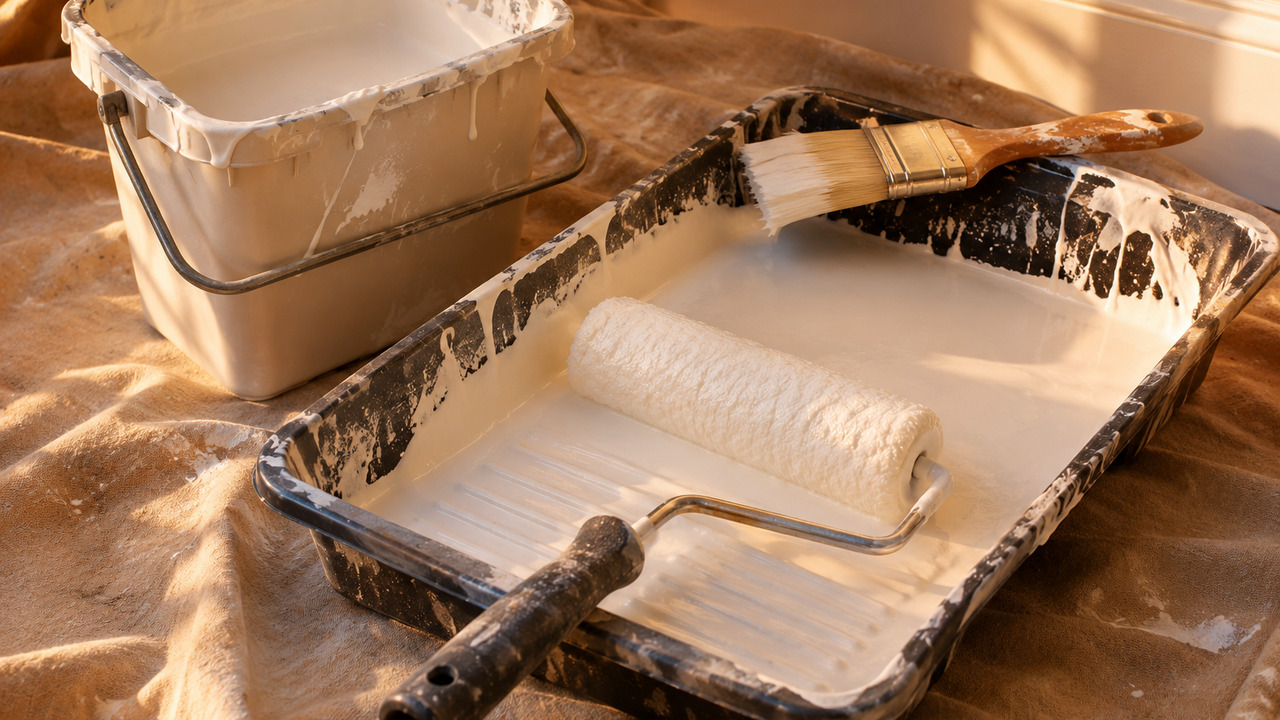
A tray suits a roller, because the ribbed slope loads the sleeve evenly and the well holds enough paint for a section. A scuttle suits a brush and a large job, because it holds more paint and is easier to carry up a ladder. Choose by the tool you are using, not by what looks handy on the shelf.
What a paint tray does
A paint tray is a shallow container with a well for paint and a ribbed slope for loading a roller. You dip the roller in the well, then roll it up the slope to spread the paint evenly across the sleeve. This gives an even coat without drips.
Trays are made for rollers, and they are the standard choice for walls and ceilings. They are light, cheap and easy to clean, especially with a liner. A tray that is too small for your roller will make loading awkward and slow.
What a scuttle does
A scuttle is a deeper container, often with a handle, that holds paint for a brush. It is used by decorators who paint large areas with a brush, or who work up a ladder. The handle makes it easy to carry, and the depth stops paint sloshing.
Scuttles hold more paint than a tray, so you refill less often. They suit exterior work, fences and woodwork, where a brush is the main tool. A scuttle is less useful for a roller, because the roller cannot load properly in a deep container.
Choosing a tray size
Trays come in sizes to suit roller widths. A standard tray suits a standard roller, while a mini tray suits a mini roller. A tray that is wider than your roller wastes paint, while a tray that is narrower makes loading difficult.
Check that the tray is stable on the floor and does not tip easily. A tray with a flat base and a low centre of gravity is safer, especially on a dust sheet. A wobbly tray spills paint, and spilled paint is a mess to clean.
A tray loads a roller, a scuttle carries paint for a brush. Use the right one.
Liners and cleaning
Tray liners are thin plastic inserts that fit inside a tray. They let you change colour quickly, without washing the tray between coats. They are cheap and they save time, especially on a job with several colours.
If you do not use a liner, wash the tray as soon as you finish, while the paint is still wet. Water based paint washes out with warm soapy water. Let the tray dry fully before you store it, so it does not stick to the next tray.
Scuttle features to look for
A good scuttle has a comfortable handle, a stable base and a rim that is easy to pour from. Some scuttles have a brush rest, which keeps the brush off the paint when you are not using it. A scuttle that is too heavy when full is hard to carry up a ladder.
Choose a scuttle size that suits the job. A small scuttle suits touch ups, while a large scuttle suits a whole fence or a set of doors. Do not fill a scuttle to the brim, or it will spill when you move it.
Using a tray well
Pour paint into the well, not onto the slope. Dip the roller lightly, then roll it up and down the slope to load it evenly. Do not overload the roller, or it will drip. Roll in a steady pattern, and reload before the roller runs dry.
Keep the tray on a flat surface, away from the edge of a dust sheet where it could tip. If you move the tray, carry it with both hands and keep it level. A spilled tray wastes paint and creates a clean up job.
When to use each
Use a tray for walls and ceilings with a roller, and a scuttle for woodwork, fences and exterior work with a brush. Many painters keep both, and switch between them as the job changes. A tray and a scuttle together cover most painting jobs.
For a small job, a tray with a liner is often enough. For a large exterior job, a scuttle is more practical. Think about the tool you will use most, and choose the container that suits it.
Trays for different paints
Emulsion needs a standard tray with a ribbed slope, so the roller loads evenly, and choosing paint rollers starts with a tray that fits the sleeve. Gloss and satin paint need a smaller tray or a scuttle, because they are applied with a brush or a mini roller, and a large tray wastes paint. Choose the tray that suits the paint and the tool.
Exterior paint is often applied with a brush from a scuttle, because the paint is thick and the areas are large. A scuttle holds more paint, so you refill less often, and it is easier to carry up a ladder. A tray is less useful outdoors, where it can tip over in wind.
Keeping trays and scuttles clean
Wash a tray as soon as you finish, while the paint is still wet, and dry it before you store it. A tray with dried paint in the well is hard to clean, and it will affect the next job. Use a liner if you want to change colour quickly, and replace the liner when it is torn.
A scuttle needs cleaning too, especially around the handle and rim, where paint builds up. Cleaning rollers and brushes is part of the same routine, and a clean tray and scuttle make the next job faster. Store them dry, stacked neatly, so they are ready to use.
More guides on this topic