Home / Johnstone's Paint / Johnstone's Paint Coverage and How Much You Need
Johnstone's Paint
Johnstone's Paint Coverage and How Much You Need
Short Answer
Coverage is a planning figure, not a promise. Measure the room, use the brand's guidance, allow for coats and waste, and buy from one batch.
At a Glance
- Start with: The brand's coverage guidance for the product you chose
- Measure: Each wall, then take off large windows and doors
- Allow for: Coats, surface condition and a strong colour change
- Buy: Enough from one batch, with a little spare
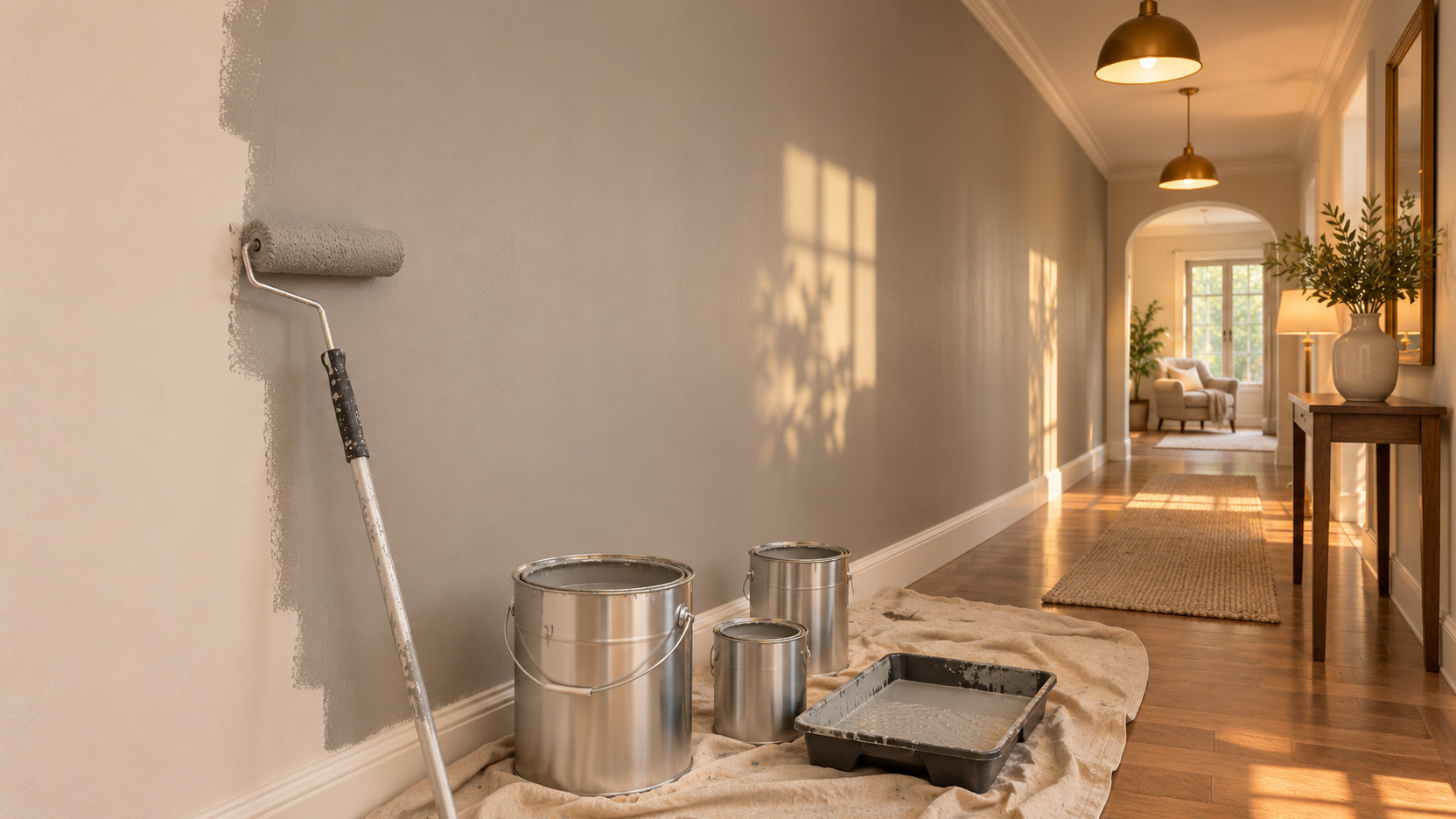
A decorator does not guess how much paint a house needs, they measure it, and a homeowner can do the same in a few minutes with a tape. Johnstones publishes coverage guidance for its products, and that guidance, plus the size of your room, is all you need to work out the amount.
Coverage as a planning tool
Coverage is the area one tin is expected to cover on a sound, previously painted wall, and it is the figure to use when you are planning a job. It is not a promise that your wall will match it exactly, because a rough wall, a bare wall and a dark colour change will all use more paint than a smooth, pale, previously painted one. Treat the figure as a guide, work out your room with care, and add a margin, and you will be close.
Different Johnstones products cover differently, so use the guidance for the exact product you are buying. Covaplus Vinyl Matt is known for its coverage across large areas, but its figure is not the same as a standard emulsion or a specialist finish. The tin or the brand's product information will give the figure for the product in your hand, and a stockist can help you find it.
How to measure a room properly
Go round the room with a tape, measuring each wall from corner to corner and from floor to ceiling, and write each figure down. Add the walls together for the total, then take off a sensible allowance for large windows and doors. For a ceiling, measure the floor, since the ceiling is the same size. That is the whole job, and it takes a few minutes.
Do not forget the awkward bits. The wall behind a wardrobe, the chimney breast, the alcoves and the reveals around windows all need paint, and together they add up to a surprising amount. A room measured properly is almost always larger than a room guessed at, and that gap is where most shortfalls come from. Measure slowly, note everything, and the sums will be right.
What makes a wall use more paint
Bare plaster is the biggest user of paint in a house, because it absorbs the first coat, so a mist coat or primer is part of the job. A rough or textured surface uses more than a smooth one, and a wall that has been stripped back will use more than one that already has a sound coat. The surface decides how much paint disappears into it, and no top coat can change that.
Colour change is the other factor. A dark shade over white, or white over a dark shade, will need more coats than a pale shade over a similar pale shade, and each coat adds to the total. If you are making a strong change, allow for the extra coat from the start, rather than finding out halfway through that the old colour is still showing.
Measure the room, use the brand's guidance, allow for coats and waste, and buy from one batch.
Working out how many tins
Divide the total area by the coverage guidance for your product, and you have the amount for one coat. Multiply by the number of coats, usually two, and add a margin for waste, touch ups and spills. That is the amount to buy. If the total sits between tin sizes, choose the larger size, since a sealed spare tin is easier to keep than a half finished wall.
Check the batch numbers on every tin before you leave the shop, and buy all the paint for one room from the same batch. A different batch can look slightly different on the wall, and a change in the middle of a wall is hard to hide. Where to buy Johnstones paint explains what to check before you pay.
Sizes, spares and storage
Johnstones paint comes in several sizes, from small sample pots to large tins for a whole house. Sample pots are for testing colour, and they work out dear per litre, so they are not a way to paint a wall cheaply. A large tin is usually better value than several small ones, if you have worked out the amount, and it avoids a batch change in the middle of a room.
Keep a little paint for touch ups, stored as the tin directs, in a cool, dry place away from frost. Write the colour, finish and batch on the tin, so a later touch up matches. A small, well sealed tin will keep usefully, while a large tin that has been opened many times may skin over and become unusable.
Touching up so it does not show
Use the same paint, the same batch and the same tool as the first coat, and apply the paint thinly, feathering it out at the edges. A thick blob will show, and a brush mark on a rolled wall will show, so keep the original roller if you can. A thin, feathered touch up dries flatter and blends better than a heavy one.
If a wall has many marks, repaint the whole wall from corner to corner rather than patching the middle. A full wall repaint looks even, while a patch in the middle catches the light. That is often quicker, too, since a dozen dabs take longer than one careful coat across the wall.
Avoiding the shortfall
The shortfall almost always comes from one of three mistakes: guessing the size, forgetting the ceiling or the woodwork, or buying for one coat when two are needed. Each is easy to avoid with a tape measure, a list and a margin. Measure the room, allow for the coats, add a little extra, and buy from one batch, and the job will finish on time.
More guides on this topic