Home / Johnstone's Paint / Johnstone's Exterior Paint Explained
Johnstone's Paint
Johnstone's Exterior Paint Explained
Short Answer
Johnstones exterior paint is a trade minded choice for a house that needs a sound finish. Prepare the surface, use the finish made for the material, and paint in dry, mild weather.
At a Glance
- Bought from: Paint stockists, decorating merchants and trade counters
- First job: Cleaning and repairing the surface, before any paint
- Surfaces: Brick and render, wooden doors and windows, and metal
- Colour tip: Test outside in daylight, since sun washes colour out
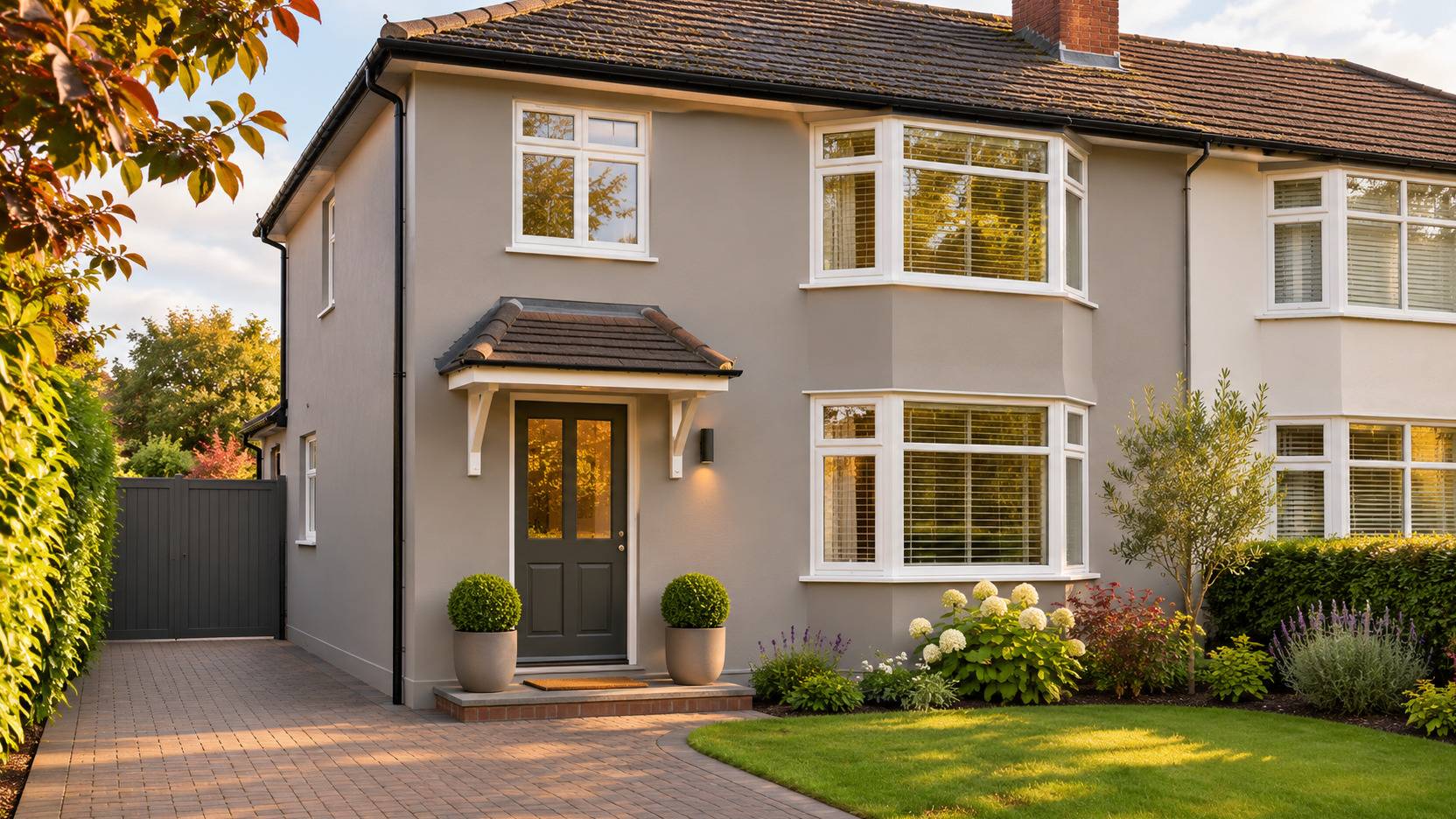
Ask a decorator what they use outside a house, and Johnstones is a name that comes up often, because the brand is sold through trade counters and is made for a working job rather than a showroom. That trade background shapes the range: finishes for masonry, for wood and for metal, each made for the surface it serves.
A trade approach to the outside
A decorator painting a whole house outside works to a routine: clean, repair, prime, then paint, and the routine does not change with the brand. That routine is worth copying, since it is the reason trade jobs last. Start by walking round the house with a stiff brush and a scraper, noting cracked render, loose paint, soft timber and rust. Repair those faults first, wash the surfaces, and let everything dry. A house that is ready will take paint well, and a house that is not ready will waste it.
The trade approach also means buying the right finish for each surface, rather than one tin for the whole house. Masonry paint for the walls, a flexible paint for the wood, and a rust beating system for the metal. Each one does a different job, and mixing them up is a shortcut that shows within a season. Buy the finishes you need, and buy enough for the elevation from one batch.
Walls of brick, render and stone
A masonry wall must be clean, dry and sound before paint goes on. Brush off loose material, wash off dirt, algae and green growth, and repair cracks and damaged render. A chalky or dusty wall may need a stabiliser, and bare or porous masonry may need a primer, following the guidance on the tin. Painting over a damp wall traps moisture, and the new coat will peel with the old one, so wait for dry weather.
Roll the paint on from the top down, in sections you can finish without a break, and keep the wet edge moving so joins do not show. A mild, overcast day is ideal, since strong sun dries the paint too fast and leaves marks. Two coats, with the first dry right through, give an even colour. Do not paint late in the day, when evening damp can spoil a fresh coat, and do not paint a wall that is still wet from rain.
Doors, windows and timber trim
Timber outside moves with the weather, so paint on it must flex, and the timber must be sound for that to work. Scrape off loose paint, sand the surface, and cut out rot rather than painting over it. Bare timber takes a primer made for exterior wood, and old gloss needs a key so the new coat can grip. A window frame that is soft at the corners needs repair, not paint, and a door that sticks needs easing before it is painted.
Brush the top coat on with the grain, in thin layers, and give the sill and the bottom of the door extra attention, since water sits there and paint fails there first. Let each coat harden before the next, and avoid painting in rain or in direct sun. A well painted door and window should look tidy for several years, with only a small touch up where hands and weather wear the edges.
Trade jobs last because the preparation is done properly. Copy that routine, and the paint will do its part.
Metalwork: gates, railings and pipes
Metalwork is the smallest exterior job and the least forgiving, because rust grows under paint. Wire brush every flake until you reach sound metal, treat the bare patches as the product directs, and prime before the top coat. A gate painted over rust will look fine for a few weeks, then bubble, and the only cure is to strip it back and begin again. Do the preparation once, properly, and the paint will last.
Brush the finish into every joint and corner, where water collects and rust starts, and use thin coats that dry hard. Check the metalwork after the first winter, since that is when a weak spot shows, and touch up any chip at once.
Choosing a colour that survives the sun
Colours outside need to be stronger than you think, because daylight bleaches them. A pale neutral that looks warm indoors can look almost white on a sunny wall, while a mid tone keeps its character. Paint a large patch on the wall itself, and look at it at different times of day, including morning and late afternoon, when the light is warm and low. A patch that still looks right at dusk is the one to buy.
Think about the house and the street together. A bold front door can suit a quiet street, while a bold whole house can dominate it. The Johnstones colours guide covers the wider range, and a mid tone from it often holds up best outside. Test the patch for a few days, and do not buy full tins from a card alone.
Weather windows and drying
Exterior work is a weather job, and the forecast is part of the tools. Aim for a run of dry, mild days with little wind, start early, and give the paint the day to dry. Avoid frost overnight, avoid rain, and avoid a damp wall. If the forecast turns, stop at a corner and wait for a better day, rather than pushing on and spoiling a coat.
Drying times outside vary with temperature and humidity, so follow the tin guidance rather than guessing. A coat that looks dry may still be soft underneath, and a second coat laid too soon can lift the first. Patience outside is not wasted time, it is the part of the job that makes the paint last.
Looking after the outside year by year
Check the house each spring, after winter has done its worst. Look for flaking, cracking and green growth, wash the surfaces, and touch up small areas before they spread. A wall with a small failure is an afternoon's work, while a wall left for years becomes a full repaint. Keep a note of the colour and finish used, and keep a little spare paint indoors for touch ups.
A well prepared exterior job in the right finish should serve for several years, and a yearly check will stretch that further. The houses that look cared for are rarely the ones with the dearest paint, they are the ones whose owners walk round them each spring with a brush and a tin. Work out the amount with the paint coverage guide.
More guides on this topic