Home / Paint Colours by Room / How to Choose Paint Colours for Your Home
Paint Colours by Room
How to Choose Paint Colours for Your Home
Short Answer
Work room by room, but with one palette in mind. Check the light, choose warm or cool to suit it, test large patches on the wall, and pick shades that sit happily with the rooms next door. A short list of three testers per room is enough, and testing beats guessing every time.
At a Glance
- Step one: note which way each room faces and how much daylight it gets
- Step two: choose warm or cool based on that light, not on the colour chart
- Step three: test three shades on the wall and live with them for a few days
- Whole house rule: keep a common thread so rooms flow into each other
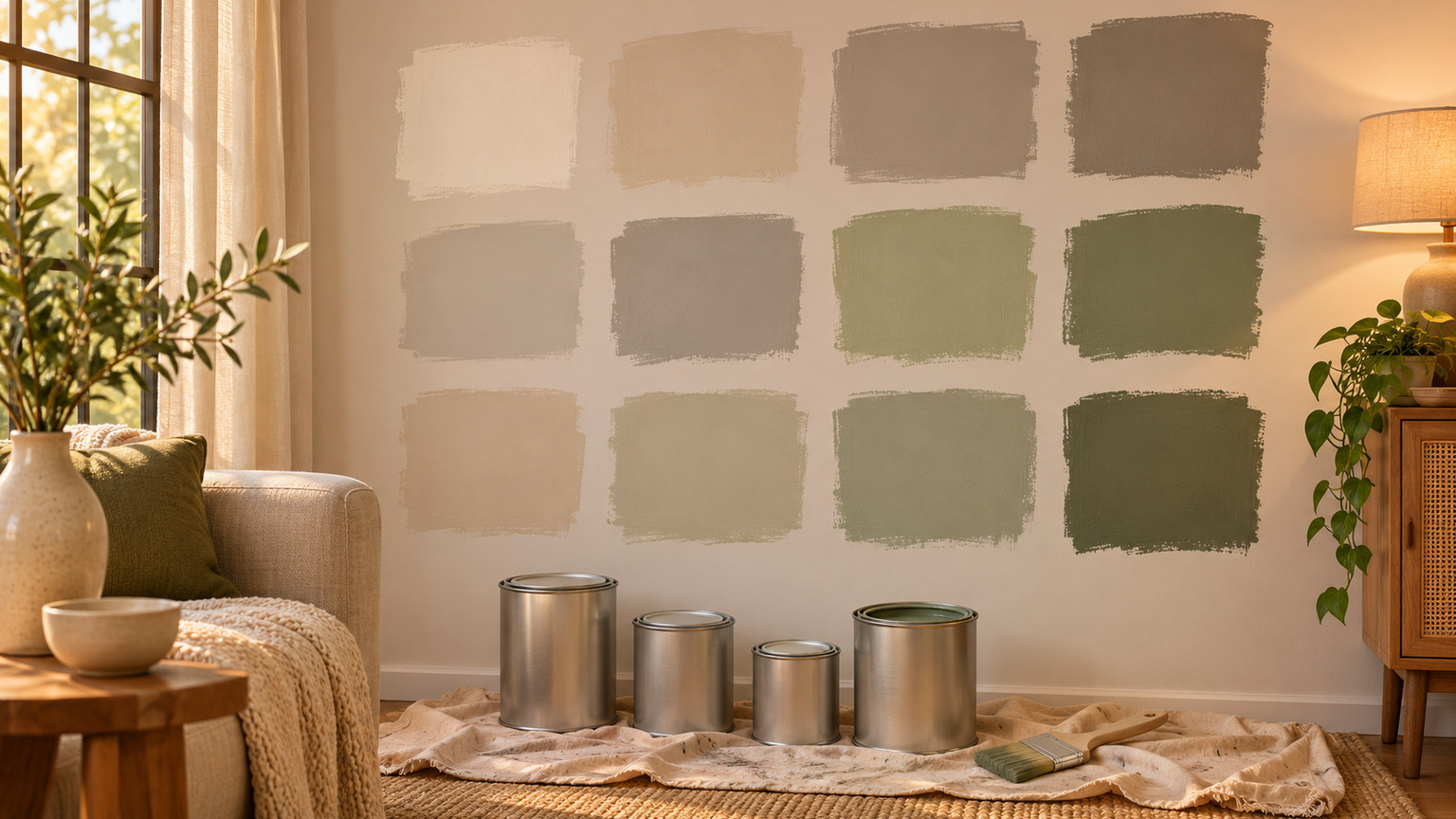
Choosing paint colours for a whole home feels hard because there are too many options and no obvious place to start. The method that works is simple: check the light in each room, pick a temperature that suits it, test three shades on the wall, and keep the rooms connected so the house feels like one home, not a set of unrelated rooms.
Start with a palette, not a single colour
The mistake most people make is choosing one room at a time with no plan, and ending up with a house full of colours that clash at every doorway. Start instead with a small palette: two or three neutrals, one or two accent colours, and one white for ceilings and woodwork. Every room then draws from the same set, and the house feels connected even when the rooms look different.
Your palette can be warm or cool, but it should be one or the other at its core. A warm house uses creamy whites, warm greiges and soft greens with yellow undertones. A cool house uses crisp whites, blue greys and dusty blues. Mixing the two families without a plan is what makes a home feel unsettled, even when each room looks fine on its own.
Check the light in every room
Walk through the house with a notebook and write down which way each room faces, how big the windows are, and whether the room gets direct sun. North facing rooms need warm colours, south facing rooms can take cool ones, and east and west facing rooms sit in between. This takes half an hour and it shapes every choice that follows.
Also note how you use each room and when. A living room used mainly in the evening needs a colour that looks good in lamplight, while a home office used during the day needs one that looks good in daylight. A bedroom needs a colour that feels calm at night. Light and use together tell you what each room needs.
Undertones are where choices go wrong
Most paint regrets come from undertones, not from the main colour. A grey that looked neutral in the shop turns blue on the wall, a white turns pink, a green turns muddy. The fix is to test large patches in the room itself, next to your furniture and flooring, and to look at them in the morning, the afternoon and the evening before deciding.
Hold each sample next to a plain white card to see its undertone clearly. If the sample looks wrong next to your sofa or your floor, the undertone is mismatched, and no amount of hoping will fix it. Shift one step towards the temperature of your furniture and test once more. Three testers per room is enough if you choose them with the light in mind.
Choose a small palette for the whole house first, then let each room draw from it, so the home feels connected at every doorway.
Keep the rooms connected
Rooms that open onto each other need colours that sit happily side by side. The simplest way to do that is to use the same neutral in the hallway and carry it into the rooms as a base, then let each room add its own accent. A hallway in a warm greige with a living room in a soft green and a bedroom in a pale plaster shade will feel like one home.
If two rooms clash, the problem is usually that their undertones are in different families. A warm living room next to a cool hallway will always feel wrong at the doorway, even if both rooms look good alone. Test the two colours side by side at the doorway before you paint, because that is where you will see them together every day.
Order of work through the house
Paint the hallway and landing first, because they set the tone for the rest of the house and they are the rooms you see most. Then do the living room, because it is the room guests see. Bedrooms and home offices can follow, and kitchens and bathrooms last, because their finishes are different and their colours have to work with tiles and worktops.
Buy all the paint for one room at once so the tins match, and write the colour name, the finish and the room on the back of a spare tile or in a notebook. Keep a small amount of each colour for touch ups. A house painted in a planned order with a written record is far easier to maintain than one painted in a rush.
When to ask for help
If you have tested three shades in a room and none of them feels right, the problem is usually the temperature, not the shade. Try the same colour in a warmer or cooler version rather than testing more shades in the same family. A paint counter can help here, and many paint shops will mix a small tester in a slightly different undertone if you ask.
Before you buy: check the light, pick the temperature, test three large patches, look at them morning and evening, check them against your furniture, and check them against the colour in the next room. If a shade passes all six checks, buy it. If it fails even one, keep testing, because a weekend of testing is cheaper than a weekend of repainting.
More guides on this topic