Home / Farrow and Ball Products and Worth It / Farrow and Ball Paint for Bathrooms and Kitchens
Farrow and Ball Products and Worth It
Farrow and Ball Paint for Bathrooms and Kitchens
Short Answer
Bathrooms and kitchens punish soft paint, so use the specialist Farrow and Ball finish made for the room. Preparation and ventilation matter as much as the tin you choose.
At a Glance
- Room finishes: Specialist paints made for steam, splashes and wiping
- Not for wet rooms: Ordinary Estate Emulsion is too soft for these rooms
- Walls: Washable matt or eggshell, matched to the room
- Woodwork: A tougher eggshell for cupboards, doors and trim
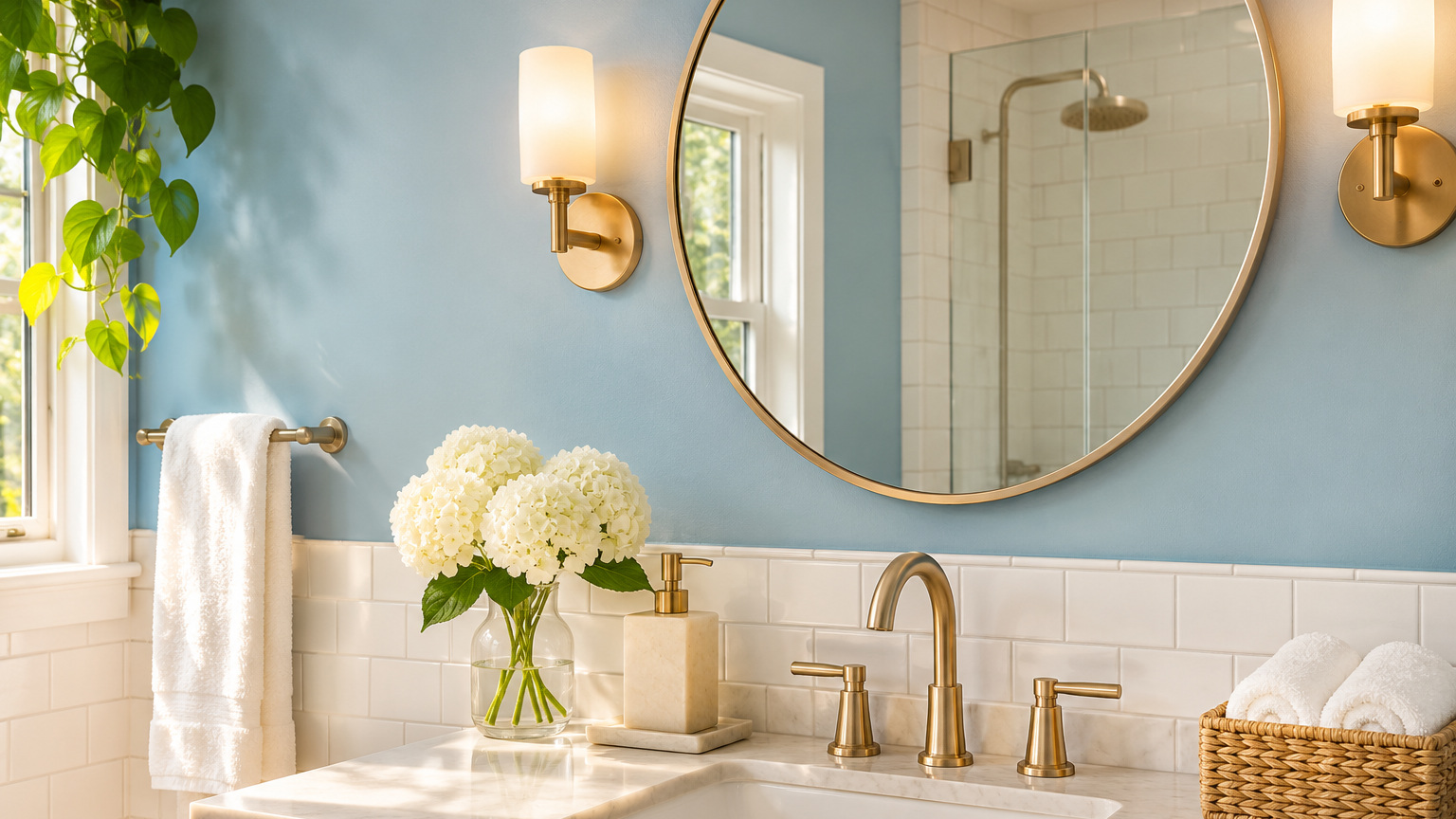
Bathrooms and kitchens need paint that copes with steam, splashes and regular wiping, and ordinary matt wall paint is not made for that job. Farrow and Ball makes specialist finishes for these rooms, with a harder, more washable surface. Pick the finish for the room, prepare the walls well, and the paint will cope with daily use.
Why ordinary matt fails here
A bathroom fills with steam every morning, and a kitchen throws up splashes and grease every day. Ordinary matt paint, such as Estate Emulsion, has a soft, porous surface that absorbs moisture and marks easily. In a bathroom it can go patchy, and in a kitchen it can stain where splashes land. The paint is not faulty; it is simply the wrong finish for the room.
Specialist bathroom and kitchen paints have a harder, more washable surface that resists moisture and can be wiped clean. They still look like a matt or low sheen paint, so they do not turn the room shiny, but the film is tougher underneath. That toughness is what you are paying for, and it is worth it in these two rooms above all others.
Which finish for a bathroom
For bathroom walls, use the brand's bathroom finish or its tough Modern Emulsion, following the guidance for the product you choose. The bathroom finish is made to resist steam and condensation, and to be wiped when marks appear. It suits walls away from direct water, such as the wall above a bath or beside a basin, but it is not a substitute for tiles in a shower enclosure.
Ventilation matters in a bathroom even with the right paint. An extractor fan that runs during and after a shower keeps steam from sitting on the walls, and that helps any paint last longer. If the bathroom has no fan and no opening window, even the toughest paint will struggle, so fix the ventilation first and paint second.
Which finish for a kitchen
For kitchen walls, a washable matt such as Modern Emulsion or the brand's kitchen finish is the usual pick. It copes with splashes and can be wiped when grease lands on it. The wall behind a hob or sink is the hardest working spot, and tiles or a splashback are a better choice there than any paint. Paint the rest of the wall, and tile the splash zone.
Kitchen cupboards need a tougher finish again, since doors are opened with wet or greasy hands many times a day. Modern Eggshell is the brand's pick for that job, with a harder surface than Estate Eggshell. Prepare cupboard doors well, sand them, prime bare areas, and allow each coat to dry fully before the next.
In a bathroom or kitchen, use the finish made for steam and splashes, fix ventilation first, and tile where water hits daily.
Preparing bathroom and kitchen walls
Walls in these rooms often carry grease, soap residue and old paint, and all of it must go before new paint goes on. Wash the walls with a suitable cleaner, rinse, and let them dry fully. Sand any glossy areas so the new paint can grip, and fill holes and cracks. In a bathroom, deal with any mould first, following the guidance for the product you use, and find the cause rather than just painting over it.
New plaster in a bathroom or kitchen must be fully dry and sealed before painting, and that can take longer in a damp room than in a dry one. There is no shortcut worth taking here. A mist coat or primer, applied as the tin directs, gives the top coat a sound base. Painting over damp plaster is a common cause of peeling in these rooms.
Applying the paint
Roll the walls and brush the edges, keeping a wet edge as you work. Two coats are the normal route, with the first fully dry before the second. Keep the room ventilated while you paint, and avoid painting in a cold, damp room. In a bathroom, avoid using the shower until the paint has had time to harden, following the guidance on the tin.
For woodwork and cupboards, use a brush and work in thin, even coats. Avoid overbrushing, which can leave marks as the paint sets. If you are painting cupboard doors, remove them if you can and lay them flat, since that gives a smoother coat and avoids drips on the edges.
Cleaning and upkeep
Wipe marks with a soft damp cloth and plain water first, adding only a mild cleaner if needed. Avoid abrasive pads and harsh chemicals, which can dull the finish in patches. In a bathroom, wipe condensation off the walls when you can, and run the fan after showers. In a kitchen, wipe splashes promptly rather than letting grease set.
Touch ups work best with paint from the same tin and batch, applied thinly. If a wall has many marks, repainting the whole wall from corner to corner gives a cleaner result than patching. Keep the colour and finish noted, so a later touch up matches.
Mistakes to avoid in wet rooms
The biggest mistake is using Estate Emulsion in a bathroom or kitchen and expecting it to behave like a specialist paint. It will not, and the result will be patchy walls and extra work. Another mistake is painting over mould without dealing with the damp that caused it. A third is tiling too little and painting too much, leaving paint where water hits it daily. Paint is for walls that get splashed, not for walls that get soaked.
More guides on this topic