Home / Farrow and Ball Products and Worth It / Farrow and Ball Estate Eggshell Explained
Farrow and Ball Products and Worth It
Farrow and Ball Estate Eggshell Explained
Short Answer
Estate Eggshell is a woodwork paint first and a wall paint second. It gives trim a soft, washable surface that does not fight with matt walls, and it is at its best on well prepared timber.
At a Glance
- Finish: Low sheen eggshell, softer than satin and tougher than matt
- Best for: Skirting, doors, cupboards and woodwork in general
- Also for: Walls that need wiping, where a matt would mark too easily
- Look: A gentle glow that pairs well with flat wall paint
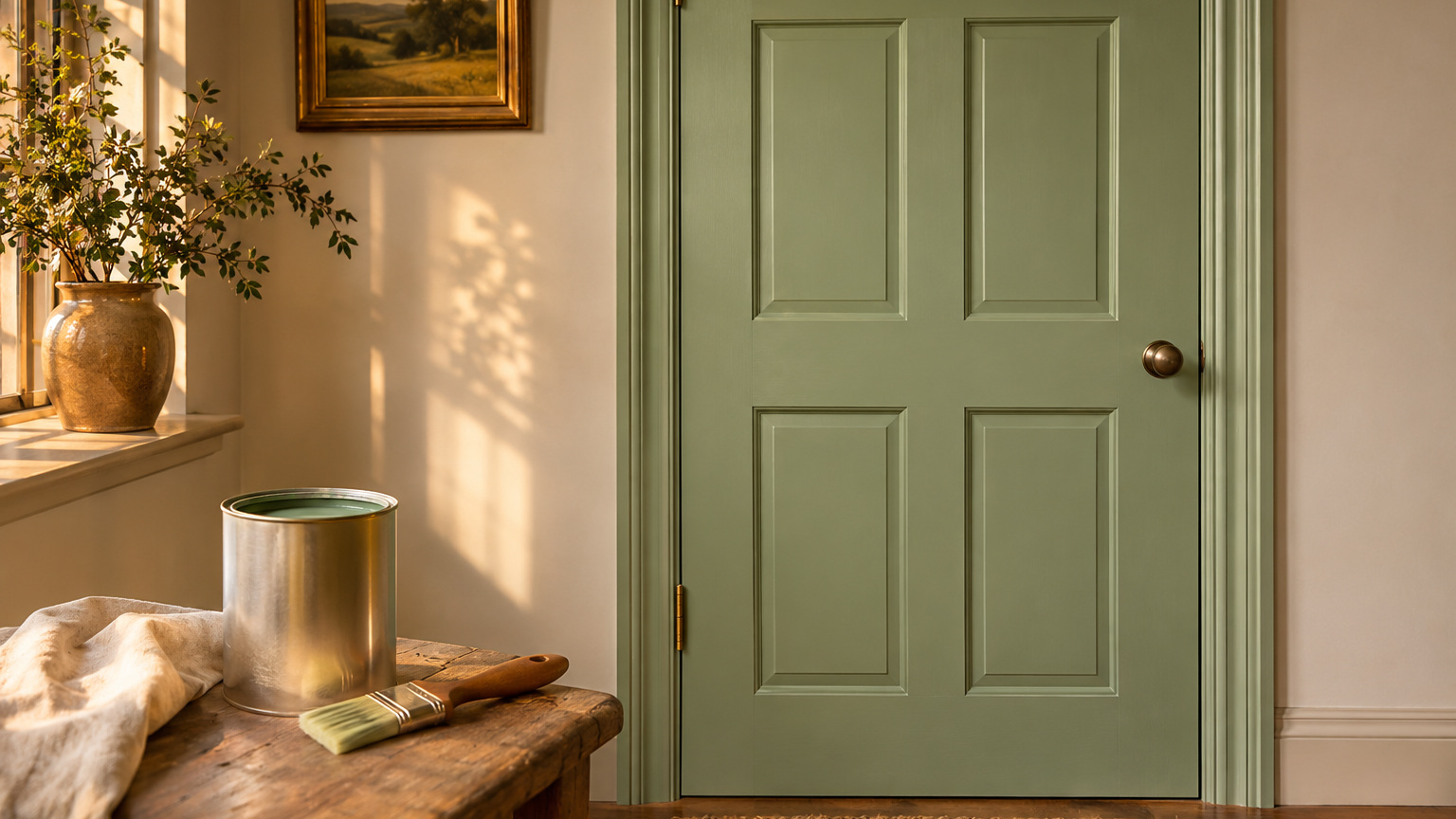
Estate Eggshell is Farrow and Ball's low sheen finish for woodwork, and it also works on walls that need a wipeable surface. It sits between matt and satin, with a soft glow rather than a shine. If your skirting, doors and cupboards need a finish that matches flat walls, this is the one to look at first.
What Estate Eggshell is
Estate Eggshell is a water based paint with a low sheen, made mainly for interior wood and metal. It dries to a soft finish that reflects a little light, which helps woodwork stand out gently against flat walls without looking glossy. The surface is harder than a matt wall paint, so it copes with knocks, dusting and the odd wipe.
It is also used on walls in rooms where a matt finish would struggle, such as a hallway wall at hand height or a wall behind a desk. That is a secondary use, though. The paint was designed for trim, and it behaves best on a smooth, prepared surface rather than on rough plaster.
Where to use it in a home
Skirting boards are the most common job, followed by doors, door frames, architraves and window sills. It also suits fitted cupboards, shelving and painted furniture, where a durable low sheen finish looks right. In kitchens, it is used on painted cupboard doors and panels, though the brand has a separate finish made for the hardest working kitchen surfaces.
Avoid using it where a high gloss is expected, such as a traditional gloss front door, or where a completely flat look is wanted on a wall. It also needs care on large flat areas, where brush marks can show more than they would with a roller on a wall. Pick the finish for the surface, and the result will look intentional.
Preparing woodwork properly
Woodwork shows poor preparation more than walls do, because the light rakes across it. Sand back rough patches, fill dents, and dust off before you paint. Old gloss should be sanded to give the new paint something to grip, and any flaking paint should be removed rather than sealed in. Bare wood needs a suitable primer, applied as the tin directs.
A clean, dry surface is the foundation. Grease from hands and kitchens stops paint sticking, so wash woodwork in busy areas before you start. Take the time to remove handles and mask hinges if you can, since paint on hardware is hard to remove cleanly and always looks like a shortcut.
Estate Eggshell earns its place on trim that is seen up close every day, so prepare the wood well and let each coat dry.
Applying Estate Eggshell
Use a good brush for woodwork, and work with the grain where the timber shows through the shape of the piece. Lay the paint on evenly and avoid overbrushing, which can leave drag marks as the paint starts to set. For flat cupboard doors, a small roller can give a smoother coat, finished lightly with a brush. Two coats are the usual approach for a solid, even colour.
Keep the room ventilated and at a normal temperature, and allow each coat to dry fully before the next. Rushing a second coat over a tacky first coat is a common cause of a rough finish. If a coat dries with a mark in it, let it harden, sand it lightly, dust off and recoat rather than trying to fix wet paint.
Eggshell compared with Modern Eggshell
Farrow and Ball also sells Modern Eggshell, which is tougher and more washable than Estate Eggshell, with a slightly higher sheen. Modern Eggshell is the pick for kitchens, bathrooms and very busy woodwork, where the surface will be wiped often. Estate Eggshell keeps a softer, flatter look, which many people prefer on period skirting and doors.
The choice comes down to use. A bedroom door in a quiet house is happy with Estate Eggshell, while a kitchen cupboard door that gets opened with wet hands is better in Modern Eggshell. Pair Estate Eggshell with Estate Emulsion on the walls for a matched, low sheen scheme through a room.
Looking after painted woodwork
Estate Eggshell can be wiped with a soft damp cloth, and dusted with a dry cloth in normal use. Avoid harsh cleaners and abrasive pads, which can dull the sheen in patches. Chips happen on corners and edges, especially on doors, so keep a small pot of the same paint for touch ups and note the colour name on the lid.
When you touch up, use a small brush and feather the paint out thinly rather than loading a thick blob on the chip. A thin coat dries flatter and blends better. If a door or skirting has many chips, a full sand and recoat gives a better result than a dozen separate dabs.
Mistakes that spoil the finish
Painting over dirty or glossy wood without sanding is the most common error, and it leads to peeling within weeks. Painting in a cold room is another, since the paint can dry cloudy or stay tacky. Using a worn brush leaves bristle marks and loose hairs in the finish, so a decent brush is worth the money. Finally, judging the sheen from a tiny sample can mislead, so test a patch on the actual woodwork in the room light.
More guides on this topic