Home / Farrow and Ball Products and Worth It / Farrow and Ball or Dulux: Which Is Best
Farrow and Ball Products and Worth It
Farrow and Ball or Dulux: Which Is Best
Short Answer
Choose Farrow and Ball where the finish and the colour are the point, and Dulux where durability and value matter more. Most homes end up using both, in different rooms.
At a Glance
- Farrow and Ball strength: Flat matt finish and muted, complex colours
- Dulux strength: Durability, wipeability and value for money
- Best approach: Split by room, not by brand
- Colour test: Sample both brands on the wall before deciding
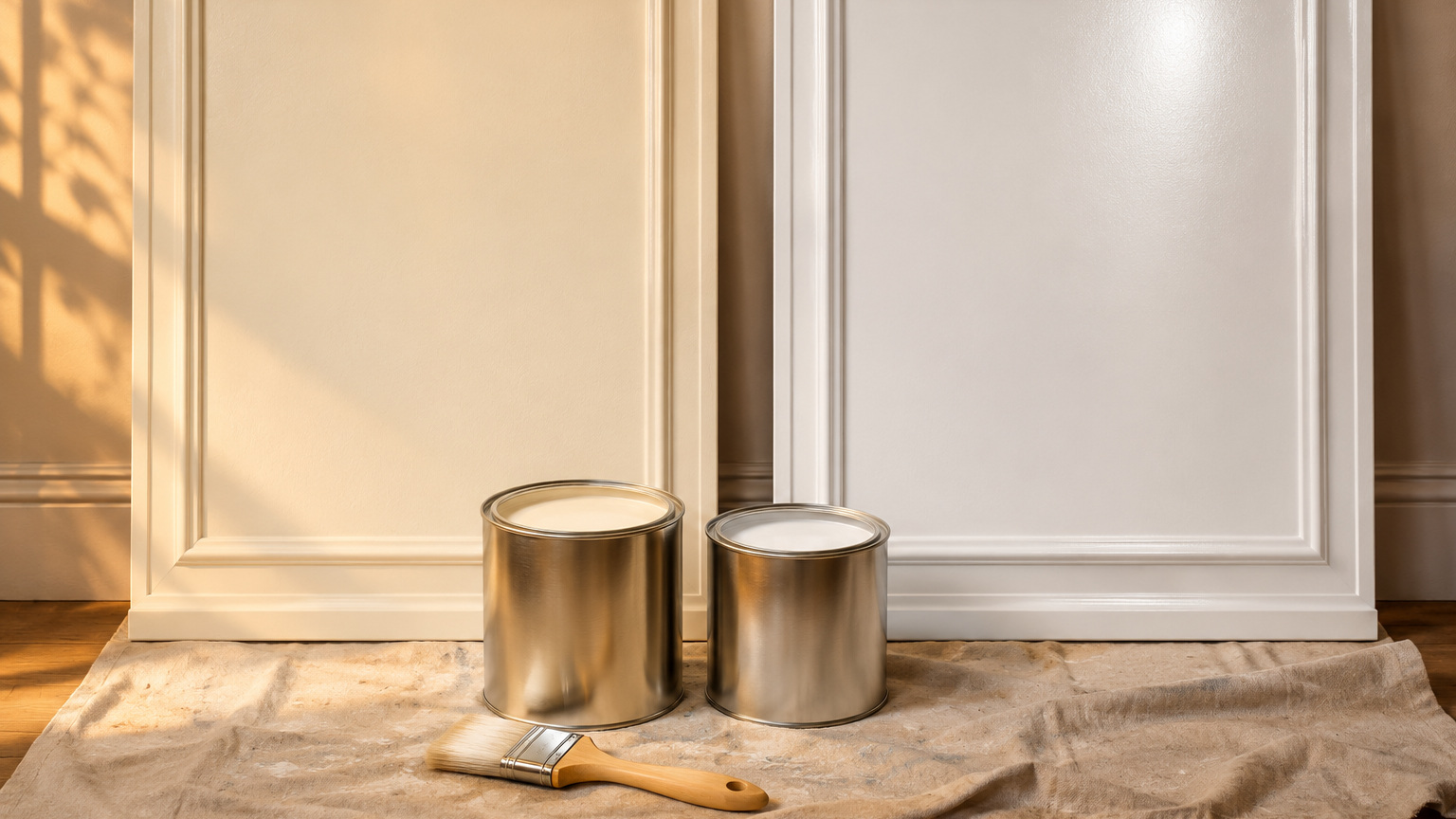
Farrow and Ball or Dulux? Start from what Farrow and Ball does well: a flat, chalky finish and a range of muted, complex colours that are hard to match. Dulux does well at toughness, easy cleaning and value across a whole house. Neither wins every room, so the sensible answer is to split the job by room rather than by brand loyalty.
Starting from the Farrow and Ball side
Farrow and Ball is built around look and colour. Its classic Estate Emulsion gives a flat, chalky matt that makes muted shades look deep and soft, and the colour range leans towards greys, greens and earthy tones with complex undertones. If you have a shade in mind that only this brand seems to offer, that is a real reason to choose it, and no other brand will match it exactly.
Dulux approaches paint from the practical side. Its emulsions are made to cover well, dry to a durable finish and stand up to wiping, and its range covers the plain whites, neutrals and popular colours most homes need. It is a workhorse brand, and it is at its best when the job is to paint a lot of wall well, at a fair price, without fuss.
Finish and look, side by side
Side by side, the difference is visible. Farrow and Ball Estate Emulsion is flatter and chalkier, with almost no shine, while a Dulux matt has a slightly more even, practical sheen. In a pale colour the gap is small, but in a dark colour the Farrow and Ball wall looks richer and softer, while the Dulux wall looks a touch more uniform and modern. Neither is wrong; they are different aims.
Modern Emulsion narrows the gap, since it is Farrow and Ball's tougher matt, but it still keeps the brand's flat character. Dulux also sells tougher finishes for kitchens and bathrooms, and those are made to be wiped daily. If the room will be wiped often, the practical finish matters more than the last bit of flatness, and Dulux has the edge there.
Colour range compared
Farrow and Ball's range is smaller and more curated, with shades designed to sit together across a house. That curation helps when you are planning a whole scheme, because the colours are meant to work as a set. The trade is choice: if you want a bright, clean colour or a very specific shade, the range may not have it.
Dulux has a much larger range, with colour matching and mixing services that can reproduce shades from other sources. That breadth suits a home where each room has its own idea, and where a bright accent or a clean white is needed. A Farrow and Ball shade can be colour matched by another brand, but the match will be in colour only, not in the flat finish that makes the shade look the way it does.
Let the room decide: Farrow and Ball for the look, Dulux for the hard wear, and sample both before you spend.
Durability and cleaning
Dulux generally wins on durability. Its matt and vinyl matt paints are made to resist marks and to be wiped, and its kitchen and bathroom paints are built for steam and splashes. Farrow and Ball's classic matt is softer and marks more easily, which is why the brand points busy rooms towards Modern Emulsion or its specialist finishes. If you have children, pets or a busy hallway, that difference is not minor.
That does not mean Farrow and Ball is fragile. Modern Emulsion copes with normal family life, and the specialist finishes are made for hard use. It means you must pick the right finish within the brand, rather than assuming any Farrow and Ball tin will be tough. A Dulux matt in a hallway will usually outlast an Estate Emulsion in the same hallway, and that is worth knowing before you buy.
Price and value
Farrow and Ball costs more than Dulux, and the gap is real across a whole house. For one feature wall or a single quiet room, the extra spend is modest and the look is the reward. For every wall in a four bedroom house, the gap becomes a serious sum, and the value of the dearer paint fades on ceilings, in cupboards and on walls that are rarely seen.
A common compromise is to use Farrow and Ball in the rooms where the finish will be admired, and Dulux elsewhere. That keeps the budget sane and puts the premium paint where it earns its keep. If you are hiring a decorator, ask for the paint cost separately, since the brand choice changes the materials bill more than the labour.
Which to pick room by room
Pick Farrow and Ball for a living room, bedroom or dining room where the colour and the flat finish are the point, especially in a period home. Pick Dulux for hallways, stairs, family rooms and rentals, where durability and value matter more. For kitchens and bathrooms, pick the specialist finish from either brand that is made for the job, and test it first.
Sample both brands on the wall before you decide. Paint a large patch of each, live with them for a few days, and look at them in daylight and lamplight. The patch test tells you more than any comparison article, because your light and your walls are part of the result.
More guides on this topic