Home / Paint Colours by Room / Best Paint Colours for a Small Room
Paint Colours by Room
Best Paint Colours for a Small Room
Short Answer
Use one pale, warm colour across the walls and carry it onto the ceiling, with woodwork in a matching white. That removes the lines that chop a small room up. Save deeper colours for one feature wall or for furniture, and always test in the dimmest corner of the room.
At a Glance
- Most reliable approach: a pale warm shade on walls, ceiling and woodwork
- Colour that helps most: a warm undertone, which stops pale walls looking cold
- Useful trick: painting the ceiling the wall colour makes a low room feel taller
- Avoid: strong contrast between wall, ceiling and skirting in a tiny room
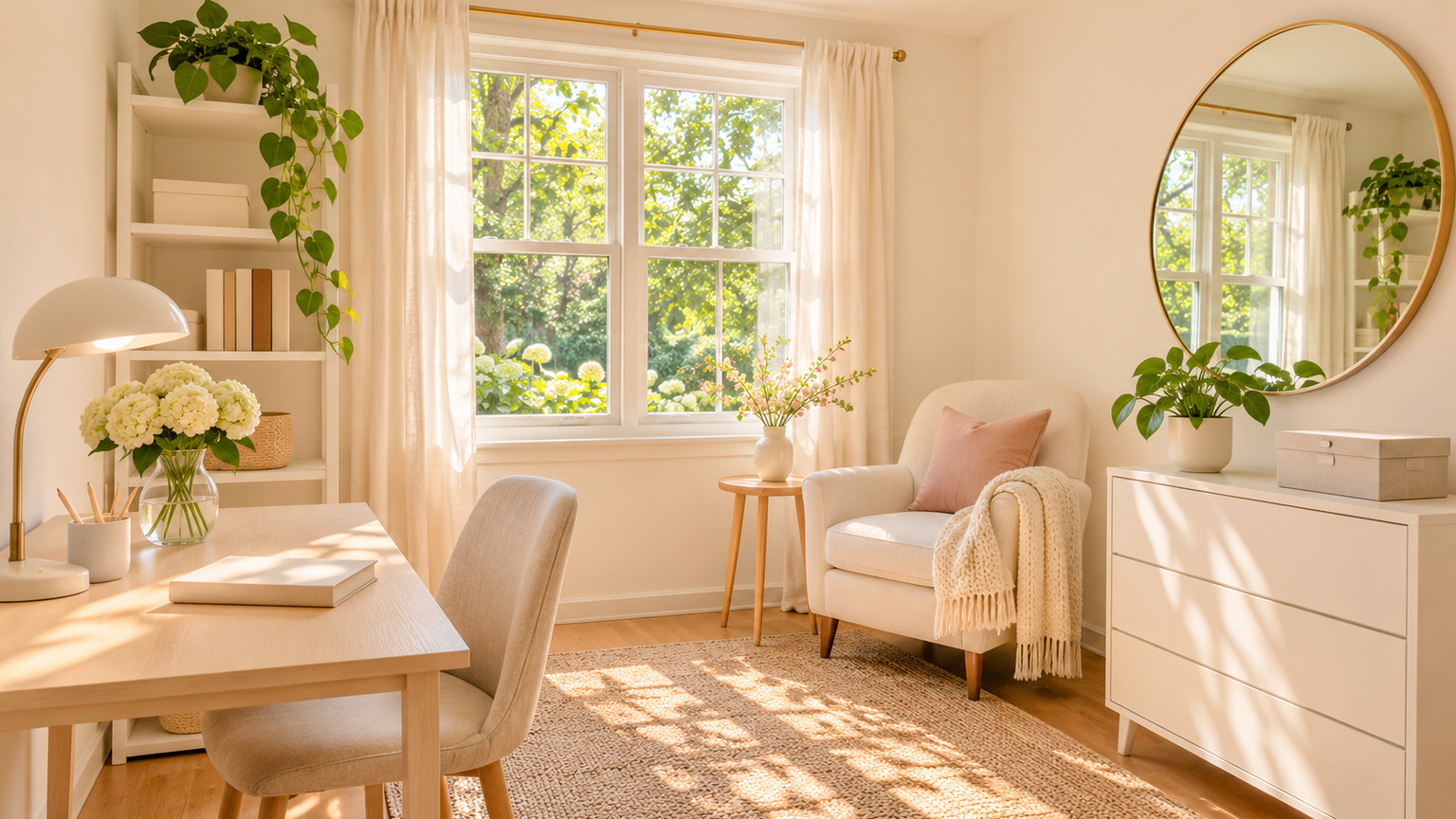
The right colour can make a small room feel noticeably larger, but the trick is not simply painting everything white. Pale shades with a warm undertone, one colour carried onto the ceiling, and matching woodwork all help a room feel more open. Dark colours have their place too, if you use them in the right spot.
Why white alone often fails
Painting a small room brilliant white is the first thing most people try, and it often disappoints. A stark white in a room with little daylight can look cold and flat, and it shows every mark on the wall. The room does not feel larger, it just feels bare. A pale colour with a warm undertone does the job better, because it reflects light without looking clinical.
Think of shades like warm white, pale greige, soft mushroom and light plaster pink. They all reflect plenty of light, but they give the room a sense of warmth that plain white lacks. Hold a sample against a white card in the room and you will see the difference at once: the warm shade looks like a colour, the white looks like a blank.
One colour on walls and ceiling
The lines where walls meet ceiling and skirting are what make a small room feel small, because your eye stops at each one. Painting the ceiling in the same pale colour as the walls removes one of those lines, and the room feels taller as a result. This works best with very pale shades, and it is a trick decorators use in box rooms and small bedrooms all the time.
Woodwork matters too. Skirting and door frames in a brilliant white against pale walls create a hard outline around the room, which makes it feel smaller. A soft white that matches the wall colour in tone blurs that outline and lets the room read as one space. Test the woodwork white next to the wall colour before you commit.
Where dark colours can help
Dark colours are not banned in small rooms, but they need to be used with care. A single dark wall at the far end of a long narrow room can make the room feel shorter and more balanced. A dark colour in an alcove or behind shelves adds depth without closing the room in, because the eye reads it as a recess rather than a wall.
The mistake is painting all four walls in a dark shade in a small room with one small window. That will make the room feel cramped, however good the colour is. If you love a dark shade, use it on one wall, keep the ceiling white, and make sure the other walls are pale enough to bounce light around.
A small room feels larger when your eye has no hard line to stop at, so blur the edges between wall, ceiling and woodwork.
Light, mirrors and furniture
Paint is only part of the answer in a small room. A mirror opposite the window doubles the light, pale flooring makes the room feel wider, and furniture in a similar tone to the walls blends in rather than breaking the space up. A dark bookcase against a pale wall becomes the focus of the room, which can be a good thing if it is the piece you want to show off.
Check the light in the room before you choose. A small north facing room needs a warm shade to stop it feeling cold, while a small south facing room can take a cooler pale shade because the sun warms it up. Test your sample in the darkest corner, because that is where a poor choice will show most.
Colour and the shape of the room
Long narrow rooms and square rooms need different thinking. In a long narrow room, a slightly deeper colour on the far end wall pulls that wall closer and makes the room feel less like a corridor. In a square room, one even colour on all walls is usually best, because any contrast emphasises the box shape.
Low ceilings benefit from a pale ceiling and walls in a shade that is only slightly deeper, so the difference between them is gentle. A living room with a low ceiling benefits from the same gentle difference. High ceilings in a small room can take a slightly deeper wall colour, because the height gives the colour room to breathe. Measure the ceiling before you shop, because it changes the choice more than people expect.
Testing and finishing
Paint your testers large, at least the size of a cushion, on two walls: the wall you face when you walk in, and the darkest wall in the room. Look at them in the morning and in the evening, with the curtains open and closed. A shade that looks open and warm in both views is the right one.
When you paint, use a matt finish to hide bumps on the walls, and keep the same colour for touch ups later. Small rooms show brush marks more than large ones, so use a good roller and keep a wet edge as you work. If you are also choosing a colour for the room next door, pick shades that sit happily together, because you see both rooms at once from the doorway.
More guides on this topic