Home / Exterior Paint / Painting a Garage Door: A Complete Guide
Exterior Paint
Painting a Garage Door: A Complete Guide
Short Answer
Clean the door, remove rust or flaking paint, prime bare metal or wood, then apply two thin coats of an exterior paint made for the door material in dry weather. Let it harden before you use the door hard.
At a Glance
- Material first: metal and wood need different paints
- Prep: clean, remove rust, prime bare areas
- Paint: exterior paint made for the door material
- Weather: dry day, no rain due, mild temperature
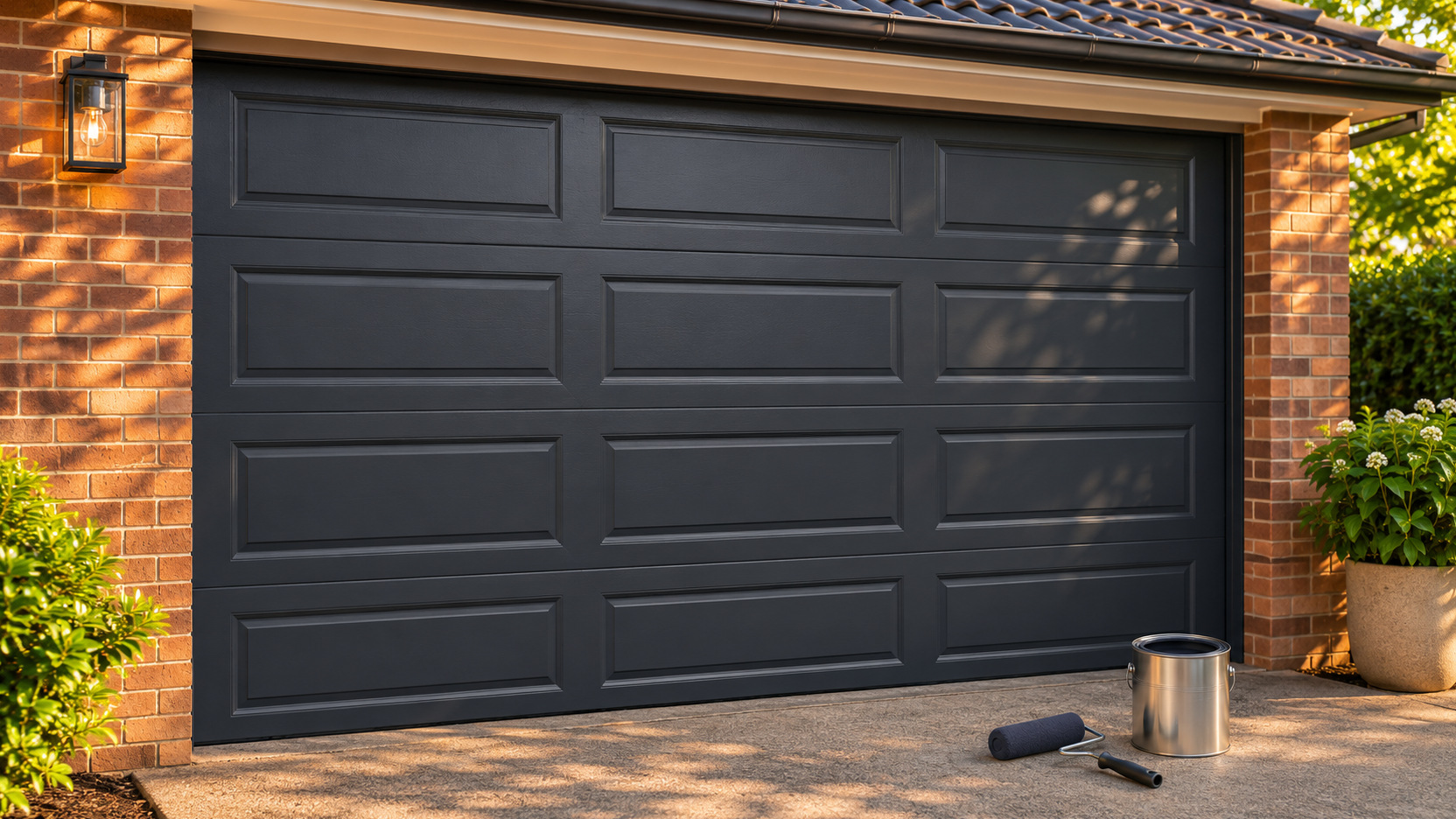
Painting a garage door means cleaning it, dealing with rust or flaking paint, priming bare areas, and applying a weatherproof paint made for the material, metal or wood. A garage door is a large, flat surface that faces rain, sun and frost, and it is opened and closed every day. A paint made for the material, applied over a sound surface, will keep the door looking smart for years.
Metal or wood: what is your door
Check what your garage door is made from before you buy paint. A metal door needs a metal primer and an exterior metal paint, while a wooden door needs a wood primer and an exterior wood paint. A UPVC door needs a paint made for UPVC. Using the wrong paint will lead to peeling, however well you prepare the surface.
Look at the door in daylight and check for rust, flaking paint, dents and gaps. A metal door will show rust at the bottom edge and around the hinges first. A wooden door will show rot at the bottom edge and around the panels first. Deal with those areas before you paint, because paint will not fix them.
Cleaning and preparing the door
Wash the door with sugar soap or warm soapy water to remove dirt, grease and algae, then rinse and let it dry fully. Brush off any loose paint with a stiff brush, and sand rusted areas on a metal door back to bright metal, or use a rust treatment the maker advises. Sand flaking paint on a wooden door back to a sound edge, and feather the edge smooth.
Fill dents and holes with a filler made for the material, let it set, and sand it smooth. Wipe away the dust with a damp cloth, and prime bare metal with a metal primer, or bare wood with a wood primer, as soon as it is clean and dry. The guide to painting exterior metal covers rust and primer in detail.
Choosing a paint for the door
Choose an exterior paint made for the door material, in satin or gloss. A satin finish hides small bumps better than gloss, while gloss is harder and easier to wipe. Check that the paint is made for exterior use, and that it is suitable for the door, whether it is metal, wood or UPVC. A paint made for interior use will not last outside.
Think about the colour as well. A colour that matches the front door or the windows gives the house a joined up look. A dark colour will show dust and fading more, while a pale colour will show dirt more. Test the colour on a hidden area first, and look at it in daylight before you commit to the whole door.
A garage door is a large flat surface. Every flaw will show, so prepare it well.
Painting the door
Paint the door in dry weather, with no rain due, and a mild temperature so the paint can dry properly. Use a brush for the panels and the edges, and a small roller for the large flat areas, working in thin coats and keeping a wet edge. Start at the top and work down, so drips land on areas you have not finished yet.
Let each coat dry fully before you apply the next, and give the paint time to harden before you open and close the door hard. Do not paint the door shut, and check that it opens and closes smoothly once the paint is dry. If the door is a roller door, check the maker guidance, because some roller doors need a specific paint and a specific method.
Painting a door in place
Most garage doors are painted in place, which is fine if you protect the ground and the frame. Mask the frame, the handles and any windows in the door, and protect the driveway with a dust sheet. Work in thin coats, and do not overload the brush or roller, or paint will pool in the panels and dry with a ridge.
Keep the door closed while you paint, and do not open it until the paint is dry, or it may stick to the frame. If the door has a lock or a handle, remove it if you can, or mask it carefully, so paint does not get into the mechanism and stop it working.
Keeping a painted garage door looking good
Wash the door with a soft cloth and warm soapy water when it looks dirty, and avoid abrasive cleaners that dull the finish. Check the door each spring for chips, rust spots and flaking paint, and deal with them early. A small chip touched up with a primer and a topcoat will stay invisible, while a chip left open will let rust or rot in and lift a larger patch.
Keep a little of the paint for touch ups, labelled with the colour and the finish. With a good exterior paint and a little care, a garage door should stay smart for years, and a fresh coat later will be far easier because the groundwork is already there. If the door is part of a larger job, the guide to how to paint a house exterior will help you plan the whole house, and the guide to exterior wood paint covers the timber around it.
Common mistakes to avoid
The most common mistake is painting over rust or flaking paint without dealing with it, which leads to peeling within months. The second is using an interior paint outside, which will fade and peel quickly in sun and rain. The third is painting in rain or on a damp door, which stops the paint bonding.
Another mistake is painting the door too thickly, which causes drips and a heavy texture that shows. Use thin coats, let each dry fully, and give the paint time to harden. A garage door painted well, in the right weather, will look like a new door, while a door painted in a hurry will show every shortcut.
More guides on this topic