Home / Farrow and Ball Colours / How to Match a Farrow and Ball Colour
Farrow and Ball Colours
How to Match a Farrow and Ball Colour
Short Answer
Find the name if you can, or take a sample of the old paint to a stockist and let them mix a small amount first. Test it on the wall, because a match that looks right on a card can look wrong on a faded wall. If the wall has faded, repainting the whole wall beats patching it.
At a Glance
- Quickest route: the colour name, from the old tin or your notes
- Next best thing: a flake of paint from a hidden spot on the wall
- Weakest evidence: a phone photo, which shifts colours on screen
- Golden rule: test the match on the wall before painting the room
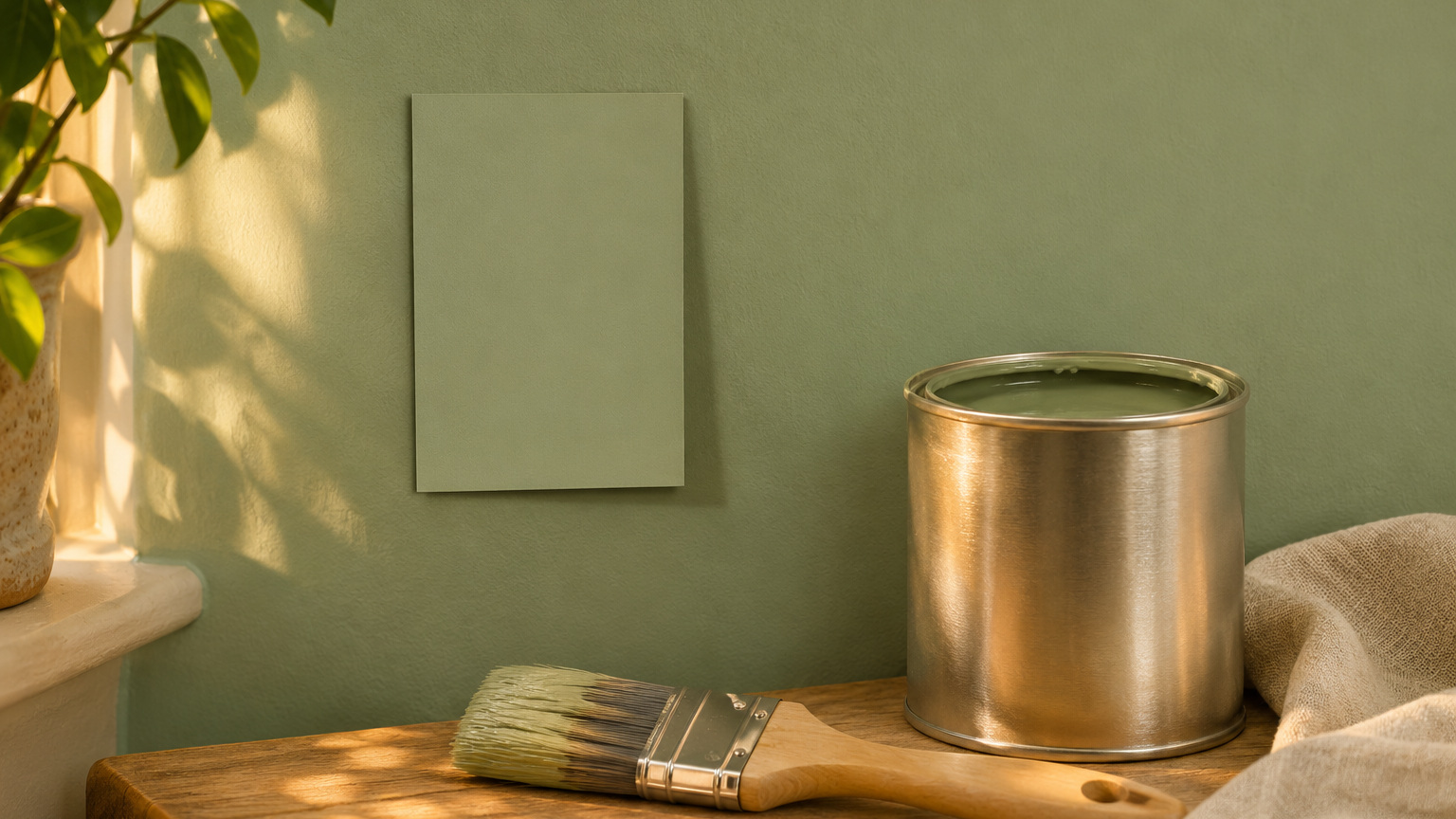
You have a wall to touch up, a room to finish, or a colour you loved in a house you visited, and you need to find it again. Matching a Farrow and Ball colour is straightforward when you have the name, and still very doable when you do not. The trick is to bring something physical to the stockist, and to test the result on the wall before you commit.
The name is the match
Farrow and Ball colours have memorable names, Ammonite, Hague Blue, Green Smoke, and if you have the name, a stockist can mix it in the finish you need. Check old tins, receipts, notebooks and photos of the room, because the name is often written somewhere you have forgotten about. The range also uses numbers, which the stockist can use to mix the shade precisely.
Keep a record once you have it. Write the room, the colour name, the finish and the date on the tin or in a notebook, and keep it somewhere you will find it. A labelled tin turns a future touch up into a five minute job instead of a search, and it is the cheapest insurance in decorating.
Taking a sample to the stockist
If the name is lost, take a sample. The best sample is a flake from the wall itself, taken from a hidden spot such as behind a radiator or inside a cupboard, where fading is least. Put it in a small bag and take it to a stockist or showroom, where staff can compare it against the chart and mix a small amount for you to test at home.
A photo can help as a backup, but it is not a reliable match on its own. Phone cameras shift colours, screens show them differently again, and a muted Farrow and Ball shade is exactly the kind of colour that shifts most. Take the photo, but take a physical sample if you possibly can, because the stockist needs something real to match against.
The faded wall problem
Paint changes over time. Sunlight fades paint, cooking and smoke discolour it, and cleaning wears it thin, so the shade on a ten year old wall is not the shade that came out of the tin. Paint from a fresh tin will look brighter and cleaner than the old wall, and the difference will show as a patch if you only paint part of it.
The honest fix is to repaint the whole wall, not just the patch. A fresh coat of the same colour will sit evenly across the wall, while a patch will stand out. If patching is unavoidable, paint the full wall from corner to corner, because the eye reads a whole wall as one surface and a patch as a repair.
Fresh paint will look brighter than a faded wall, so repaint the whole wall rather than patching it.
Finishes change the match
The same colour can look different in different finishes, and this range is no exception. A shade in matt emulsion looks softer than the same shade in eggshell, because the eggshell reflects more light. If you are matching a wall painted in matt, buy the match in matt, and if the original was an eggshell finish, match it in that product.
Not every colour is available in every finish, so check with the stockist before you settle on a shade. If the colour you need is not made in the finish you want, the stockist can usually advise on the closest equivalent, but test it on the wall first, because a close equivalent is not an exact match.
Matching across brands
Sometimes you need to match a Farrow and Ball colour to a paint from another brand, or the other way round. A paint counter can often do this by eye or by scanning a sample, and many shops keep conversion charts for common shades. The result is usually close, but it is rarely exact, because different brands use different bases and pigments, and muted shades show the difference most.
Always test a cross brand match on the wall first, painting it beside the original so you can judge the two directly. For a touch up, even a slight difference will show, so repainting the whole wall is the safer choice. If the match is for another room, a close result is usually good enough, since the two rooms are never seen side by side.
Touch ups that blend in
When you finish painting a room, keep a small amount of the paint in a sealed tin, labelled with the room, the colour name, the finish and the date. Keep it somewhere cool and dry, and stir it well before you open it. A labelled tin makes a future touch up a five minute job instead of a hunt through old tins.
Before you touch up, stir the paint, test it on a hidden spot, and check it in daylight. On a faded wall the touch up will show, so repainting the wall is the better choice. If the match looks good, apply the touch up with a small brush and feather the edges so it melts into the old paint. The full colour guide and the white comparison will help if the shade you need is a white or a neutral.
More guides on this topic