Home / Farrow and Ball Colours / Farrow and Ball Green Colours: A Complete Guide
Farrow and Ball Colours
Farrow and Ball Green Colours: A Complete Guide
Short Answer
Green Smoke is the safest starting point, because it works in almost any room. Go deeper for a dining room or a feature wall, and test on the darkest wall first, because a green with a blue undertone can look muddy where the light is poor.
At a Glance
- Most used green: Green Smoke, soft and muted for kitchens and bedrooms
- Deeper options: Card Room Green and Yeabridge Green for dining rooms
- Darkest green: Studio Green, for large rooms and single feature walls
- Check before buying: whether your green leans yellow or blue
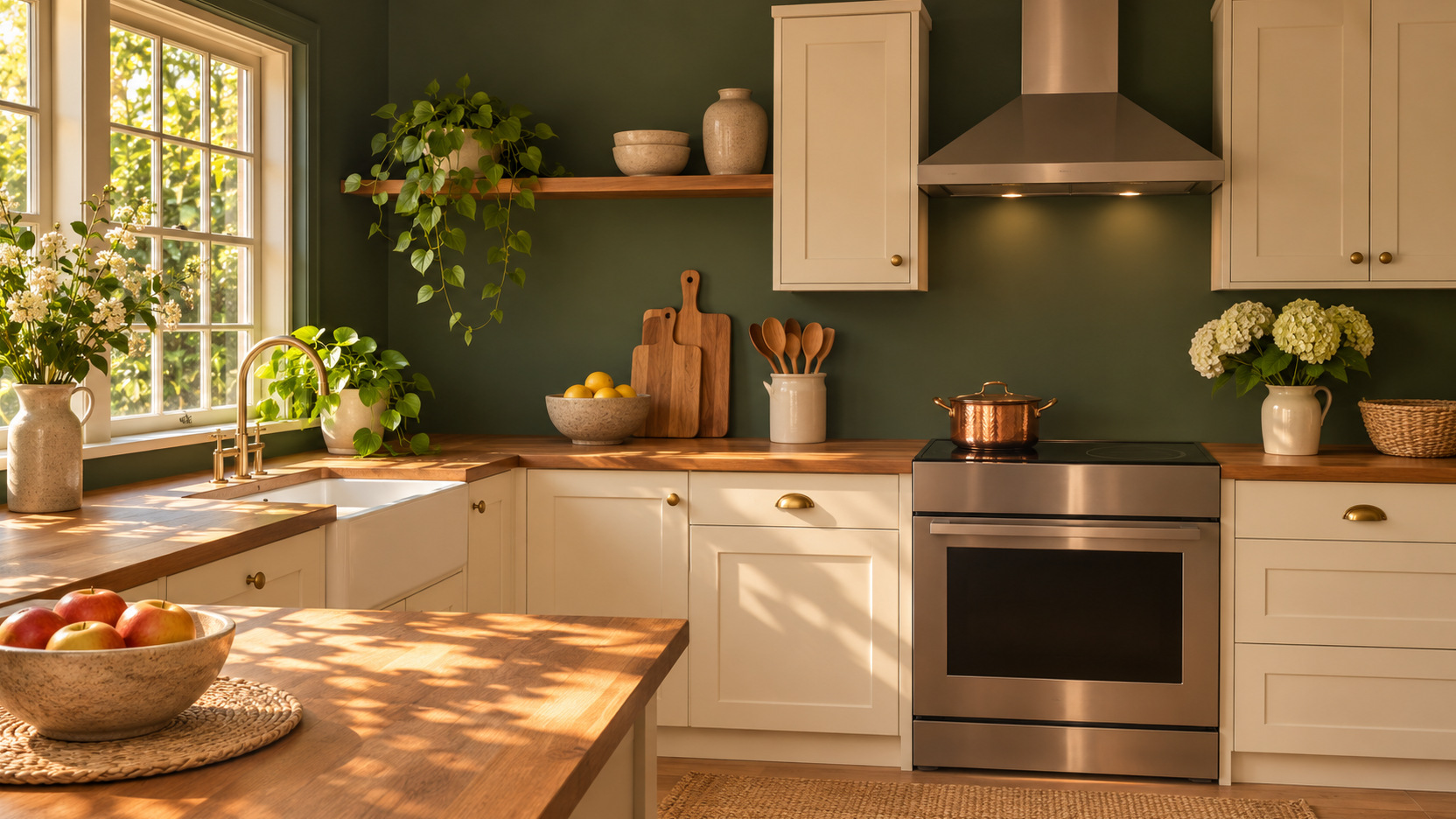
Green is the colour of the moment in British homes, and the Farrow and Ball greens are the reason so many people have tried it. They are soft, muted and easy to live with, and they suit kitchens, bedrooms, living rooms and studies in a way that few other colours do. The range runs from pale sage to the darkest forest green.
Why green works in so many rooms
Green sits between blue and yellow, which gives it a rare quality: it feels calm like a blue and warm like a yellow at the same time. That is why it suits rooms with different lights and different uses. A green kitchen feels fresh in the morning, a green bedroom feels restful at night, and a green study feels steady through a long working day.
Green also suits the things British homes are full of: wooden floors, white woodwork, linen, wool and houseplants. A green wall makes a plant look better, a wooden table look warmer and white bedding look cleaner. Few colours flatter a room's contents as well as green does, and that is a large part of its appeal.
Green Smoke and the pale greens
Green Smoke is the green that suits the widest range of rooms. It is a soft, muted green with a grey undertone, pale enough to keep a small room bright and calm enough for a bedroom. It pairs with white cabinets, timber worktops, linen bedding and houseplants, which explains why it turns up in so many homes.
Lighter greens nearby in the range, like Mizzle and Cromarty, suit bathrooms and bedrooms where you want a fresh, pale colour. The risk with any pale green is a blue undertone in a dim room, where it can look muddy. Test your sample on the darkest wall at midday, and if it looks muddy there, look for a green with a warmer base.
Mid greens for dining rooms and studies
Card Room Green is a deeper green that suits dining rooms and studies, where it adds depth and a sense of occasion without feeling heavy. Yeabridge Green is a similar mid green with a slightly different character, and it works in living rooms with wooden furniture and natural fabrics. Both look rich in lamplight, which is when dining rooms and studies are used most.
A mid green is a practical hallway choice, since it hides the marks that a pale shade would show at once. It covers scuffs far better than white or pale grey, and it gives a narrow hallway a sense of purpose. Match it with white woodwork and a pale ceiling so the hallway keeps its height.
Green feels calm like a blue and warm like a yellow at the same time, which is why it suits so many rooms.
Studio Green and the deep end
Studio Green is the darkest green in the range, and it is a strong choice for a large living room, a dining room or a study with good daylight. It makes a large room feel cosier, pairs well with brass and dark timber, and looks striking beside pale bedding or a light sofa. A deep green chimney breast framed by pale walls suits plenty of older houses and gives the room a clear focal point.
In a small room, keep deep green to one wall. One dark green wall behind the bed adds depth to a bedroom while the other walls stay pale, and a deep green island does the same job against pale kitchen cabinets. Leave the ceiling white, since a dark ceiling above dark walls makes the room feel low.
Yellow greens and blue greens
Every green leans towards yellow or towards blue, and that lean decides how it feels. A green with a yellow cast feels sunny and warm, and it pairs well with timber floors and cosy fabrics. A green with a blue cast feels cooler and more restrained, and it fits rooms furnished in grey with chrome or glass. Hold the sample next to a white card and the lean will show.
Check the green against the biggest timber surface in the room. Hold the sample against your oak floor: the yellow leaning green will warm it, the blue leaning one will cool it, and the one that flatters the timber is the keeper. Try the same check with the sofa: a green that makes grey fabric look grubby is the wrong temperature for that room.
Green in kitchens, bedrooms and offices
Green is a natural kitchen colour, because it suits wooden worktops, white cabinets and black handles, and it looks fresh in both daylight and evening light. Green Smoke on the walls with a deeper green on lower cabinets is a combination that suits both modern and traditional kitchens. Check that the colour is available in a finish that copes with steam and splashes.
In a bedroom, a gentle green feels restful beside linen or cotton bedding in white, cream or pale grey. A deeper green at the head of the bed brings drama to the room while pale bedding keeps it from feeling dark. The blue family is the cooler alternative, and the full colour guide shows how the greens sit with the rest of the range.
More guides on this topic